Thomas
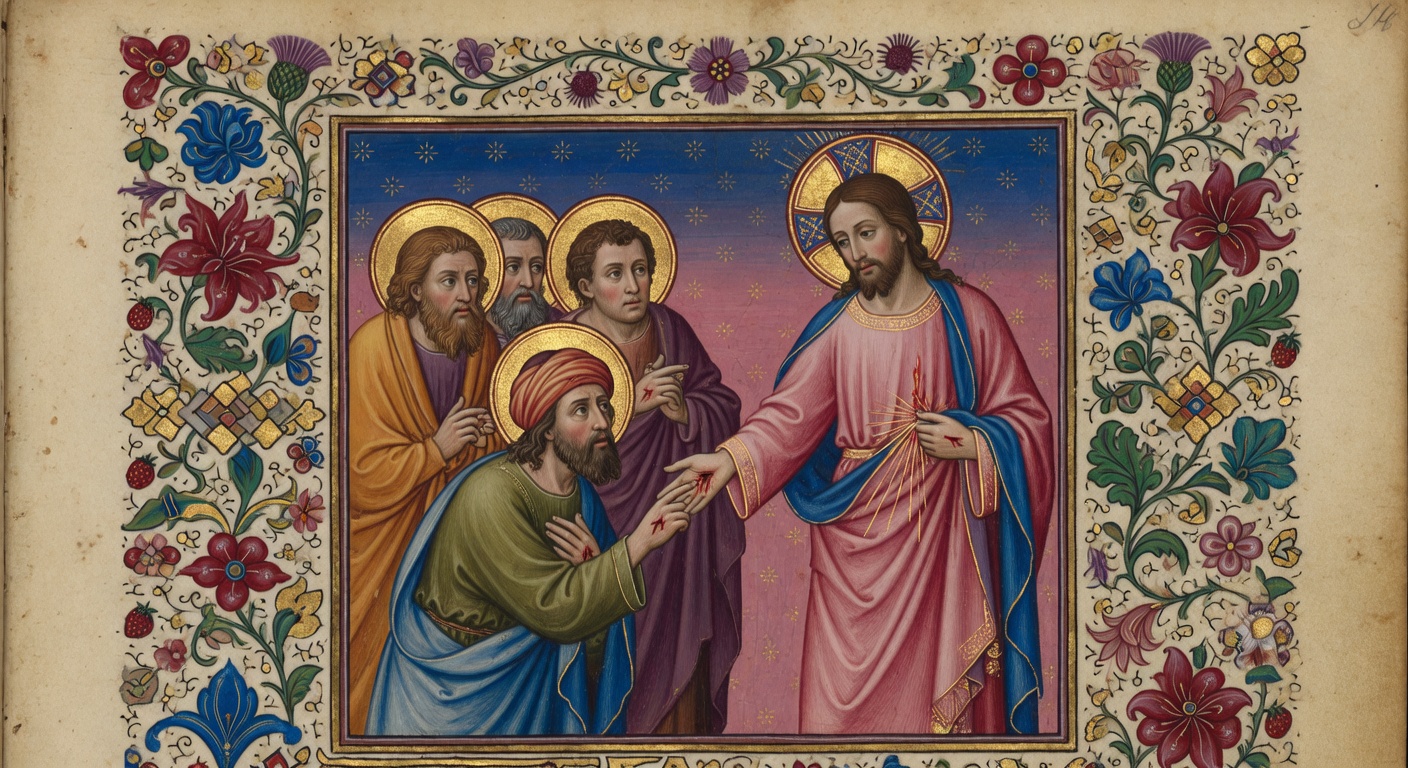
Thomas, one of the twelve apostles chosen by Jesus, is frequently identified in Scripture as the disciple who initially doubted reports of the resurrection. In the Gospel of John, he stated that he would not believe unless he personally saw and touched the wounds from Jesus' crucifixion. Eight days later, Jesus appeared to the gathered disciples and directly invited Thomas to examine the marks in his hands and side, prompting Thomas to confess, "My Lord and my God." This episode illustrates the biblical emphasis on moving from doubt to faith and records Jesus' blessing on those who believe without physical evidence, a principle that has shaped Christian teaching on trust in the resurrection.
Biography
- Died
- c. AD 72, India (tradition)
- Occupation
- Apostle
- Era
- New Testament
- Nationality
- Jewish, Galilean
- Also Known As
- Didymus (the Twin)
Did You Know?
Thomas, whose Aramaic name means "twin," is called Didymus in Greek three times in John's Gospel, a detail suggesting possible bilingual cultural ties in first-century Judea not shared by most other apostles.
In John 11:16, Thomas is the only disciple who explicitly urges the others to accompany Jesus to Bethany despite mortal danger, declaring they should "die with him," revealing early loyalty before the resurrection events.
Thomas's question in John 14:5 about not knowing the way directly prompts Jesus's declaration "I am the way, the truth, and the life," a pivotal theological statement unique to this exchange.
After demanding physical proof of the wounds, Thomas becomes the first disciple in the Gospels to address the risen Jesus explicitly as "My Lord and my God" (John 20:28), marking a profound shift in christological recognition.
Early church traditions preserved in sources like the Acts of Thomas describe his mission to India around 52 CE, where he reportedly established communities whose descendants, the Saint Thomas Christians, still exist today.
Key Passages
Thomas's Doubt
John 20:24-29
Thomas refuses to believe without physical evidence, and Jesus graciously provides it - then pronounces a blessing on all future believers who trust without seeing.
 24ut Thomas, one of the twelve, called Didymus, was not with them when Jesus came.
Thomas's Devotion
John 11:16
Earlier, when Jesus determined to go to dangerous Judea, Thomas declared 'Let us go that we may die with Him' - revealing a courage often overshadowed by his later doubt.
 16hen said Thomas, which is called Didymus, unto his fellowdisciples, Let us also go, that we may die with him.