Titus
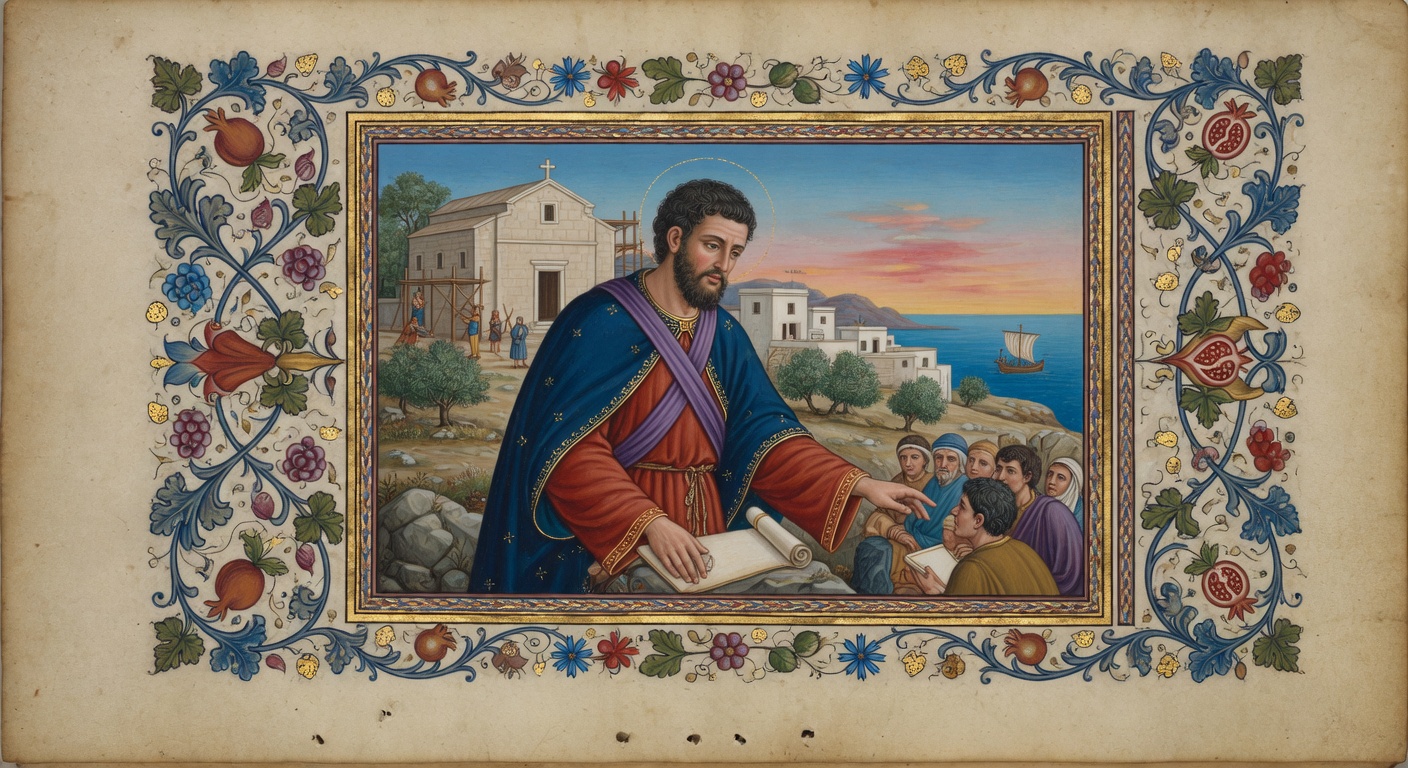
Titus was a Gentile convert to Christianity who became one of the apostle Paul's most trusted companions and co-workers in ministry. Paul left Titus in Crete specifically to appoint elders and organize the newly established churches there according to sound doctrine. The New Testament book of Titus, a pastoral epistle written by Paul, provides instructions on church leadership, the qualifications for elders, and the importance of good works as evidence of faith. This account highlights the early church's efforts to establish orderly governance among Gentile believers and underscores the inclusion of non-Jews in the Christian community without requiring adherence to Jewish law.
Biography
- Occupation
- Pastor, Missionary
- Era
- New Testament
- Nationality
- Greek
Did You Know?
Although absent from Acts, Titus accompanied Paul to the Jerusalem Council as an uncircumcised Greek believer, where Paul refused demands for his circumcision to defend Gentile freedom from the law (Galatians 2:3-5).
Titus made at least two trips to Corinth, first carrying a severe letter from Paul and later reporting the church's repentance, which brought the apostle great relief while he awaited Titus in Macedonia (2 Corinthians 2:12-13; 7:5-7).
The letter to Titus is the only New Testament writing that quotes a pagan Cretan prophet describing his own people as "always liars, evil beasts, lazy gluttons," highlighting the cultural obstacles Titus faced in organizing churches on the island (Titus 1:12).
Paul left Titus in Crete specifically to appoint elders in every town and to silence rebellious teachers, giving him authority to "straighten out what was left unfinished," an assignment not given to any other individual in the New Testament (Titus 1:5).
Near the end of Paul's life, Titus was dispatched to Dalmatia, indicating his ministry extended from Crete into the western Balkans rather than remaining confined to the eastern Mediterranean (2 Timothy 4:10).
Key Passages
Titus in Crete
Titus 1:4-9
Paul entrusts Titus with the difficult task of establishing church order in Crete - demonstrating confidence in a proven co-worker and the importance of sound leadership in new churches.
 4o Titus, mine own son after the common faith: Grace, mercy, and peace, from God the Father and the Lord Jesus Christ our Saviour.
Paul's Joy over Titus
2 Corinthians 7:13-16
Paul's relief and joy at Titus's safe return and good report reveals the deep emotional bonds between ministry partners and the anxiety that accompanies sending others into difficult situations.
13herefore we were comforted in your comfort: yea, and exceedingly the more joyed we for the joy of Titus, because his spirit was refreshed by you all.