Job 10 KJV
Job Pleads with God
Job Chapter 10: Job Pleads with God
Job 10 subverts ancient Near Eastern creation hymns by recasting God as both potter and adversary, where the same hands that "fashioned" and "made" the speaker in the womb (vv. 8-9) are now invoked to destroy the work, highlighting the tension between divine artistry and unexplained hostility.
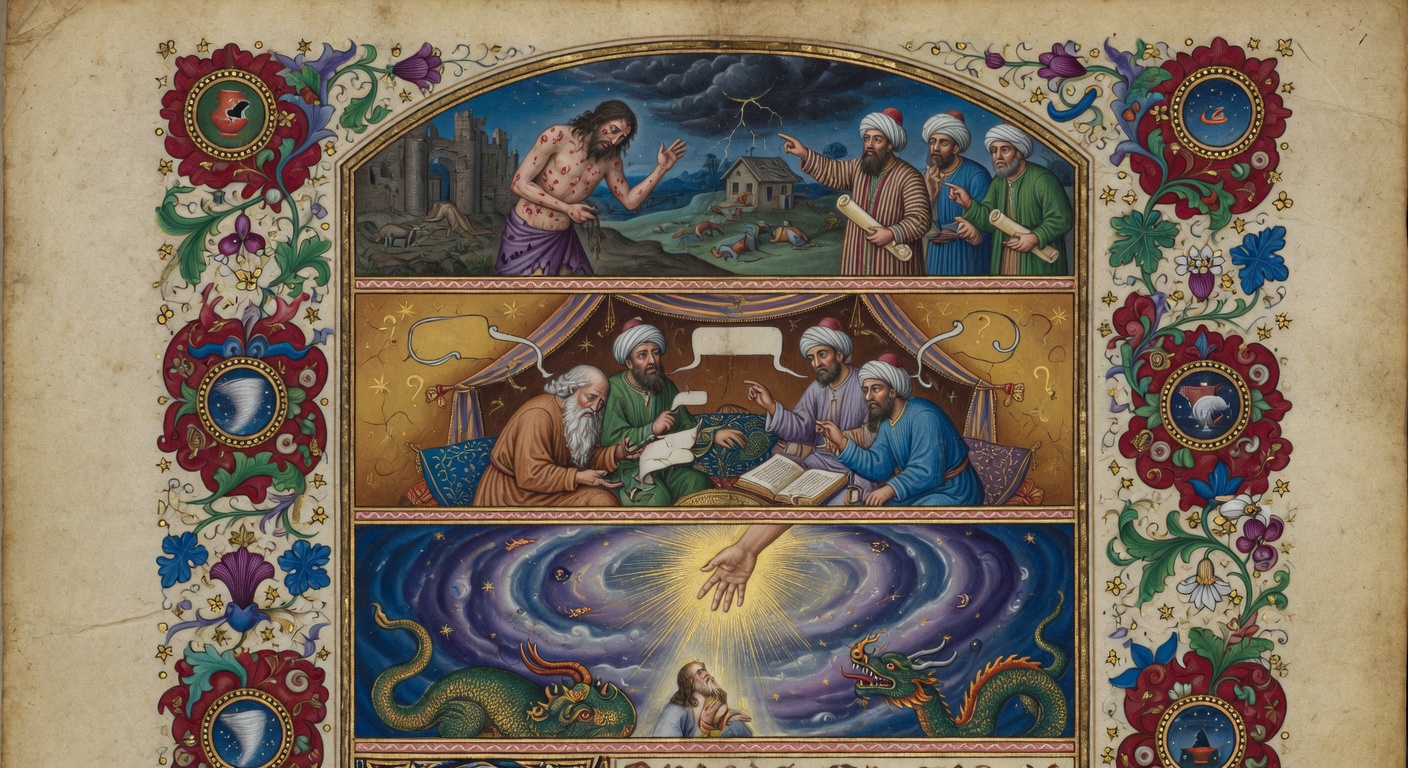
 1y soul is weary of my life; I will leave my complaint upon myself; I will speak in the bitterness of my soul.
2 I will say unto God, Do not condemn me; shew me wherefore thou contendest with me.
3 Is it good unto thee that thou shouldest oppress, that thou shouldest despise the work of thine hands, and shine upon the counsel of the wicked?
4 Hast thou eyes of flesh? or seest thou as man seeth?
5 Are thy days as the days of man? are thy years as man’s days,
6 That thou enquirest after mine iniquity, and searchest after my sin?
7 Thou knowest that I am not wicked; and there is none that can deliver out of thine hand.
8 Thine hands have made me and fashioned me together round about; yet thou dost destroy me.
9 Remember, I beseech thee, that thou hast made me as the clay; and wilt thou bring me into dust again?
10 Hast thou not poured me out as milk, and curdled me like cheese?
11 Thou hast clothed me with skin and flesh, and hast fenced me with bones and sinews.
12 Thou hast granted me life and favour, and thy visitation hath preserved my spirit.
13 And these things hast thou hid in thine heart: I know that this is with thee.
14 If I sin, then thou markest me, and thou wilt not acquit me from mine iniquity.
15 If I be wicked, woe unto me; and if I be righteous, yet will I not lift up my head. I am full of confusion; therefore see thou mine affliction;
16 For it increaseth. Thou huntest me as a fierce lion: and again thou shewest thyself marvellous upon me.
17 Thou renewest thy witnesses against me, and increasest thine indignation upon me; changes and war are against me.
18 Wherefore then hast thou brought me forth out of the womb? Oh that I had given up the ghost, and no eye had seen me!
19 I should have been as though I had not been; I should have been carried from the womb to the grave.
20 Are not my days few? cease then, and let me alone, that I may take comfort a little,
21 Before I go whence I shall not return, even to the land of darkness and the shadow of death;
22 A land of darkness, as darkness itself; and of the shadow of death, without any order, and where the light is as darkness.
← → arrow keys to navigate chapters · spacebar to play/pause audio
Did You Know?
Job 10 subverts ancient Near Eastern creation hymns by recasting God as both potter and adversary, where the same hands that "fashioned" and "made" the speaker in the womb (vv. 8-9) are now invoked to destroy the work, highlighting the tension between divine artistry and unexplained hostility.
The dairy imagery in verse 10. Pouring out "as milk" and curdling "like cheese". Reflects a rare biblical appropriation of ancient physiological theories of embryology, using everyday ANE observations of milk coagulation to describe fetal formation while attributing the process solely to God's intimate yet now menacing involvement.
Verse 2 employs forensic terminology ("contendest") that frames the entire speech as a legal deposition or lawsuit against God, an early instance of the divine-human litigation motif that structures much of the book and anticipates covenant lawsuit forms in the prophets.
Job's fleeting acknowledgment of past "life and favour" (v. 12) followed by immediate reversal creates a theological reversal of the usual praise formula found in psalms of thanksgiving, transforming what could be doxology into accusation and exposing the fragility of memory under suffering.
The closing description of Sheol (vv. 21-22) as a "land of darkness" and "shadow of death" without order or return supplies one of the Hebrew Bible's most vivid pre-exilic underworld portraits, shaping later apocalyptic imagery while underscoring Job's desire for oblivion over continued divine attention.