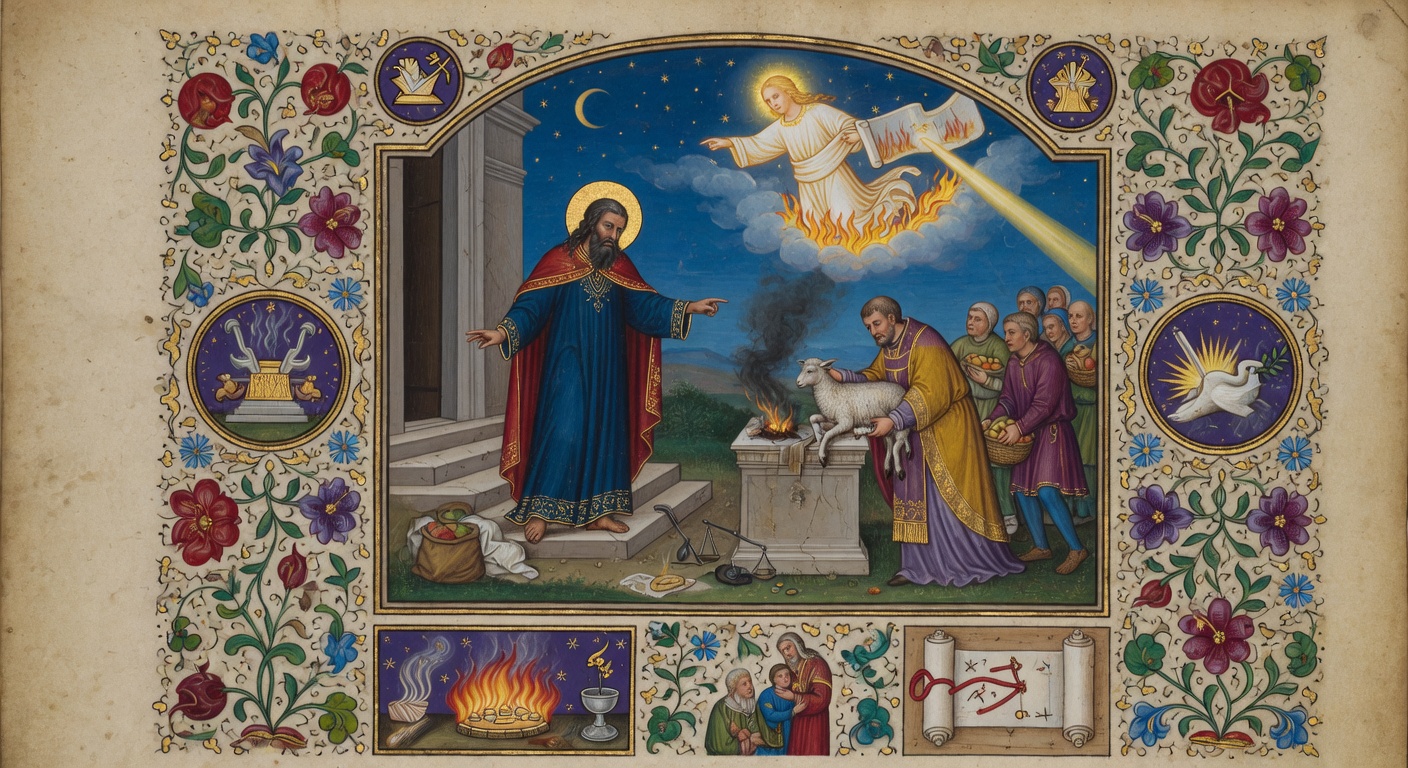
Malachi 1 KJV
The Lord's Love for Israel
Malachi Chapter 1: The Lord's Love for Israel
The chapter's declaration of God's hatred for Esau and the perpetual desolation of Edom serves as a theological counterpoint to Israel's election, illustrating divine sovereignty over nations in a post-exilic context where Edom's territory had been encroached upon by Nabatean Arabs.
 1he burden of the word of the LORD to Israel by Malachi.
2 I have loved you, saith the LORD. Yet ye say, Wherein hast thou loved us? Was not Esau Jacob’s brother? saith the LORD: yet I loved Jacob,
3 And I hated Esau, and laid his mountains and his heritage waste for the dragons of the wilderness.
4 Whereas Edom saith, We are impoverished, but we will return and build the desolate places; thus saith the LORD of hosts, They shall build, but I will throw down; and they shall call them, The border of wickedness, and, The people against whom the LORD hath indignation for ever.
5 And your eyes shall see, and ye shall say, The LORD will be magnified from the border of Israel.
6 A son honoureth his father, and a servant his master: if then I be a father, where is mine honour? and if I be a master, where is my fear? saith the LORD of hosts unto you, O priests, that despise my name. And ye say, Wherein have we despised thy name?
7 Ye offer polluted bread upon mine altar; and ye say, Wherein have we polluted thee? In that ye say, The table of the LORD is contemptible.
8 And if ye offer the blind for sacrifice, is it not evil? and if ye offer the lame and sick, is it not evil? offer it now unto thy governor; will he be pleased with thee, or accept thy person? saith the LORD of hosts.
9 And now, I pray you, beseech God that he will be gracious unto us: this hath been by your means: will he regard your persons? saith the LORD of hosts.
10 Who is there even among you that would shut the doors for nought? neither do ye kindle fire on mine altar for nought. I have no pleasure in you, saith the LORD of hosts, neither will I accept an offering at your hand.
11 For from the rising of the sun even unto the going down of the same my name shall be great among the Gentiles; and in every place incense shall be offered unto my name, and a pure offering: for my name shall be great among the heathen, saith the LORD of hosts.
12 But ye have profaned it, in that ye say, The table of the LORD is polluted; and the fruit thereof, even his meat, is contemptible.
13 Ye said also, Behold, what a weariness is it! and ye have snuffed at it, saith the LORD of hosts; and ye brought that which was torn, and the lame, and the sick; thus ye brought an offering: should I accept this of your hand? saith the LORD.
14 But cursed be the deceiver, which hath in his flock a male, and voweth, and sacrificeth unto the LORD a corrupt thing: for I am a great King, saith the LORD of hosts, and my name is dreadful among the heathen.
← → arrow keys to navigate chapters · spacebar to play/pause audio
Did You Know?
The chapter's declaration of God's hatred for Esau and the perpetual desolation of Edom serves as a theological counterpoint to Israel's election, illustrating divine sovereignty over nations in a post-exilic context where Edom's territory had been encroached upon by Nabatean Arabs.
The priests' offering of blind and lame sacrifices is framed not merely as ritual negligence but as a profound dishonoring of the covenant with Levi, echoing the zealous intervention of Phinehas in Numbers 25 while inverting it to show how the same priestly line now profanes what it once defended.
Malachi 1:11's vision of incense and a pure offering rising to God's name among the Gentiles from east to west functions as an eschatological reversal of Israel's exclusive cult, prefiguring the inclusion of non-Israelites without requiring temple pilgrimage or circumcision.
The comparison of unacceptable offerings to gifts a Persian governor would refuse embeds the prophecy in the administrative realities of Achaemenid Yehud, where local priests navigated both Mosaic purity laws and expectations of tribute to imperial officials.
By calling the temple altar 'the table of the Lord,' the text employs rare domestic imagery that subtly equates sacrificial worship with covenant fellowship, a motif later developed in New Testament eucharistic language while exposing the priests' contempt as a rupture in divine-human communion.