Malachi 4 KJV
The Day of the Lord
Malachi Chapter 4: The Day of the Lord
Malachi 4 serves as the canonical conclusion to the Nevi'im in the Hebrew Bible, positioning its call to remember the Torah of Moses as the final prophetic exhortation before the Ketuvim.
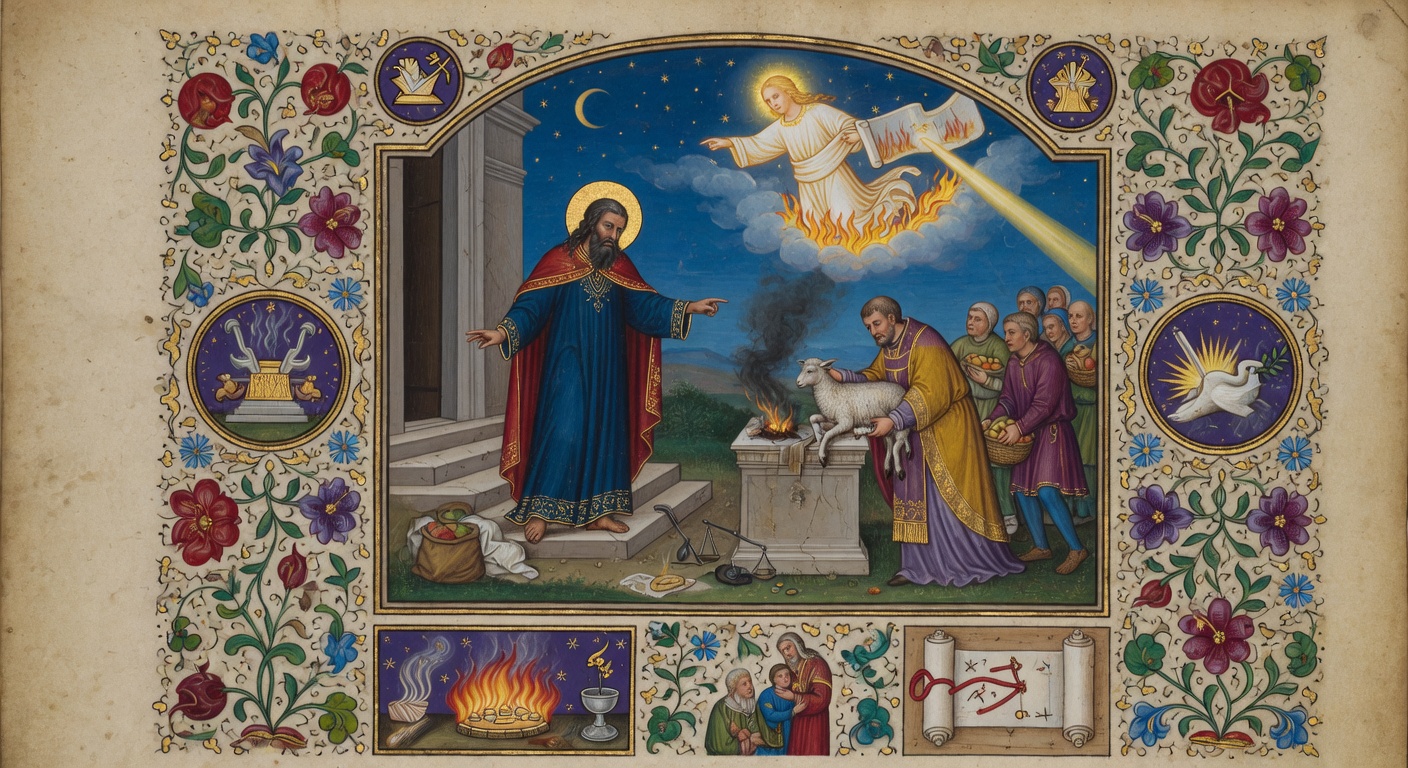
 1or, behold, the day cometh, that shall burn as an oven; and all the proud, yea, and all that do wickedly, shall be stubble: and the day that cometh shall burn them up, saith the LORD of hosts, that it shall leave them neither root nor branch.
2 But unto you that fear my name shall the Sun of righteousness arise with healing in his wings; and ye shall go forth, and grow up as calves of the stall.
3 And ye shall tread down the wicked; for they shall be ashes under the soles of your feet in the day that I shall do this, saith the LORD of hosts.
4 Remember ye the law of Moses my servant, which I commanded unto him in Horeb for all Israel, with the statutes and judgments.
5 Behold, I will send you Elijah the prophet before the coming of the great and dreadful day of the LORD:
6 And he shall turn the heart of the fathers to the children, and the heart of the children to their fathers, lest I come and smite the earth with a curse.
← → arrow keys to navigate chapters · spacebar to play/pause audio
Did You Know?
Malachi 4 serves as the canonical conclusion to the Nevi'im in the Hebrew Bible, positioning its call to remember the Torah of Moses as the final prophetic exhortation before the Ketuvim.
The unique phrase "sun of righteousness" with healing in its wings draws on solar imagery from ancient Near Eastern religions but applies it to YHWH's eschatological justice.
Verses 5-6 provide the scriptural basis for the Jewish expectation of Elijah's return, which the New Testament identifies with John the Baptist in the Gospels.
The chapter's division differs in the Masoretic Text, where its content forms the concluding verses of chapter 3, highlighting editorial differences between Christian and Jewish traditions.
By juxtaposing the fiery judgment on the wicked with the promise of restoration through Elijah, it underscores the theological tension between divine wrath and covenantal reconciliation at the close of the Old Testament.