Zechariah 7 KJV
Justice and Mercy, Not Fasting
Zechariah Chapter 7: Justice and Mercy, Not Fasting
The inquiry originates specifically from Bethel, the former northern sanctuary where Jeroboam set up a golden calf, showing how former sites of idolatry now defer to Jerusalem's priests and prophets after the exile.
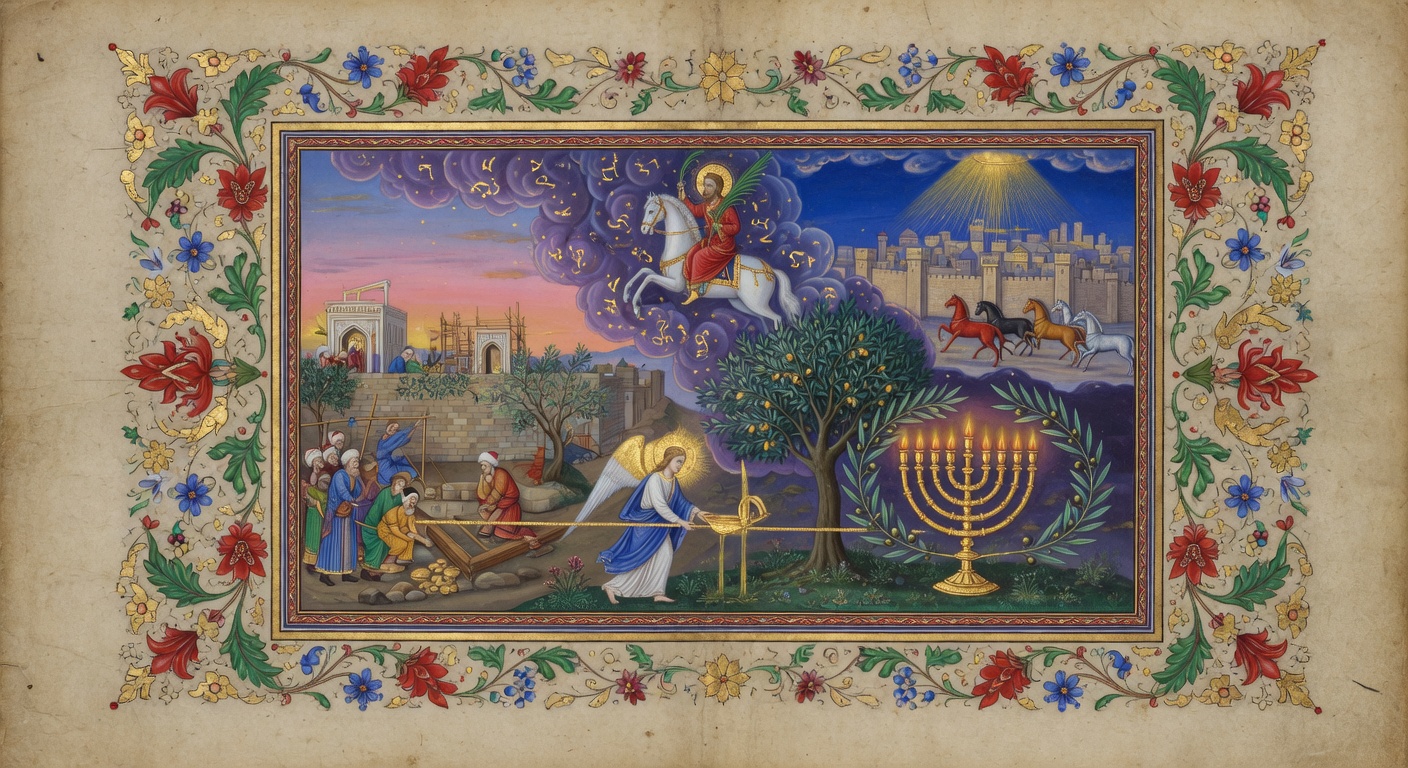
 1nd it came to pass in the fourth year of king Darius, that the word of the LORD came unto Zechariah in the fourth day of the ninth month, even in Chisleu;
2 When they had sent unto the house of God Sherezer and Regemmelech, and their men, to pray before the LORD,
3 And to speak unto the priests which were in the house of the LORD of hosts, and to the prophets, saying, Should I weep in the fifth month, separating myself, as I have done these so many years?
4 Then came the word of the LORD of hosts unto me, saying,
5 Speak unto all the people of the land, and to the priests, saying, When ye fasted and mourned in the fifth and seventh month, even those seventy years, did ye at all fast unto me, even to me?
6 And when ye did eat, and when ye did drink, did not ye eat for yourselves, and drink for yourselves?
7 Should ye not hear the words which the LORD hath cried by the former prophets, when Jerusalem was inhabited and in prosperity, and the cities thereof round about her, when men inhabited the south and the plain?
8 And the word of the LORD came unto Zechariah, saying,
9 Thus speaketh the LORD of hosts, saying, Execute true judgment, and shew mercy and compassions every man to his brother:
10 And oppress not the widow, nor the fatherless, the stranger, nor the poor; and let none of you imagine evil against his brother in your heart.
11 But they refused to hearken, and pulled away the shoulder, and stopped their ears, that they should not hear.
12 Yea, they made their hearts as an adamant stone, lest they should hear the law, and the words which the LORD of hosts hath sent in his spirit by the former prophets: therefore came a great wrath from the LORD of hosts.
13 Therefore it is come to pass, that as he cried, and they would not hear; so they cried, and I would not hear, saith the LORD of hosts:
14 But I scattered them with a whirlwind among all the nations whom they knew not. Thus the land was desolate after them, that no man passed through nor returned: for they laid the pleasant land desolate.
← → arrow keys to navigate chapters · spacebar to play/pause audio
Did You Know?
The inquiry originates specifically from Bethel, the former northern sanctuary where Jeroboam set up a golden calf, showing how former sites of idolatry now defer to Jerusalem's priests and prophets after the exile.
The fast in the fifth month, commemorating the temple's destruction, was a human-initiated practice during the Babylonian captivity rather than a Mosaic command, which God uses to expose self-centered ritual rather than true devotion.
Verses 9-10 condense the ethical core of earlier prophets by demanding justice and protection for the vulnerable, directly echoing the triad of justice-mercy-humility found in Micah 6:8 while applying it to post-exilic returnees.
The 'whirlwind' scattering in verse 14 employs the same rare Hebrew imagery Hosea used for Israel's earlier judgment, creating a deliberate literary bridge between the northern kingdom's fall and the southern kingdom's exile.
Even as temple reconstruction under Darius advanced, the delegation still sought permission to maintain mourning fasts, revealing a theological tension between ongoing grief over past loss and the prophetic call to active covenant ethics.
Commentary & Study Notes Jamieson-Fausset-Brown (1871) · Public Domain fourth year of... Darius — two years after the previous prophecies (Zec 1:1, &c.). Chisleu — meaning "torpidity," the state in which nature is in November, answering to this mo…
Classic verse-by-verse commentary on Zechariah 7 from Jamieson, Fausset & Brown (1871). Covers: Ii. Didactic part, seventh and eighth chapters. Obedience, rather than fasting, enjoined: its reward.
- 1
- fourth year of... Darius — two years after the previous prophecies (Zec 1:1, &c.). Chisleu — meaning "torpidity," the state in which nature is in November, answering to this month.
- 2
- they... sent unto... house of God — The Jews of the country sent to the house of God or congregation at Jerusalem. The altar was long since reared (Ezr 3:3), though the temple was not completed till two years afterwards (Ezr 6:15). The priests' duty was to give decision on points of the law (De 17:9; Mt 2:4). Beth-el is here used instead of Beth-Jehovah, because the religious authorities, rather than the house itself (designated "Beth-Jehovah" in Zec 7:3), are intended. The old Beth-el had long ceased to be the seat of idol-worship, so that the name had lost its opprobrious meaning. "The house of the Lord" is used for the congregation of worshippers headed by their priests (Zec 3:7; Ho 8:1). MAURER makes the "house of God" nominative to "sent." HENDERSON makes "Beth-el" so. Sherezer — an Assyrian name meaning, "Prefect of the treasury." Regemmelech — meaning, "The king's official." These names perhaps intimate the semi-heathen character of the inquirers, which may also be implied in the name "Beth-el" (Hebrew for "house of God"), so notorious once for its calf-worship. They sent to Jehovah's house as their forefathers sent to old Beth-el, not in the spirit of true obedience. pray before the Lord — literally, "to entreat the face of," that is, to offer sacrifices, the accompaniment of prayers, to conciliate His favor (1Sa 13:12).
Read all 12 notes on Zechariah 7 →