Zerubbabel
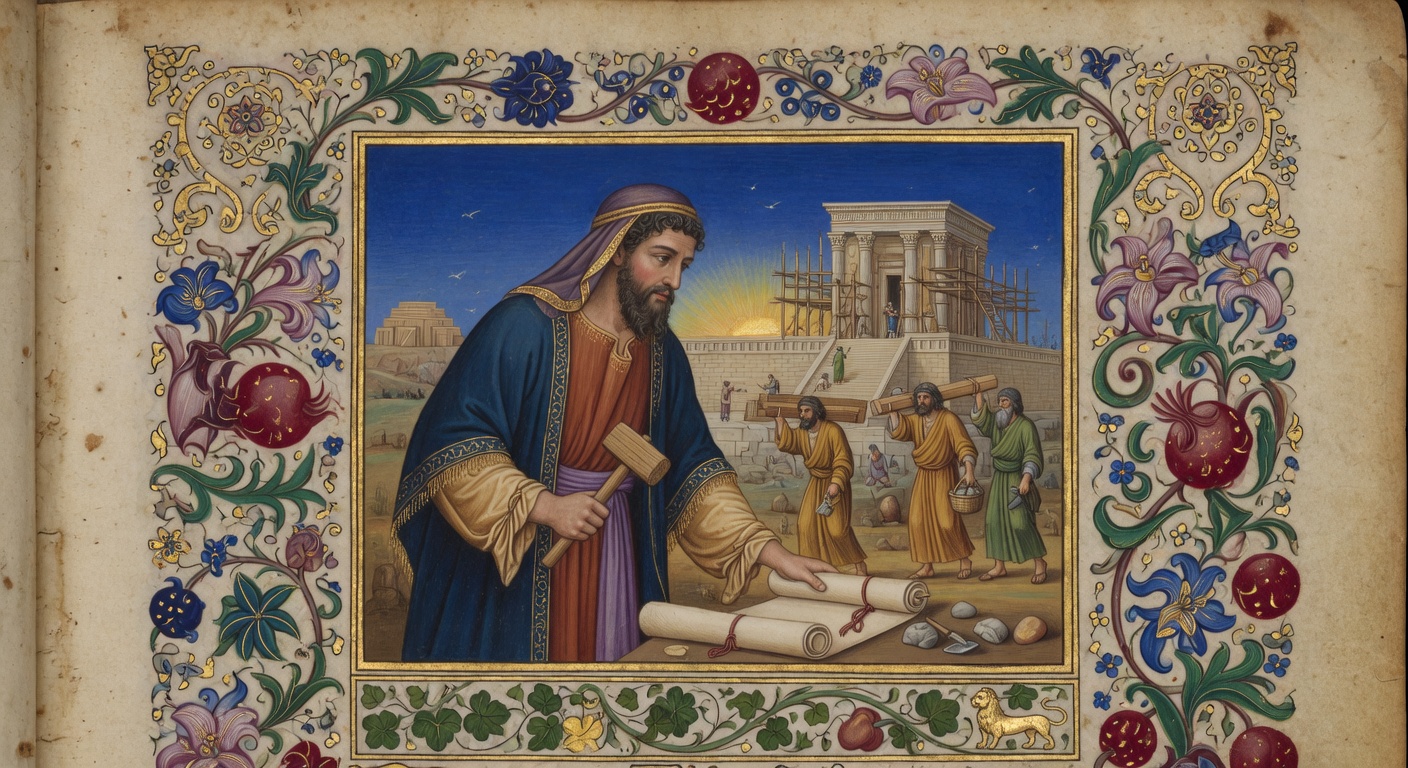
Zerubbabel, a descendant of King David, served as governor of Judah and led the first major wave of Jewish exiles back from Babylon around 538 BC under the decree of Persian ruler Cyrus. He directed the initial efforts to rebuild the Temple in Jerusalem, laying its foundation despite local opposition that halted progress for years until the prophets Haggai and Zechariah urged completion. This return and reconstruction ended the Babylonian captivity, restored worship in the land, and established the Second Temple period central to post-exilic Jewish life. His Davidic lineage and leadership also carry messianic weight, appearing in the genealogies of Jesus and in prophecies symbolizing renewed covenant hope.
Biography
- Occupation
- Governor of Judah
- Tribe
- Judah (royal family)
- Father
- Shealtiel
- Era
- Post-Exile (c. 520 BC)
- Nationality
- Judean
- Also Known As
- Sheshbazzar (possibly)
Family
Did You Know?
Zerubbabel's name, derived from Akkadian meaning 'seed of Babylon,' indicates he was likely born in captivity, underscoring how Persian policy allowed exiled royalty to retain leadership roles upon return.
In Haggai 2:23, God declares Zerubbabel His signet ring, symbolically reversing the judgment on Jehoiachin in Jeremiah 22:24 and restoring Davidic authority under foreign rule.
Zechariah 4 presents Zerubbabel as the one who will complete the temple 'not by might nor by power, but by my Spirit,' a message delivered amid Samaritan opposition that halted construction for over a decade.
Ezra 2 lists Zerubbabel returning with nearly 50,000 people including temple servants and livestock, yet the group faced severe economic hardship and identity conflicts with local populations claiming shared heritage.
Though a Davidic heir and Persian-appointed governor, Zerubbabel vanishes from records after temple dedication around 516 BC, leading scholars to note his potential role in early messianic expectations without any recorded coronation.
Key Passages
Zerubbabel Leads the Return
Ezra 2:1-2
This passage shows God's loving provision in raising Zerubbabel to lead His people home, sparking hope and renewal after exile.
 1ow these are the children of the province that went up out of the captivity, of those which had been carried away, whom Nebuchadnezzar the king of Babylon had carried away unto Babylon, and came again unto Jerusalem and Judah, every one unto his city;
Temple Foundation Laid
Ezra 3:8-11
This passage shows Zerubbabel leading God's people to restore worship, sparking joyful praise that renews hope after exile.
8ow in the second year of their coming unto the house of God at Jerusalem, in the second month, began Zerubbabel the son of Shealtiel, and Jeshua the son of Jozadak, and the remnant of their brethren the priests and the Levites, and all they that were come out of the captivity unto Jerusalem; and appointed the Levites, from twenty years old and upward, to set forward the work of the house of the LORD.
Not by Might but by My Spirit
Zechariah 4:6-10
This passage reminds us that God's purposes advance through the Spirit's power, not our own strength or resources.
 6hen he answered and spake unto me, saying, This is the word of the LORD unto Zerubbabel, saying, Not by might, nor by power, but by my spirit, saith the LORD of hosts.