Abimelech
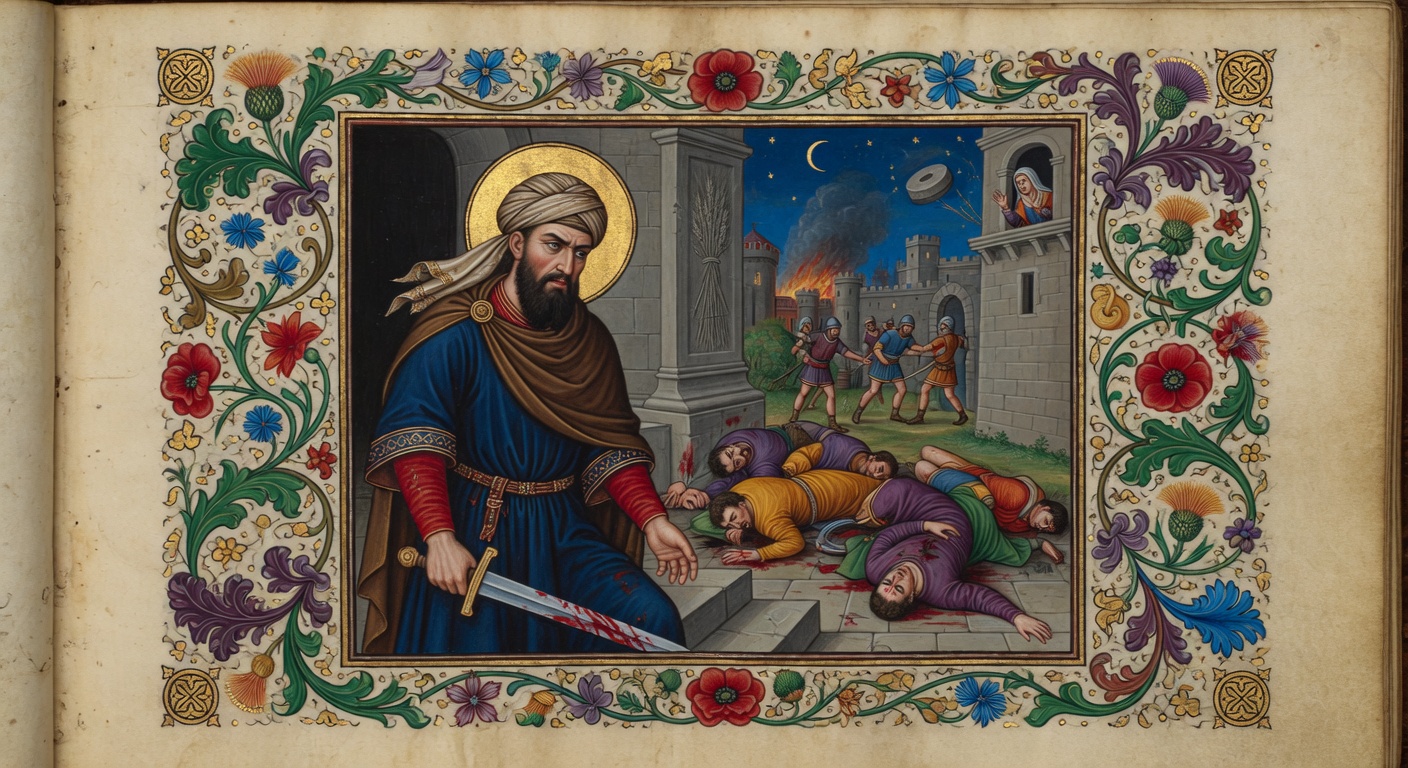
Abimelech, the son of Gideon by a concubine from Shechem, seized power after his father's death by convincing the Shechemites to fund his coup and then murdering his seventy half-brothers, leaving only Jotham alive to deliver a curse. He ruled as a self-appointed king for three years amid growing internal strife until God sent an evil spirit that provoked rebellion, culminating in his fatal injury when a woman dropped a millstone from a tower during the siege of Thebez. This narrative in Judges 9 illustrates the cycle of violence and failed leadership that followed Gideon's judgeship, warning against the human desire for monarchy apart from divine appointment and demonstrating God's judgment on tyrannical ambition.
Biography
- Occupation
- Self-proclaimed King
- Tribe
- Manasseh
- Father
- Gideon (Jerubbaal)
- Mother
- Concubine from Shechem
- Era
- Judges (c. 1122-1119 BC)
- Nationality
- Israelite
Family
Did You Know?
Abimelech's name, meaning "my father is king," stands in direct contrast to his father Gideon's repeated refusals of hereditary rule, underscoring the son's rejection of Israel's traditional theocratic leadership.
Abimelech funded his coup by drawing seventy shekels of silver from the treasury of Shechem's temple of Baal-berith, a detail that reveals the city's syncretistic religious practices and the economic role of Canaanite shrines in funding political violence.
After murdering his seventy half-brothers on a single stone at Ophrah, Abimelech spared only the youngest, Jotham, whose subsequent parable of the trees from Mount Gerizim is the Bible's earliest extended allegory and functions as political satire against illegitimate rule.
During the siege of Thebez, Abimelech was fatally injured when an unnamed woman dropped an upper millstone from the city tower, prompting him to order his armor-bearer to finish him so that it could never be said "a woman killed him."
Abimelech's three-year reign, the first explicit attempt at kingship in the book of Judges, ended without dynastic succession and is framed by the narrator as divine retribution orchestrated through the very Shechemites who had initially crowned him.
Key Passages
Abimelech Kills His Brothers
Judges 9:1-6
This passage shows how selfish ambition for power can destroy families and communities when God is not honored as true leader.
 1nd Abimelech the son of Jerubbaal went to Shechem unto his mother’s brethren, and communed with them, and with all the family of the house of his mother’s father, saying,
Jotham's Parable
Judges 9:7-15
This parable warns that elevating unworthy leaders brings ruin, while true service often comes from the humble and fruitful.
7nd when they told it to Jotham, he went and stood in the top of mount Gerizim, and lifted up his voice, and cried, and said unto them, Hearken unto me, ye men of Shechem, that God may hearken unto you.
Abimelech's Death
Judges 9:50-57
This passage reveals God's justice in humbling ruthless ambition, assuring us that evil leaders cannot escape His righteous judgment.
 50hen went Abimelech to Thebez, and encamped against Thebez, and took it.