Deborah
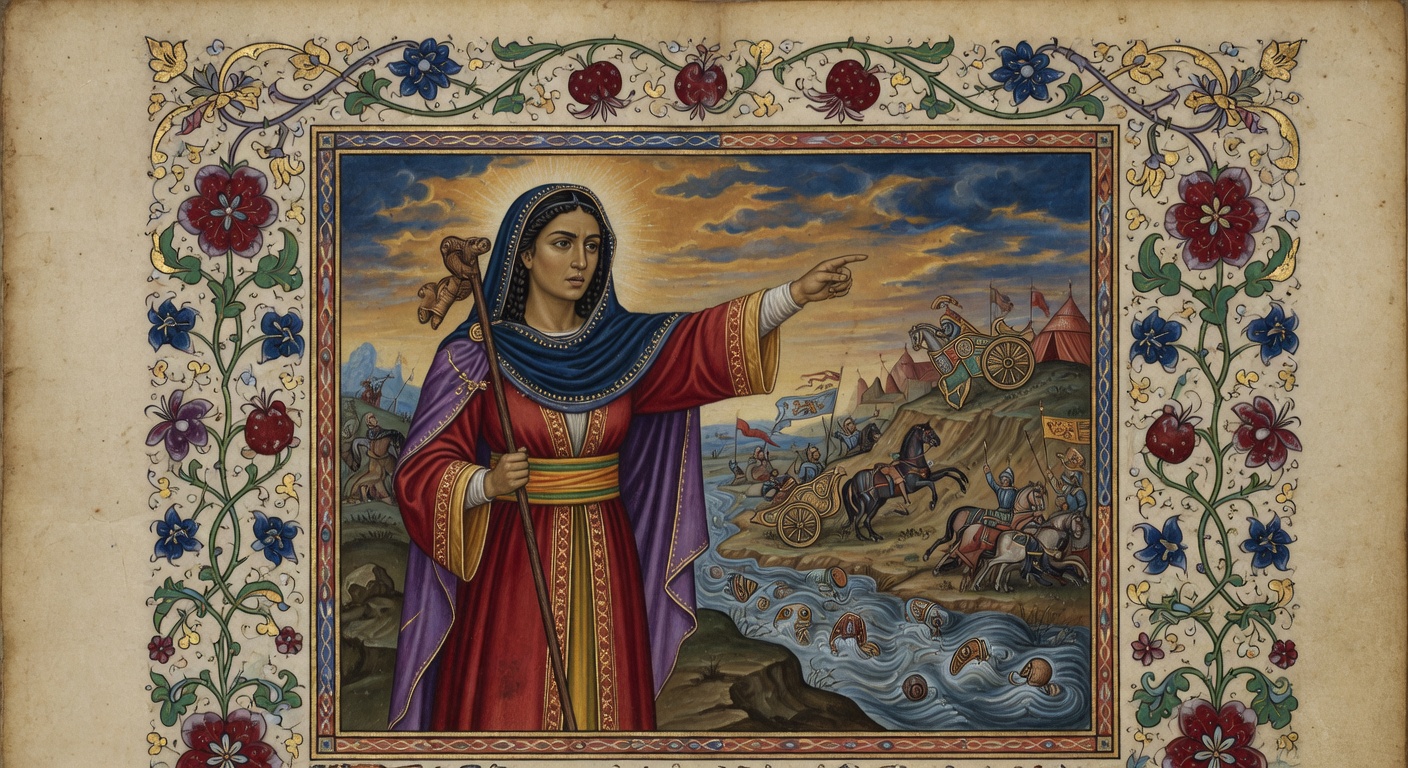
Deborah served as a prophetess and judge in Israel during a period of oppression by the Canaanite king Jabin and his army commander Sisera. She received divine instruction to summon Barak and lead the Israelite forces into battle at Mount Tabor, resulting in a decisive victory through a sudden storm that routed the Canaanite chariots and led to Sisera's death at the hands of Jael. The account in Judges 4 details these events, while chapter 5 preserves the Song of Deborah, a poetic celebration of the triumph. This narrative underscores God's use of a woman in spiritual and military leadership to deliver His people and affirms themes of faith, obedience, and divine justice in Scripture.
Biography
- Occupation
- Judge, Prophetess
- Tribe
- Ephraim
- Spouse
- Lappidoth
- Era
- Judges (c. 1200 BC)
- Nationality
- Israelite
Family
Did You Know?
Deborah is the only judge in the Book of Judges explicitly identified as both a prophetess and a judicial authority who settled disputes under a palm tree between Ramah and Bethel, a site suggesting she operated outside traditional city gates in a region linked to Ephraimite territory.
The Song of Deborah in Judges 5 preserves archaic Hebrew poetry possibly composed in the late 12th century BC, describing cosmic participation where stars and the swollen Kishon River contributed to the defeat of Sisera's technologically superior force of 900 iron chariots.
Deborah's prophecy that Sisera's defeat would be accomplished by a woman was fulfilled not by herself but by Jael, a Kenite outsider whose tent-peg killing inverted expectations of male military honor in Canaanite and Israelite cultures.
Barak refused to lead the Israelite coalition unless Deborah accompanied him, resulting in her presence at the battle and the transfer of battlefield glory to Jael, underscoring Deborah's role as indispensable spiritual authority rather than combat commander.
Although titled 'wife of Lappidoth,' Deborah's husband receives no further mention or lineage in the text, a striking omission that contrasts with the detailed genealogies typically attached to male leaders in the same period.
Key Passages
Deborah Judges Israel
Judges 4:1-10
In a patriarchal culture, God raises up a woman as prophet, judge, and military leader - demonstrating that He calls and empowers whomever He chooses regardless of social expectations.
 1nd the children of Israel again did evil in the sight of the LORD, when Ehud was dead.
Victory over Sisera
Judges 4:14-24
Deborah's faith-filled leadership inspires Barak and Israel to defeat a vastly superior army, showing that courage rooted in God's promises can overcome any odds.
14nd Deborah said unto Barak, Up; for this is the day in which the LORD hath delivered Sisera into thine hand: is not the LORD gone out before thee? So Barak went down from mount Tabor, and ten thousand men after him.
Song of Deborah
Judges 5:1-12
This ancient victory hymn celebrates God as the divine warrior who fights for His people, and honors the courage of those who volunteered freely for battle.
 1hen sang Deborah and Barak the son of Abinoam on that day, saying,