Amos
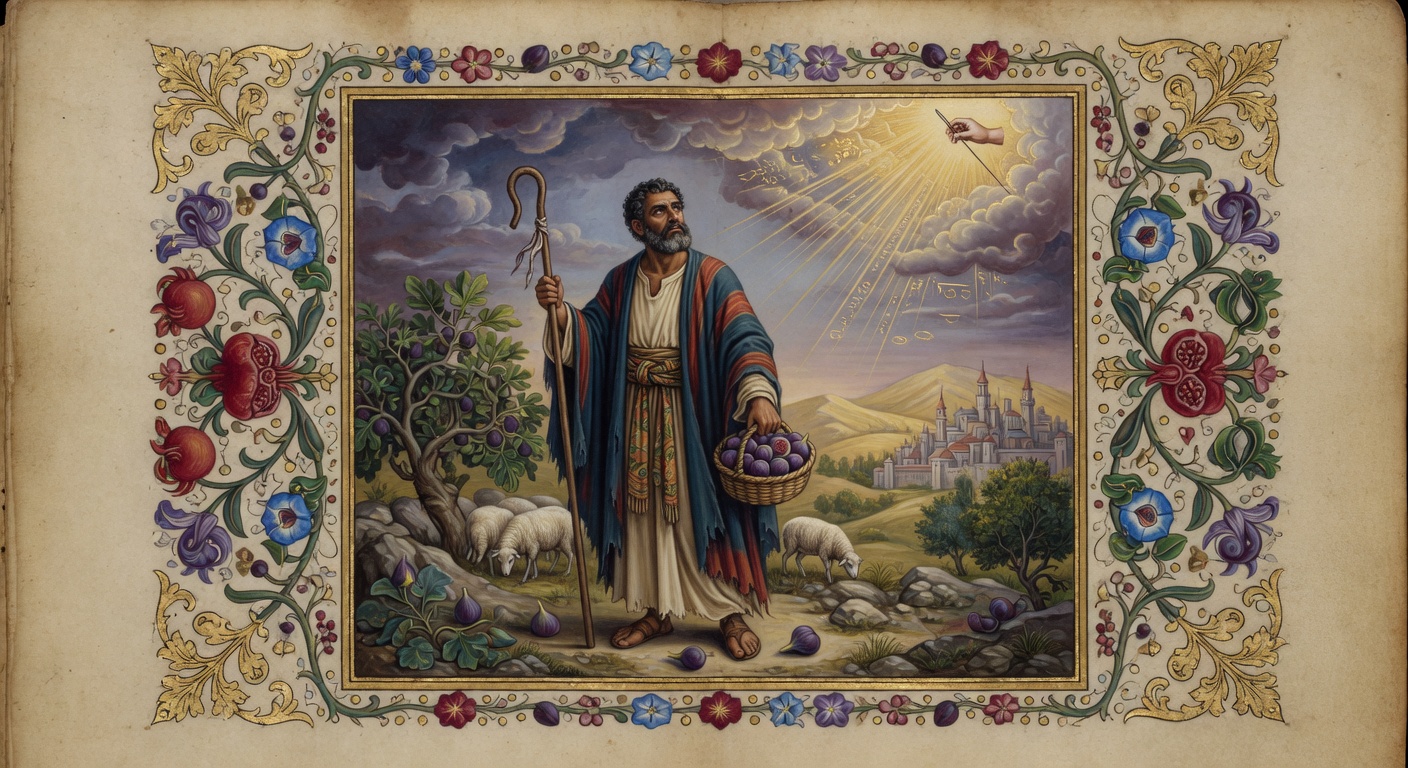
Amos was a shepherd and tender of sycamore figs from Tekoa in Judah who received a divine call to leave his rural occupation and deliver oracles of judgment to the northern kingdom of Israel during the prosperous reign of Jeroboam II. He confronted the nation’s elite for exploiting the poor through dishonest commerce, bribery in the courts, and hollow religious observances that ignored covenant ethics. The resulting book records five visions culminating in the prediction of exile, underscoring that divine favor does not exempt any people from accountability for systemic injustice. As one of the earliest written prophetic works, Amos establishes the scriptural principle that authentic worship must produce righteousness and care for the vulnerable, shaping later prophetic and ethical traditions.
Biography
- Occupation
- Prophet, Shepherd, Fig Farmer
- Era
- Divided Kingdom (c. 760-750 BC)
- Nationality
- Judean
Did You Know?
Amos came from the tiny Judean hamlet of Tekoa, a shepherd-farmer who pierced sycamore figs to ripen them, yet he delivered oracles exclusively in the rival northern kingdom at Bethel, the royal sanctuary of Jeroboam II.
His opening oracles begin not with Israel but with a ring of surrounding nations, using the repeated formula "For three transgressions and for four" to lull Israelite listeners before pivoting the same judgment formula onto them for selling the poor "for a pair of sandals."
Amos records the earliest datable prophetic book, anchored to a "two years before the earthquake" that archaeologists have linked to a massive 8th-century seismic event confirmed at multiple sites.
When the priest Amaziah ordered him to stop prophesying and flee to Judah, Amos replied that he had never belonged to any prophetic guild and was merely a herdsman whom God had seized, marking the first explicit clash between a temple official and an independent prophet.
The book closes with a sudden reversal from total destruction to an agricultural restoration so abundant that the plowman overtakes the reaper, an image scholars link to ancient Near Eastern treaty-curse reversals.
Key Passages
Amos's Call
Amos 7:14-15
This passage shows that God delights to call ordinary people from everyday work to speak His word with courage and faithfulness.
 14hen answered Amos, and said to Amaziah, I was no prophet, neither was I a prophet’s son; but I was an herdman, and a gatherer of sycomore fruit:
Let Justice Roll Down
Amos 5:21-24
This passage teaches that God cherishes justice and mercy far more than empty rituals or songs.
 21 hate, I despise your feast days, and I will not smell in your solemn assemblies.
Judgment on Israel
Amos 2:6-16
This passage shows God's heart for justice, reminding us that true faith requires caring for the vulnerable instead of exploiting them.
6hus saith the LORD; For three transgressions of Israel, and for four, I will not turn away the punishment thereof; because they sold the righteous for silver, and the poor for a pair of shoes;