Hosea
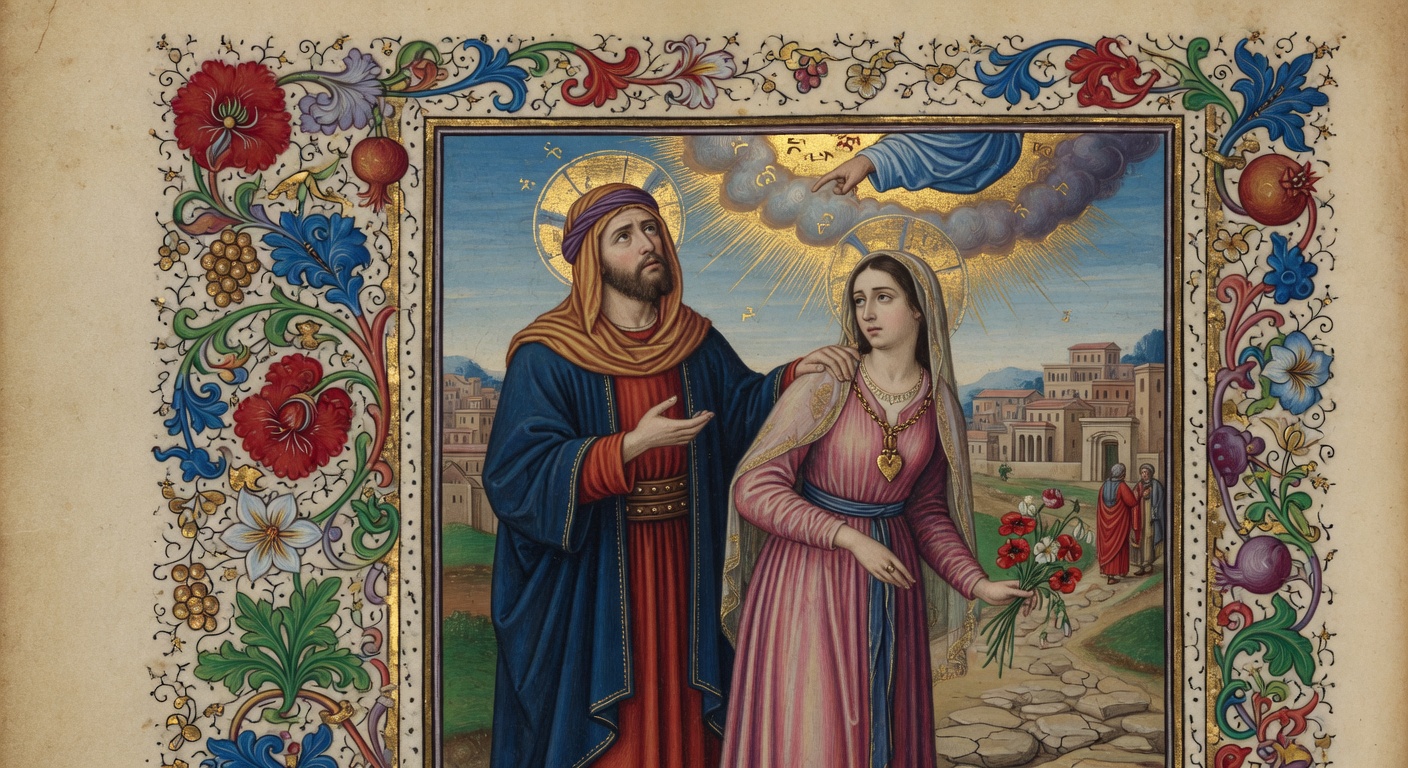
Hosea was an eighth-century BC prophet in the northern kingdom of Israel whose marriage became a living parable when God commanded him to wed Gomer, a woman who repeatedly proved unfaithful. Despite her adulteries, Hosea was instructed to redeem and restore her at personal cost, illustrating God’s covenant love for Israel amid the nation’s idolatry and spiritual adultery. The book that bears his name records both this domestic narrative and accompanying oracles of judgment and future restoration, underscoring themes of steadfast mercy and the possibility of renewed relationship. This account remains significant because it provides one of Scripture’s clearest depictions of divine faithfulness persisting even when the covenant partner is undeserving.
Biography
- Occupation
- Prophet
- Father
- Beeri
- Spouse
- Gomer
- Children
- Jezreel, Lo-Ruhamah, Lo-Ammi
- Era
- Divided Kingdom (c. 755-715 BC)
- Nationality
- Israelite
Family
Did You Know?
Hosea, the only writing prophet from Israel's northern kingdom, directed his oracles primarily against the house of Jehu during the chaotic final decades before Assyria's conquest of Samaria in 722 BC.
Hosea's three children received divinely mandated names. Jezreel, Lo-Ruhamah ('no compassion'), and Lo-Ammi ('not my people'). That functioned as public signs announcing the end of the northern dynasty and temporary revocation of Israel's covenant status.
After Gomer's departure, Hosea redeemed her for fifteen shekels of silver plus a homer and lethech of barley, an amount equivalent to the compensation price for a slave, thereby enacting Yahweh's costly restoration of wayward Israel.
Hosea 2:16 contains the earliest prophetic announcement that Israel would one day cease addressing God as 'my Baal' (master) and instead call him 'my Ish' (husband), deliberately subverting Baal fertility-cult language.
The final chapter of Hosea employs rare agricultural imagery of God as dew to Israel and a cypress tree, promising future healing of apostasy rather than the dominant judgment themes found throughout the rest of the book.
Key Passages
Hosea Marries Gomer
Hosea 1:1-9
God commands Hosea to marry an unfaithful woman as a living parable of Israel's spiritual adultery - making the prophet's personal pain a window into God's heartbreak over His people.
 1he word of the LORD that came unto Hosea, the son of Beeri, in the days of Uzziah, Jotham, Ahaz, and Hezekiah, kings of Judah, and in the days of Jeroboam the son of Joash, king of Israel.
God's Unfailing Love
Hosea 3:1-5
Despite Israel's persistent unfaithfulness, God declares 'How can I give you up?' - revealing that divine love persists even when betrayed, pursuing the beloved at great cost.
1hen said the LORD unto me, Go yet, love a woman beloved of her friend, yet an adulteress, according to the love of the LORD toward the children of Israel, who look to other gods, and love flagons of wine.
Call to Return
Hosea 14:1-9
Hosea pleads with Israel to return to God who will heal their waywardness and love them freely - offering restoration that depends entirely on God's grace, not Israel's merit.
 1 Israel, return unto the LORD thy God; for thou hast fallen by thine iniquity.