Barabbas
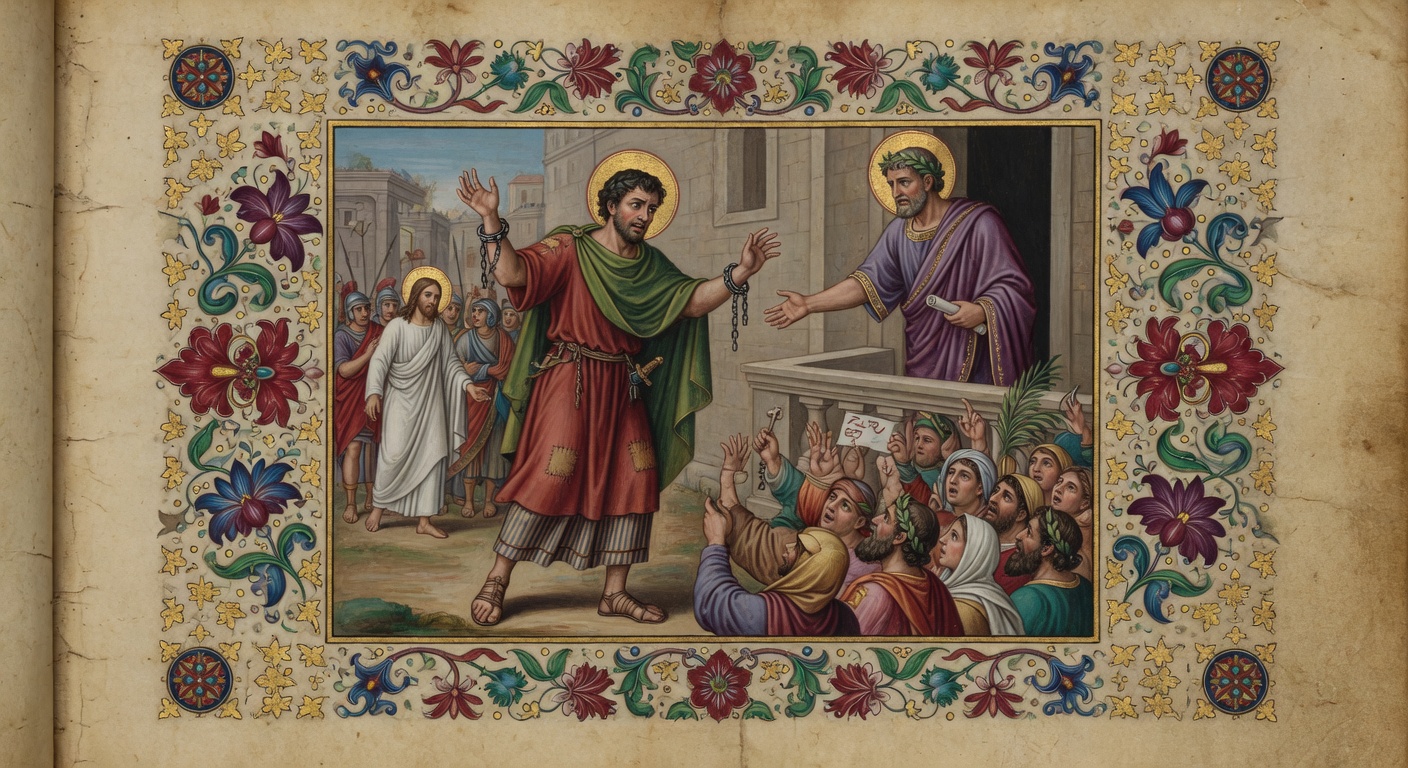
Barabbas was a criminal and insurrectionist imprisoned by the Romans for murder and rebellion in Jerusalem around the time of Jesus' trial. During the Passover festival, Pontius Pilate followed the custom of releasing one prisoner chosen by the crowd and offered either Barabbas or Jesus, but the assembled people demanded Barabbas' freedom while calling for Jesus' crucifixion. This episode, recorded in all four Gospels, forms a key part of the Passion narrative and highlights the political pressures on Pilate amid first-century tensions between Roman authority and Jewish expectations. Its significance lies in showing the substitution of a guilty man for the innocent Jesus, advancing the events that led to the crucifixion.
Biography
- Occupation
- Insurrectionist, Robber
- Era
- New Testament (c. AD 30-33)
- Nationality
- Jewish
- Also Known As
- Jesus Barabbas (some manuscripts)
Did You Know?
Barabbas's name appears as "Jesus Barabbas" in several ancient manuscripts of Matthew 27:16-17, creating a direct onomastic parallel with Jesus of Nazareth as two men both titled "son of the father."
Mark 15:7 and Luke 23:19 specify that Barabbas had committed murder during an anti-Roman insurrection in Jerusalem, identifying him as a political insurgent rather than a generic robber.
The Passover prisoner-release custom invoked by Pilate is unattested in any other ancient source, indicating it was likely an ad-hoc Roman concession to Jewish crowds rather than a regular "privilegium paschale."
Origen, writing in the third century, explicitly discussed the textual variant of Barabbas's name and its theological implication that the crowd chose one "Jesus" over another.
All four Gospels record Barabbas's release yet remain silent on his subsequent fate, leaving the insurrectionist as a narrative foil whose post-Passion life is unknown to both scripture and early Christian tradition.
Key Passages
Barabbas Released
Matthew 27:15-26
This passage shows Jesus taking a guilty man's place, reminding us that His sacrifice sets sinners free.
 15ow at that feast the governor was wont to release unto the people a prisoner, whom they would.
The Crowd Chooses Barabbas
John 18:39-40
This passage shows how easily people reject Jesus for sin, highlighting the costly exchange where He takes our place to set us free.
 39ut ye have a custom, that I should release unto you one at the passover: will ye therefore that I release unto you the King of the Jews?