Goliath
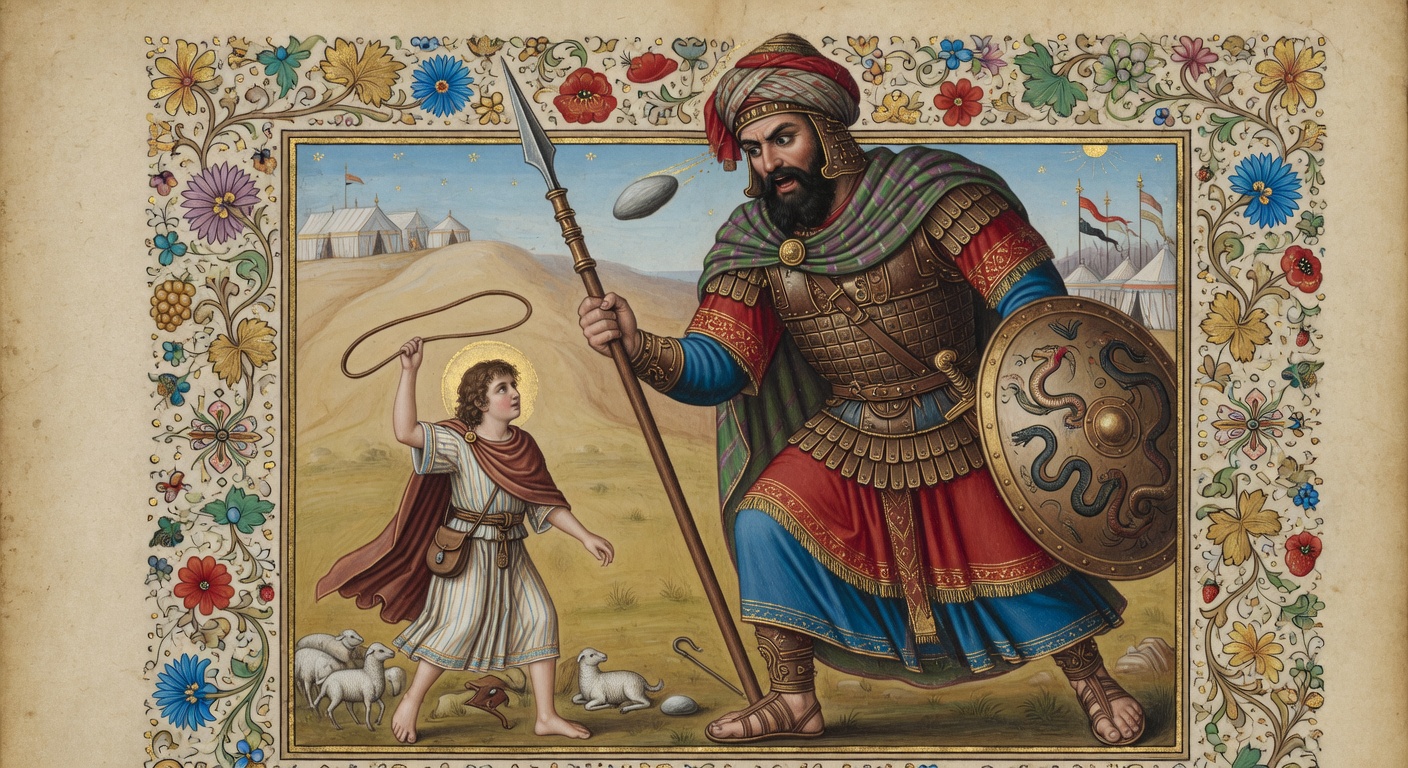
Goliath was a formidable giant warrior from the Philistine city of Gath who stood over nine feet tall and served as the champion of the Philistine army during a conflict with the Israelites in the Valley of Elah. For forty days, he taunted the Israelite forces, challenging any of their warriors to single combat to determine the outcome of the battle, which instilled fear among King Saul's troops. The young shepherd David, armed only with a sling and five stones while trusting in God's power, accepted the challenge and struck Goliath in the forehead, causing him to fall, after which David beheaded him with his own sword, leading to an Israelite victory. This event holds significant importance in Scripture as it highlights themes of faith overcoming seemingly insurmountable odds, marks David's emergence as a future king, and illustrates God's deliverance of His people through unexpected means.
Biography
- Died
- c. 1025 BC, Valley of Elah
- Occupation
- Warrior, Champion of Philistines
- Era
- United Kingdom
- Nationality
- Philistine
Did You Know?
Goliath's height of six cubits and a span equates to roughly 9 feet 9 inches, far exceeding the average Iron Age male stature of about 5 feet 3 inches in the Levant and underscoring the text's emphasis on his intimidating presence as a champion.
The Philistines' monopoly on iron smelting is reflected in Goliath's 15-pound iron spearhead and bronze scale armor weighing 125 pounds, equipment that gave them a technological edge over Israelite forces armed primarily with bronze.
Goliath's 40-day challenge to single combat aligns with ancient Near Eastern practices of representative warfare, where a champion's victory could avert larger battles, a custom also attested in Hittite and Egyptian records.
2 Samuel 21 references four additional giants from Gath, including one named Lahmi described as Goliath's brother, indicating he may have belonged to a lineage or guild of elite tall warriors associated with the city.
David's use of Goliath's own sword to behead him after the sling strike highlights the irony in the narrative, as the giant's superior weaponry ultimately seals his defeat against the lightly armed shepherd.
Key Passages
Goliaths Challenge
1 Samuel 17:4-11
This passage reveals how overwhelming threats can paralyze us with fear, yet God raises up unexpected faith to overcome them.
 4nd there went out a champion out of the camp of the Philistines, named Goliath, of Gath, whose height was six cubits and a span.
David Defeats Goliath
1 Samuel 17:40-51
This story shows how trusting God gives ordinary people courage to overcome impossible challenges through faith, not force.
40nd he took his staff in his hand, and chose him five smooth stones out of the brook, and put them in a shepherd’s bag which he had, even in a scrip; and his sling was in his hand: and he drew near to the Philistine.