Saul (King)
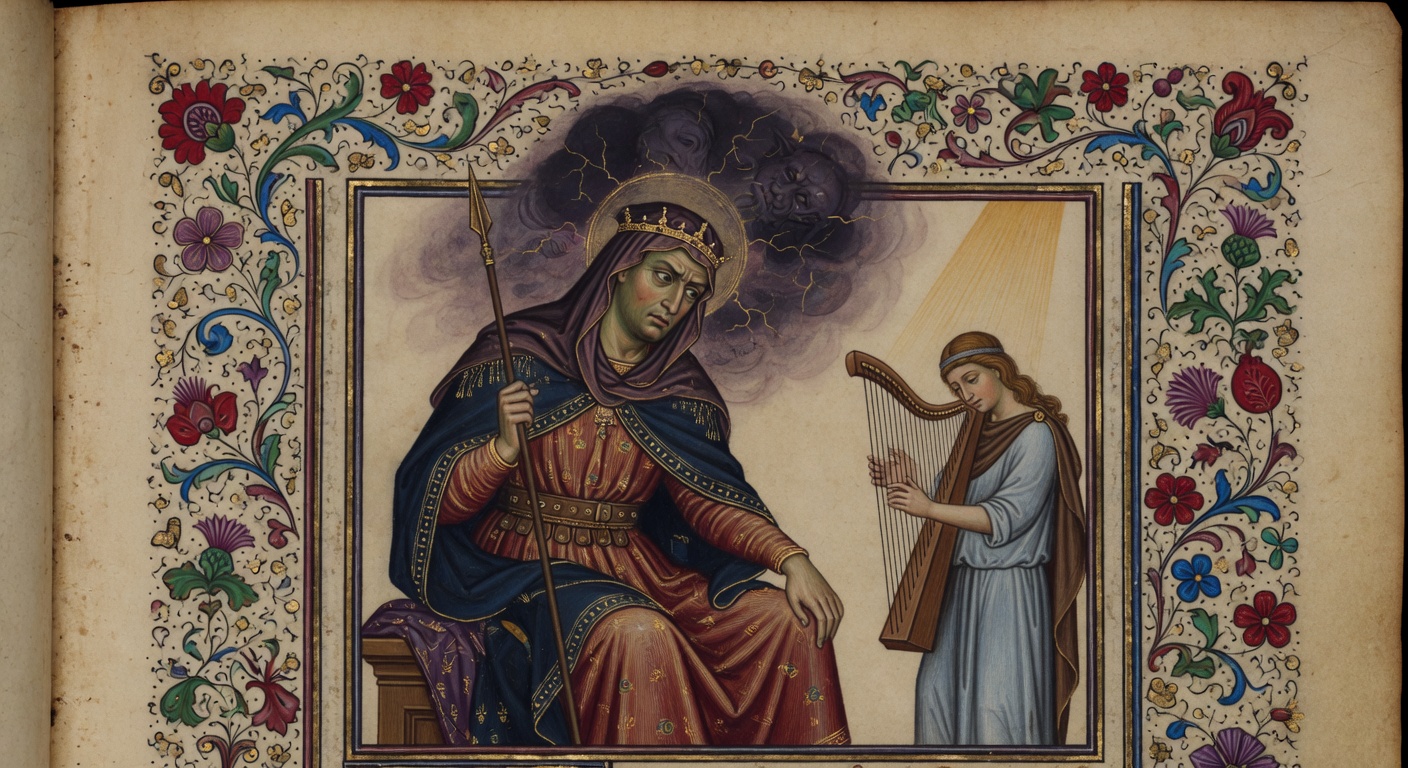
Saul was anointed as the first king of Israel by the prophet Samuel after the people demanded a monarch to lead them like surrounding nations. Despite early military victories, his repeated disobedience. Such as offering unauthorized sacrifices and sparing the Amalekites. Resulted in God rejecting him as ruler and directing Samuel to anoint the young David instead. Consumed by jealousy, Saul then persecuted David for years, driving him into exile while an evil spirit tormented the king. This account in 1 Samuel underscores the biblical principle that obedience matters more than position and marks the shift from the era of judges to the monarchy, paving the way for the Davidic line.
Biography
- Born
- c. 1080 BC, Gibeah
- Died
- c. 1010 BC, Mount Gilboa
- Occupation
- King of Israel
- Tribe
- Benjamin
- Father
- Kish
- Spouse
- Ahinoam
- Children
- Jonathan, Ishbosheth, Michal, Merab
- Era
- United Kingdom (c. 1050-1010 BC)
- Nationality
- Israelite
Family
Did You Know?
Saul was privately anointed by Samuel while searching for his father's lost donkeys, an event that occurred before his public selection by lot among Israel's tribes at Mizpah, highlighting the tension between divine choice and popular confirmation in early monarchy.
Despite his royal status, Saul was found plowing fields with oxen when messengers arrived seeking aid for Jabesh-Gilead, illustrating how Israel's first king initially maintained a modest agrarian life rather than adopting immediate courtly separation.
Saul erected Israel's first recorded royal altar after his victory over the Philistines at Michmash, yet this act of devotion contrasted sharply with his later failure to fully execute the ban on Amalek, revealing inconsistencies in his religious observance.
The tall Benjamite king experienced ecstatic prophetic episodes both at his anointing and later among a group of prophets, prompting the popular saying "Is Saul also among the prophets?" which underscored the unexpected charismatic dimensions of his early reign.
In his final battle, Saul's body was displayed in the temple of Dagon after his suicide on Gilboa, an ironic desecration given his earlier zeal against idolatry and his own decrees banning mediums, which he himself violated by consulting the witch of Endor.
Key Passages
Saul Anointed King
1 Samuel 10:1-8
This passage reveals how God sovereignly chooses and empowers ordinary people to lead, guiding them with His Spirit for His greater purposes.
 1hen Samuel took a vial of oil, and poured it upon his head, and kissed him, and said, Is it not because the LORD hath anointed thee to be captain over his inheritance?
Saul's Disobedience
1 Samuel 15:10-23
This passage shows that God values wholehearted obedience above rituals or excuses, guiding us to follow Him fully for true blessing.
10hen came the word of the LORD unto Samuel, saying,
Saul Pursues David
1 Samuel 18:6-16
This passage shows how jealousy erodes a leader's heart while humble trust in God brings protection and favor amid rising opposition.
 6nd it came to pass as they came, when David was returned from the slaughter of the Philistine, that the women came out of all cities of Israel, singing and dancing, to meet king Saul, with tabrets, with joy, and with instruments of musick.
Death of Saul
1 Samuel 31:1-6
Saul's tragic end shows how rejecting God's guidance brings sorrow, gently urging us to walk faithfully with Him each day.
 1ow the Philistines fought against Israel: and the men of Israel fled from before the Philistines, and fell down slain in mount Gilboa.