Samuel
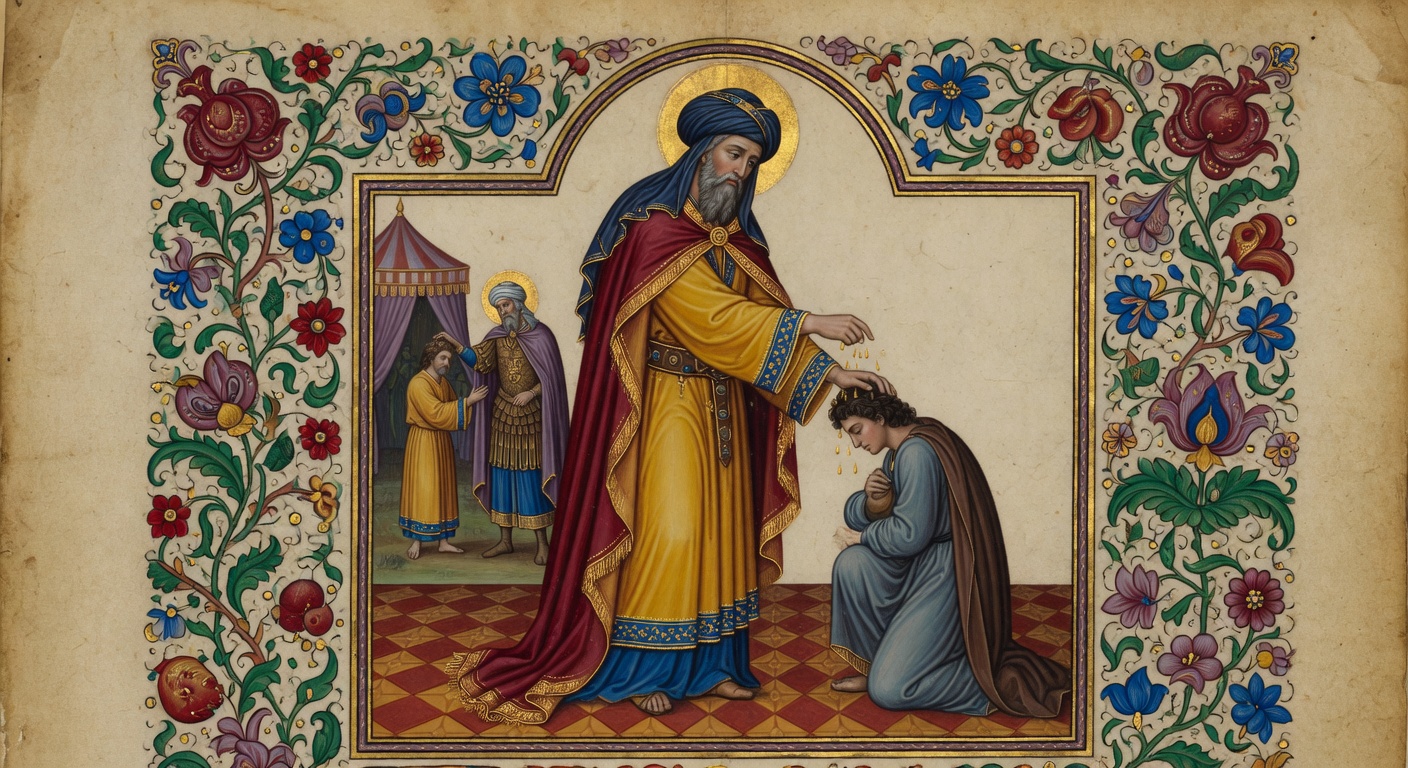
Samuel served as Israel's final judge and a major prophet during the transition from tribal leadership under the judges to a centralized monarchy. At God's instruction he anointed Saul as the first king, yet later confronted Saul's disobedience and anointed the shepherd David in his place, establishing the Davidic dynasty. These events underscore Scripture's emphasis on covenant faithfulness, the consequences of rejecting divine rule, and the preparation for the promised Messiah from David's line.
Biography
- Born
- c. 1105 BC, Ramah
- Died
- c. 1020 BC, Ramah
- Occupation
- Prophet, Judge, Priest
- Tribe
- Levi (Ephraim by residence)
- Father
- Elkanah
- Mother
- Hannah
- Children
- Joel, Abijah
- Era
- United Kingdom
- Nationality
- Israelite
Family
Did You Know?
Samuel is one of the few biblical figures whose birth narrative includes a specific song of praise by his mother Hannah, which shares striking linguistic parallels with the Magnificat of Mary in the New Testament.
Though genealogies confirm Samuel belonged to the Kohathite Levites, he performed priestly sacrifices at various altars outside Shiloh because Eli's sons had corrupted the central sanctuary, illustrating a pragmatic shift in worship practices during the late judges period.
Samuel organized formal companies of prophets at Ramah, Naioth, Bethel, and Gilgal that trained disciples in music, ecstatic utterance, and Torah study, creating institutional structures later used by Elijah and Elisha.
The spirit of Samuel summoned by the medium at Endor appeared wearing his distinctive mantle, the same garment he had used decades earlier to signal the tearing away of Saul's kingdom when David secretly cut its hem in the cave of En Gedi.
Jewish tradition in the Talmud ranks Samuel with Moses and Aaron, citing Psalm 99 where all three are named together as intercessors who called on the Lord and were answered, underscoring his status as the final bridge between the theocratic and monarchic eras.
Key Passages
God Calls Samuel
1 Samuel 3:1-21
A child hears God's voice in the night and learns to respond 'Speak, Lord, your servant is listening' - establishing the posture of receptivity that characterizes true prophets.
 1nd the child Samuel ministered unto the LORD before Eli. And the word of the LORD was precious in those days; there was no open vision.
Anointing of Saul
1 Samuel 10:1-8
Samuel anoints Israel's first king, marking the transition from theocracy to monarchy. This moment fulfills the people's demand but also begins a cautionary tale about human kingship.
 1hen Samuel took a vial of oil, and poured it upon his head, and kissed him, and said, Is it not because the LORD hath anointed thee to be captain over his inheritance?
Anointing of David
1 Samuel 16:1-13
Samuel learns that God rejects outward appearance as the criterion for leadership, choosing instead the youngest son whose heart is aligned with God's own.
1nd the LORD said unto Samuel, How long wilt thou mourn for Saul, seeing I have rejected him from reigning over Israel? fill thine horn with oil, and go, I will send thee to Jesse the Bethlehemite: for I have provided me a king among his sons.