Ezekiel 2 KJV
Ezekiel's Call
Ezekiel Chapter 2: Ezekiel's Call
The Spirit's entry into Ezekiel in verse 2 physically elevates him before any verbal commission, establishing that prophetic authority in the exile derives from pneumatic resurrection rather than priestly lineage or temple proximity.
 1nd he said unto me, Son of man, stand upon thy feet, and I will speak unto thee.
2 And the spirit entered into me when he spake unto me, and set me upon my feet, that I heard him that spake unto me.
3 And he said unto me, Son of man, I send thee to the children of Israel, to a rebellious nation that hath rebelled against me: they and their fathers have transgressed against me, even unto this very day.
4 For they are impudent children and stiffhearted. I do send thee unto them; and thou shalt say unto them, Thus saith the Lord GOD.
5 And they, whether they will hear, or whether they will forbear, (for they are a rebellious house,) yet shall know that there hath been a prophet among them.
6 And thou, son of man, be not afraid of them, neither be afraid of their words, though briers and thorns be with thee, and thou dost dwell among scorpions: be not afraid of their words, nor be dismayed at their looks, though they be a rebellious house.
7 And thou shalt speak my words unto them, whether they will hear, or whether they will forbear: for they are most rebellious.
8 But thou, son of man, hear what I say unto thee; Be not thou rebellious like that rebellious house: open thy mouth, and eat that I give thee.
9 And when I looked, behold, an hand was sent unto me; and, lo, a roll of a book was therein;
10 And he spread it before me; and it was written within and without: and there was written therein lamentations, and mourning, and woe.
← → arrow keys to navigate chapters · spacebar to play/pause audio
Did You Know?
The Spirit's entry into Ezekiel in verse 2 physically elevates him before any verbal commission, establishing that prophetic authority in the exile derives from pneumatic resurrection rather than priestly lineage or temple proximity.
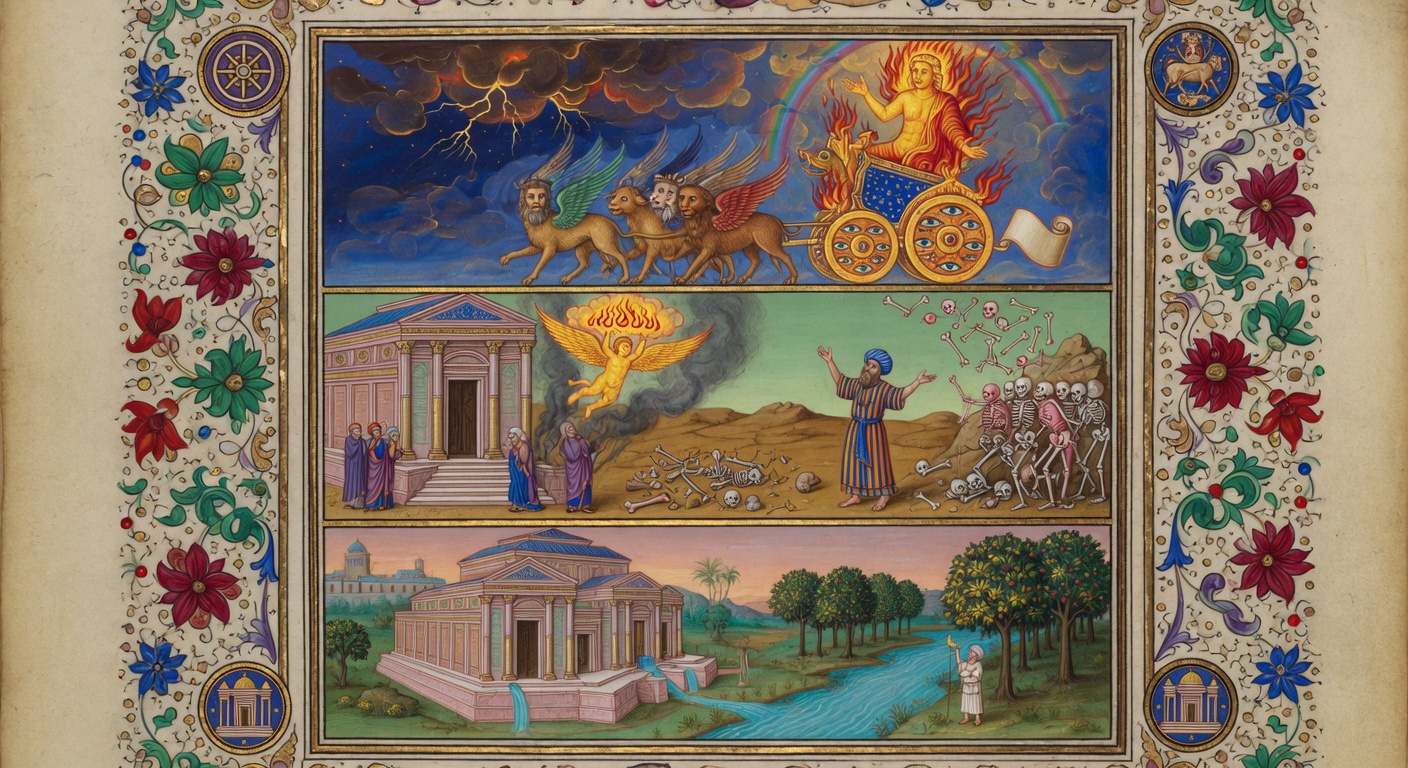
The repeated address 'son of man' in this chapter functions as a deliberate counterpoint to the throne-chariot vision of chapter 1, reminding the prophet of his mortal frailty amid the divine glory that once resided in the Jerusalem temple now destroyed.
God’s warning that the people are 'impudent children and stiffhearted' yet still requires the prophet to speak whether they 'will hear or whether they will forbear' reframes prophetic success as obedience rather than conversion, a theology later echoed in Jeremiah’s confessions.
The scroll written 'within and without' and filled with lamentations is consumed and tasted sweet, enacting an internalization of judgment that transforms the prophet into a living embodiment of the message before he utters a word.
Ezekiel’s placement among the Tel-abib exiles, addressed as a watchman to 'the rebellious nation' still in covenant with Yahweh, underscores that divine judgment and hope are now relocated from the land to the diaspora community itself.