Isaiah 4 KJV
The Branch of the Lord
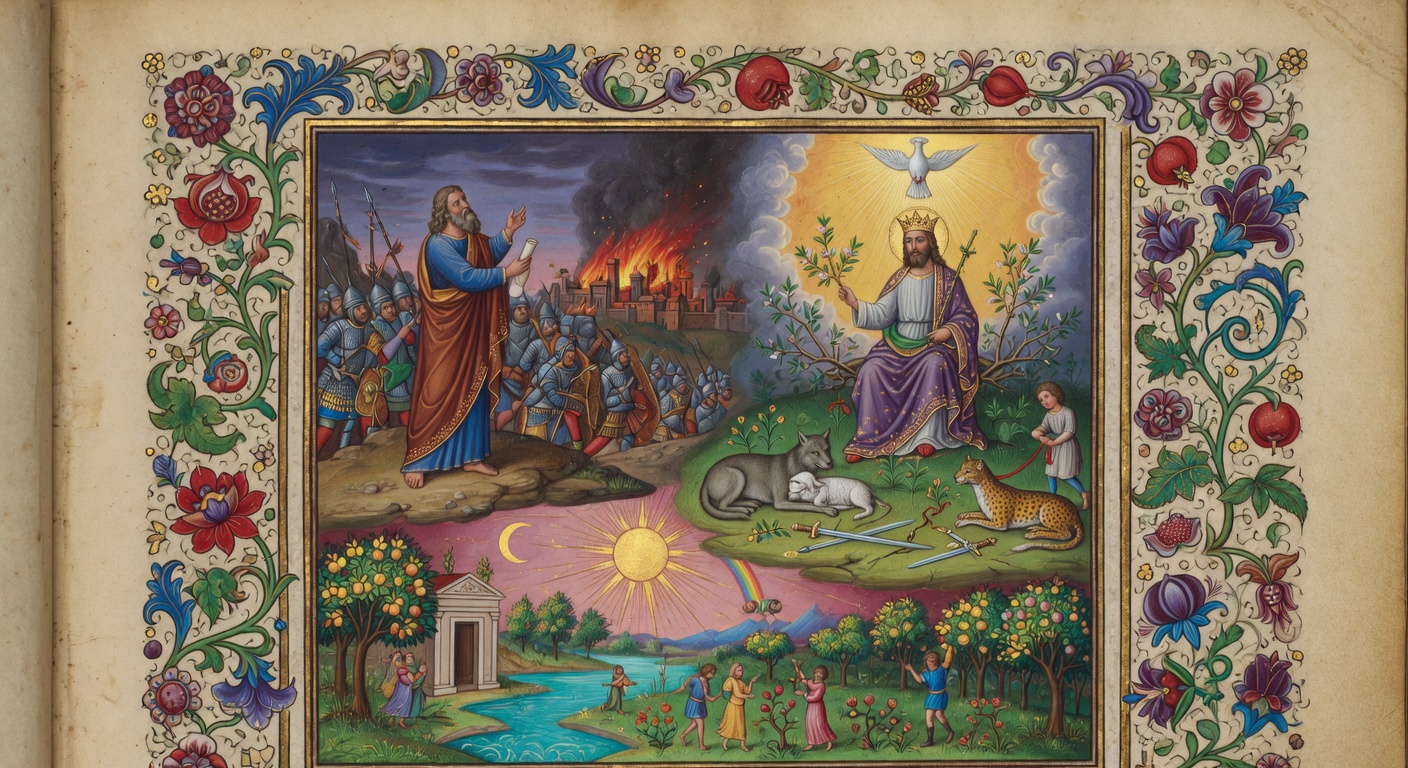
Isaiah Chapter 4: The Branch of the Lord
The chapter's depiction of the 'branch of the Lord' establishes an early messianic motif that resonates with later Old Testament prophecies, portraying the Messiah not merely as a ruler but as a source of divine beauty and fruitfulness for the remnant.
 1nd in that day seven women shall take hold of one man, saying, We will eat our own bread, and wear our own apparel: only let us be called by thy name, to take away our reproach.
2 In that day shall the branch of the LORD be beautiful and glorious, and the fruit of the earth shall be excellent and comely for them that are escaped of Israel.
3 And it shall come to pass, that he that is left in Zion, and he that remaineth in Jerusalem, shall be called holy, even every one that is written among the living in Jerusalem:
4 When the Lord shall have washed away the filth of the daughters of Zion, and shall have purged the blood of Jerusalem from the midst thereof by the spirit of judgment, and by the spirit of burning.
5 And the LORD will create upon every dwelling place of mount Zion, and upon her assemblies, a cloud and smoke by day, and the shining of a flaming fire by night: for upon all the glory shall be a defence.
6 And there shall be a tabernacle for a shadow in the day time from the heat, and for a place of refuge, and for a covert from storm and from rain.
← → arrow keys to navigate chapters · spacebar to play/pause audio
Did You Know?
The chapter's depiction of the 'branch of the Lord' establishes an early messianic motif that resonates with later Old Testament prophecies, portraying the Messiah not merely as a ruler but as a source of divine beauty and fruitfulness for the remnant.
Isaiah 4:5-6 employs Exodus typology by invoking the cloud by day and flaming fire by night, reimagining the wilderness guidance as eschatological shelter over Mount Zion, signifying God's intimate presence amid restored creation.
The purification of Zion's daughters through 'the spirit of judgment and burning' (v.4) foreshadows the refining work of the Holy Spirit, linking prophetic judgment to themes of sanctification found in New Testament pneumatology.
Positioned between oracles of judgment in chapter 3 and the vineyard song in chapter 5, Isaiah 4 serves as a pivotal hinge, illustrating the prophetic dialectic where divine wrath yields to promises of glory for the escaped remnant.
The reference to 'them that are escaped of Israel' (v.2) underscores the doctrine of the remnant, a recurring Isaianic theme that highlights survival through catastrophe as the foundation for future blessing, distinct from total annihilation.