Isaiah 50 KJV
Israel's Sin and the Servant's Obedience
Isaiah Chapter 50: Israel's Sin and the Servant's Obedience
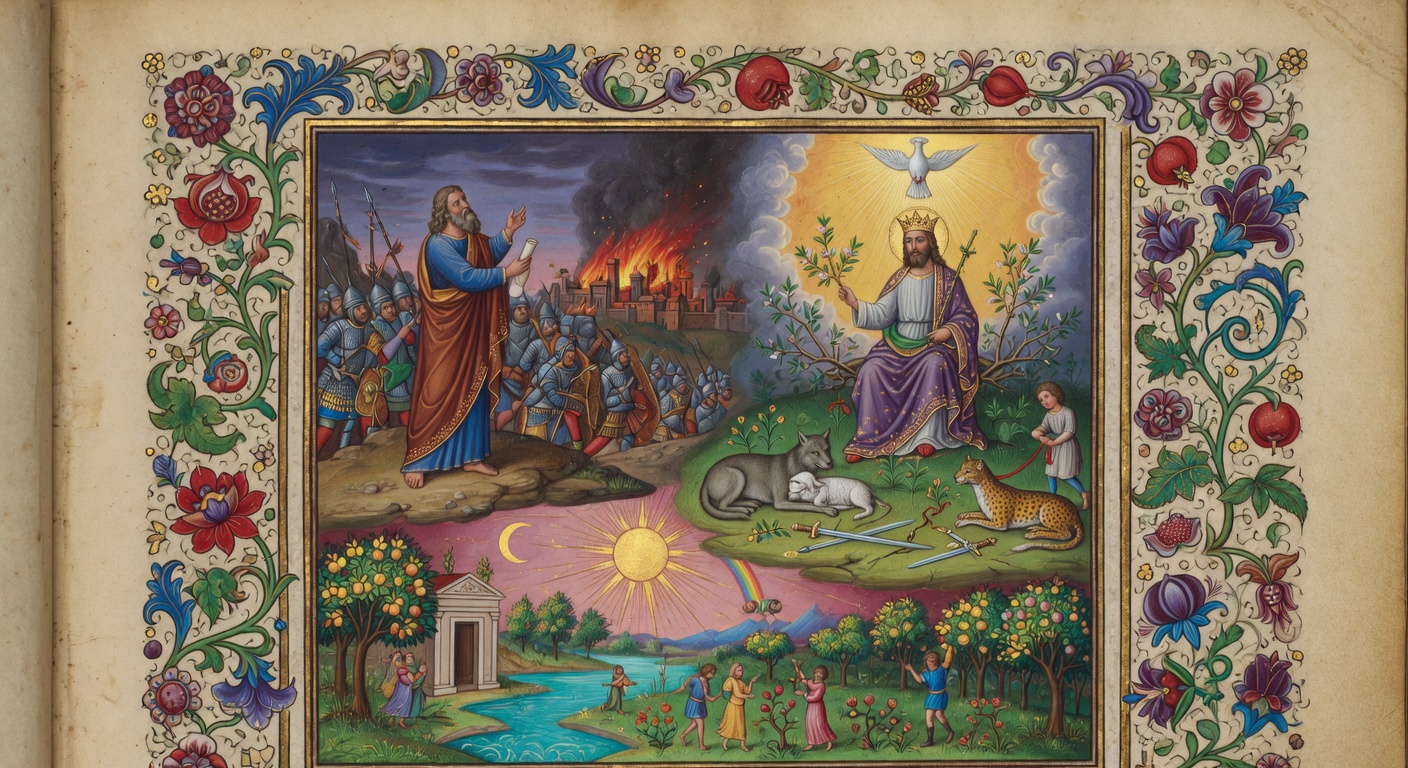
The bill of divorcement motif in verse 1 deliberately echoes Deuteronomy 24 yet inverts it: God rhetorically asks for the document that would prove He has cast Israel off, thereby underscoring that no legal rupture has occurred and the covenant remains intact despite exile.
 1hus saith the LORD, Where is the bill of your mother’s divorcement, whom I have put away? or which of my creditors is it to whom I have sold you? Behold, for your iniquities have ye sold yourselves, and for your transgressions is your mother put away.
2 Wherefore, when I came, was there no man? when I called, was there none to answer? Is my hand shortened at all, that it cannot redeem? or have I no power to deliver? behold, at my rebuke I dry up the sea, I make the rivers a wilderness: their fish stinketh, because there is no water, and dieth for thirst.
3 I clothe the heavens with blackness, and I make sackcloth their covering.
4 The Lord GOD hath given me the tongue of the learned, that I should know how to speak a word in season to him that is weary: he wakeneth morning by morning, he wakeneth mine ear to hear as the learned.
5 The Lord GOD hath opened mine ear, and I was not rebellious, neither turned away back.
6 I gave my back to the smiters, and my cheeks to them that plucked off the hair: I hid not my face from shame and spitting.
7 For the Lord GOD will help me; therefore shall I not be confounded: therefore have I set my face like a flint, and I know that I shall not be ashamed.
8 He is near that justifieth me; who will contend with me? let us stand together: who is mine adversary? let him come near to me.
9 Behold, the Lord GOD will help me; who is he that shall condemn me? lo, they all shall wax old as a garment; the moth shall eat them up.
10 Who is among you that feareth the LORD, that obeyeth the voice of his servant, that walketh in darkness, and hath no light? let him trust in the name of the LORD, and stay upon his God.
11 Behold, all ye that kindle a fire, that compass yourselves about with sparks: walk in the light of your fire, and in the sparks that ye have kindled. This shall ye have of mine hand; ye shall lie down in sorrow.
← → arrow keys to navigate chapters · spacebar to play/pause audio
Did You Know?
The bill of divorcement motif in verse 1 deliberately echoes Deuteronomy 24 yet inverts it: God rhetorically asks for the document that would prove He has cast Israel off, thereby underscoring that no legal rupture has occurred and the covenant remains intact despite exile.
The Servant’s claim that the Lord ‘hath opened mine ear’ (v. 4) alludes to the ear-piercing ritual of Exodus 21:6, transforming the mark of perpetual voluntary servitude into an image of daily prophetic attentiveness rather than physical bondage.
Verse 6’s reference to offering the cheeks to those who pluck off the beard invokes a specific ancient Near Eastern gesture of extreme public degradation; the Servant’s willing submission therefore functions as a reversal of honor-shame codes rather than mere passive endurance.
The abrupt shift from divine speech (vv. 1–3) to first-person Servant testimony (vv. 4–9) enacts the theological move from corporate Israel to an individual righteous remnant, prefiguring later Jewish and Christian readings that distinguish the nation from its ideal representative.
The closing fire imagery (v. 11) draws on both the ‘smoking firebrands’ of Isaiah 7:4 and the self-kindled flames of pagan divination, creating a deliberate contrast between trust in the Servant’s voice and autonomous attempts to manufacture one’s own light in darkness.