Bathsheba
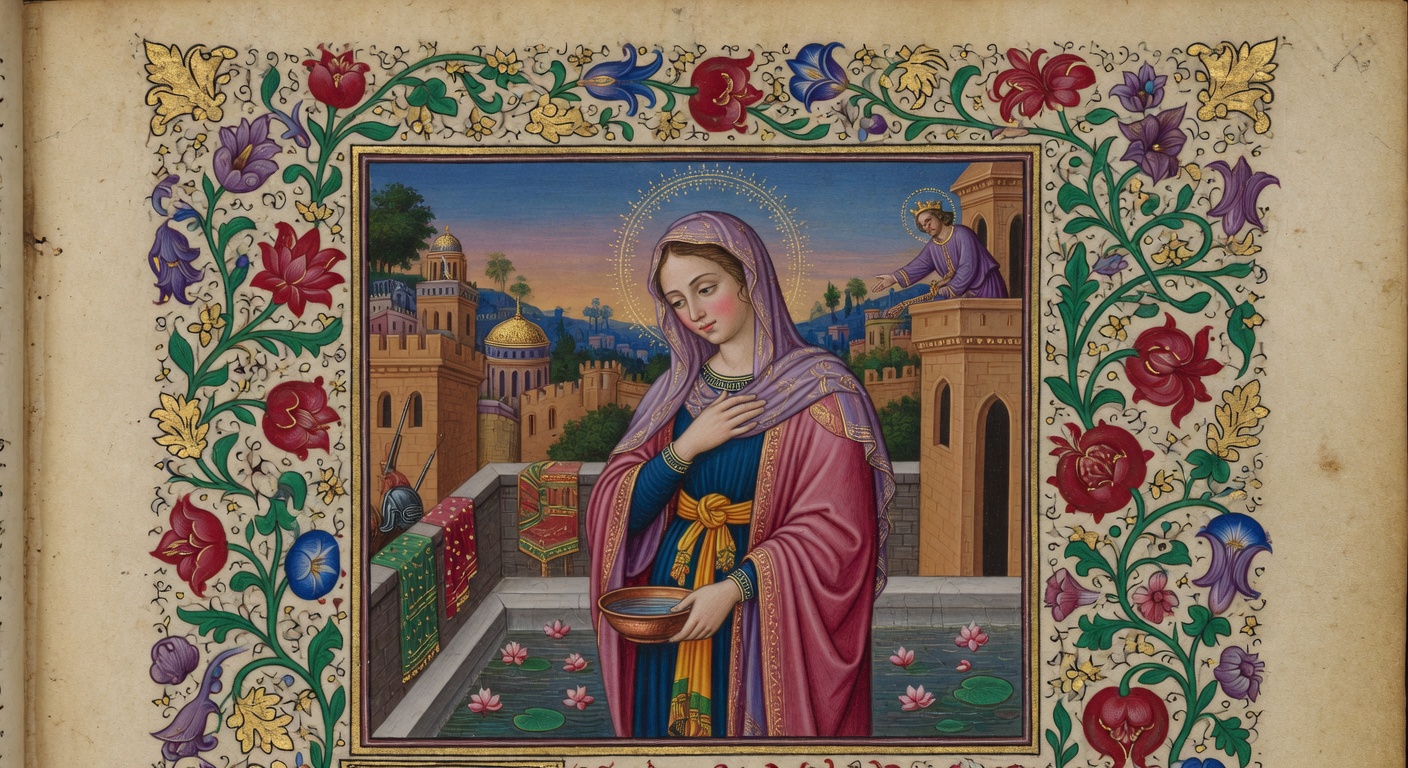
Bathsheba was the wife of Uriah the Hittite, one of King David's elite warriors, when David saw her bathing from his rooftop and summoned her, committing adultery that resulted in her pregnancy. To conceal the sin, David recalled Uriah from the battlefield and ultimately arranged his death in combat, after which he married Bathsheba; the prophet Nathan later confronted David, pronouncing judgment that included the death of their first child and ongoing turmoil in David's house. Bathsheba subsequently bore Solomon, who became David's successor and built the temple, underscoring themes of repentance, divine justice, and redemption, as her inclusion in Matthew's genealogy of Jesus highlights God's use of flawed human stories in the messianic line.
Biography
- Occupation
- Queen Mother
- Father
- Eliam
- Spouse
- Uriah the Hittite, then David
- Children
- Solomon, and others
- Era
- United Kingdom
- Nationality
- Israelite
Family
Did You Know?
Bathsheba is identified in Matthew's genealogy of Jesus simply as "the wife of Uriah," one of only five women listed, underscoring how her story of adultery and redemption was preserved in the messianic line despite cultural tendencies to omit such details.
After Uriah's death, Bathsheba mourned the loss of her first son with David as divine punishment, yet she later leveraged her position by allying with Nathan the prophet to secure Solomon's throne against Adonijah's claim in 1 Kings 1.
As queen mother under Solomon, Bathsheba was granted a throne at the king's right hand in 1 Kings 2, an unusual position of political influence that allowed her to intercede in royal matters, such as Adonijah's request for Abishag.
Bathsheba's name, meaning "daughter of the oath," may reflect ancient covenantal practices, and her union with David occurred during the spring military campaign season when kings typically went to war, highlighting David's unusual idleness as noted in 2 Samuel 11.
Uriah's status as a Hittite among David's elite warriors suggests Bathsheba's first marriage connected her to foreign mercenary circles in the united monarchy, a detail often overlooked amid the focus on David's sin.
Key Passages
David and Bathsheba
2 Samuel 11:1-5
This passage reveals how even faithful leaders can fall through unchecked desire, underscoring our need for vigilance and God's restoring grace.
 1nd it came to pass, after the year was expired, at the time when kings go forth to battle, that David sent Joab, and his servants with him, and all Israel; and they destroyed the children of Ammon, and besieged Rabbah. But David tarried still at Jerusalem.
Death of Uriah
2 Samuel 11:14-17
This passage shows how David's hidden sin escalated into deadly injustice, reminding us that moral failure always harms the innocent.
14nd it came to pass in the morning, that David wrote a letter to Joab, and sent it by the hand of Uriah.
Bathsheba Advocates for Solomon
1 Kings 1:15-21
This passage shows a mother's wise courage helping secure God's chosen king, reminding us our faithful actions matter in His plans.
15nd Bathsheba went in unto the king into the chamber: and the king was very old; and Abishag the Shunammite ministered unto the king.