Elimelech
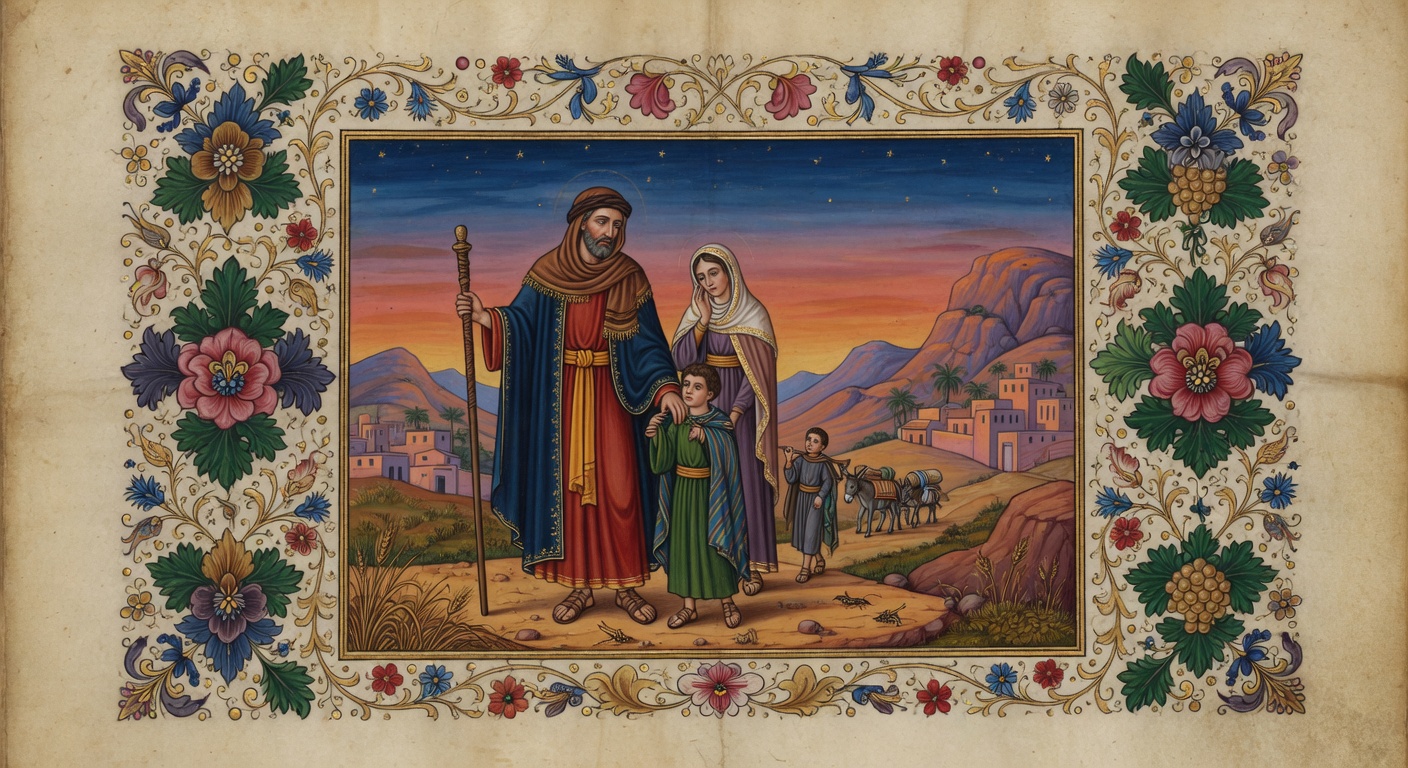
Elimelech, a man from Bethlehem in Judah, moved with his wife Naomi and their two sons to the land of Moab to escape a famine that had struck their home region. There he died, and after his sons later married Moabite women and also passed away, Naomi was left widowed and decided to return to Bethlehem accompanied by her daughter-in-law Ruth. This family tragedy sets the opening scene of the Book of Ruth, illustrating themes of loss, loyalty, and divine providence that ultimately connect Ruth’s story to the lineage of King David and the Messiah.
Biography
- Died
- Moab, Moab
- Occupation
- Landowner
- Tribe
- Judah
- Spouse
- Naomi
- Children
- Mahlon, Chilion
- Era
- Judges (c. 1100 BC)
- Nationality
- Israelite
Family
Did You Know?
Elimelech's name, meaning 'My God is King,' stands in ironic contrast to the Book of Judges' repeated refrain that 'there was no king in Israel,' as his migration to Moab during famine may reflect pragmatic survival rather than trust in divine provision amid the cyclical apostasy of that era.
By relocating his family to Moab, Elimelech entered territory whose inhabitants were barred from full Israelite assembly until the tenth generation under Deuteronomy 23:3-6, a taboo his sons later violated through marriage, underscoring the narrative's exploration of outsider inclusion.
As a Bethlehem landowner whose inheritance rights passed to Naomi upon his death, Elimelech's unmentioned field became the legal pivot for Boaz's redemption in Ruth 4, directly enabling the preservation of the Ephrathite line leading to David and, by extension, the messianic genealogy.
Historical records of Late Bronze Age collapse around 1100 BCE indicate that Levantine famines frequently prompted short-term migrations to Moab's plateau agriculture, suggesting Elimelech's move aligned with documented patterns of temporary displacement rather than permanent exile.
Unlike most biblical patriarchs whose deaths receive burial notices, Elimelech's passing receives no such detail in Ruth, leaving his grave unmarked and his personal legacy entirely subsumed into the women's story of hesed that follows.
Key Passages
Elimelech's Family Goes to Moab
Ruth 1:1-5
This passage reminds us that even in loss and displacement, God is quietly preparing a path of redemption and belonging.
 1ow it came to pass in the days when the judges ruled, that there was a famine in the land. And a certain man of Bethlehemjudah went to sojourn in the country of Moab, he, and his wife, and his two sons.