Haggai
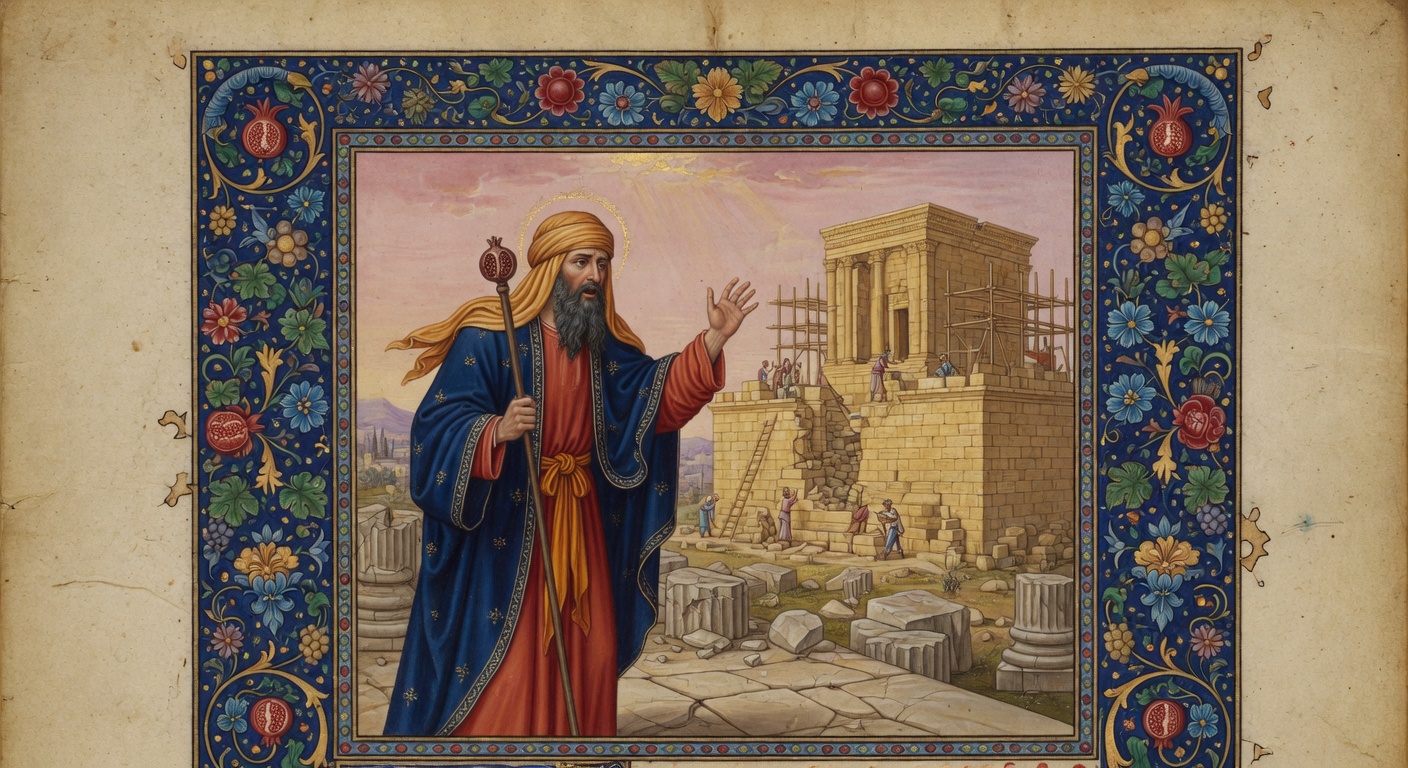
Haggai was a post-exilic prophet active around 520 BC who addressed the Jewish community that had returned from Babylonian captivity under Persian permission. He confronted the people for neglecting the ruined temple in Jerusalem while building their own homes, warning that drought and economic hardship stemmed from this misplaced priority and urging immediate resumption of the work under leaders Zerubbabel and Joshua. His brief messages prompted swift action, resulting in the temple’s reconstruction and rededication several years later. As one of the twelve Minor Prophets, the book of Haggai underscores the necessity of covenant obedience and the restoration of proper worship after exile.
Biography
- Occupation
- Prophet
- Era
- Post-Exile (c. 520 BC)
- Nationality
- Judean
Did You Know?
Haggai's four dated oracles all fall within a four-month span in 520 BC, making his ministry the most chronologically compressed of any writing prophet and tying each message to specific agricultural cycles in the Persian province of Yehud.
The prophet's repeated use of the phrase 'consider your ways' invokes the covenantal logic of Deuteronomy 28, linking the returned exiles' crop failures and wage shortages directly to their delay in rebuilding the temple rather than to Persian imperial policy.
Haggai 2:23 applies the rare term 'signet ring' to Zerubbabel, reversing the judgment oracle against his grandfather Jehoiachin in Jeremiah 22:24 and thereby restoring Davidic royal authority under Achaemenid rule.
Unlike his contemporary Zechariah, whose visions include elaborate heavenly imagery, Haggai delivers exclusively prosaic exhortations focused on immediate construction logistics and priestly ritual purity questions recorded in Haggai 2:10-19.
The second temple's foundation-laying ceremony in 536 BC had stalled for sixteen years until Haggai's intervention; the project was completed in 516 BC, exactly seventy years after the first temple's destruction as predicted in Jeremiah 25:11-12.
Key Passages
Call to Rebuild the Temple
Haggai 1:1-11
This passage reminds us that putting God’s priorities first brings purpose and blessing, while neglecting Him leaves us unfulfilled.
 1n the second year of Darius the king, in the sixth month, in the first day of the month, came the word of the LORD by Haggai the prophet unto Zerubbabel the son of Shealtiel, governor of Judah, and to Joshua the son of Josedech, the high priest, saying,
The Glory of the New Temple
Haggai 2:1-9
This passage encourages us that God's presence can make our humble efforts more glorious than anything in the past.
1n the seventh month, in the one and twentieth day of the month, came the word of the LORD by the prophet Haggai, saying,