Haman
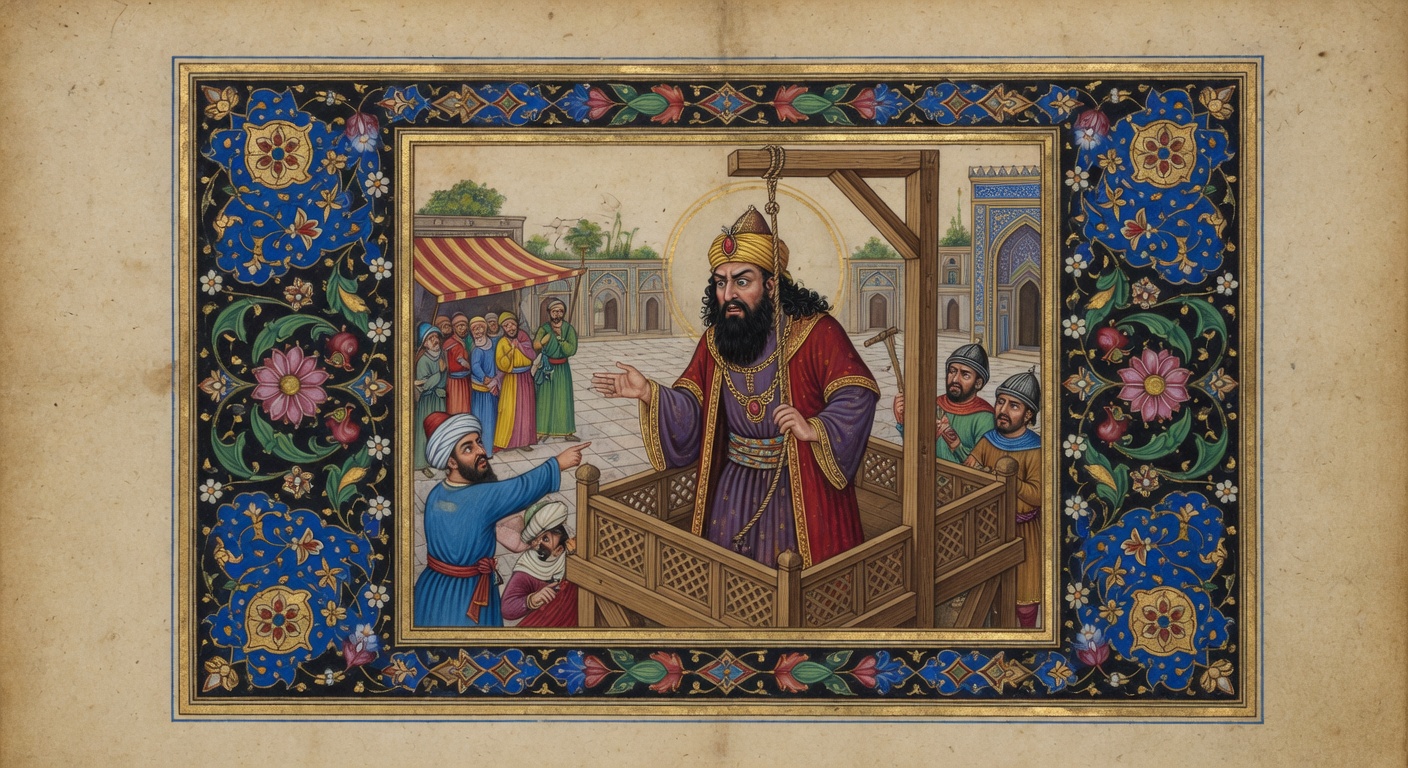
Haman served as a high-ranking official in the Persian court of King Ahasuerus during the time of the Jewish exile. Enraged by Mordecai's refusal to bow to him, he convinced the king to issue a decree ordering the destruction of all Jews throughout the empire. Through the courageous intervention of Queen Esther, who revealed her Jewish identity, the plot was exposed, leading to Haman's execution on the very gallows he had prepared for Mordecai. This account in the Book of Esther highlights God's providential care for His people and is commemorated annually in the Jewish festival of Purim.
Biography
- Died
- c. 473 BC, Susa, Persia (hanged)
- Occupation
- Prime Minister of Persia
- Father
- Hammedatha
- Spouse
- Zeresh
- Children
- Ten sons
- Era
- Post-Exile (c. 474-473 BC)
- Nationality
- Agagite (Amalekite)
Family
Did You Know?
Haman, identified as an Agagite, descends from the Amalekite royal line that Saul failed to eradicate centuries earlier, framing his genocidal plot as a continuation of the ancient Israelite-Amalekite conflict recorded in 1 Samuel.
To determine the optimal date for exterminating the Jews, Haman and his officials cast purim (lots) that fell in the month of Adar, a detail that later supplied the name of the Jewish festival Purim commemorating his downfall.
Haman pledged 10,000 talents of silver. Roughly two-thirds of the Persian Empire's yearly tax revenue. To the royal treasury to cover the costs of the planned massacre, an offer recorded in Esther 3:9.
After the king ordered Haman to parade Mordecai through Susa in royal attire, Haman's wife Zeresh warned him that a Jewish opponent would inevitably prevail, prompting Haman to rush to the second banquet where his fate was sealed.
The Hebrew text of Esther 9:7-9 spells out the names of Haman's ten executed sons with a notably small letter vav in the word vayzata, a scribal feature preserved in the Megillah that has prompted centuries of commentary on their collective downfall.
Key Passages
Haman's Plot
Esther 3:7-15
This passage shows how prideful hatred can spawn devastating evil, yet God's unseen hand quietly works to protect and deliver His people.
 7n the first month, that is, the month Nisan, in the twelfth year of king Ahasuerus, they cast Pur, that is, the lot, before Haman from day to day, and from month to month, to the twelfth month, that is, the month Adar.
Haman's Downfall
Esther 7:1-10
Haman's downfall shows how God sovereignly reverses evil schemes to protect His people and humble the proud.
 1o the king and Haman came to banquet with Esther the queen.