Mordecai
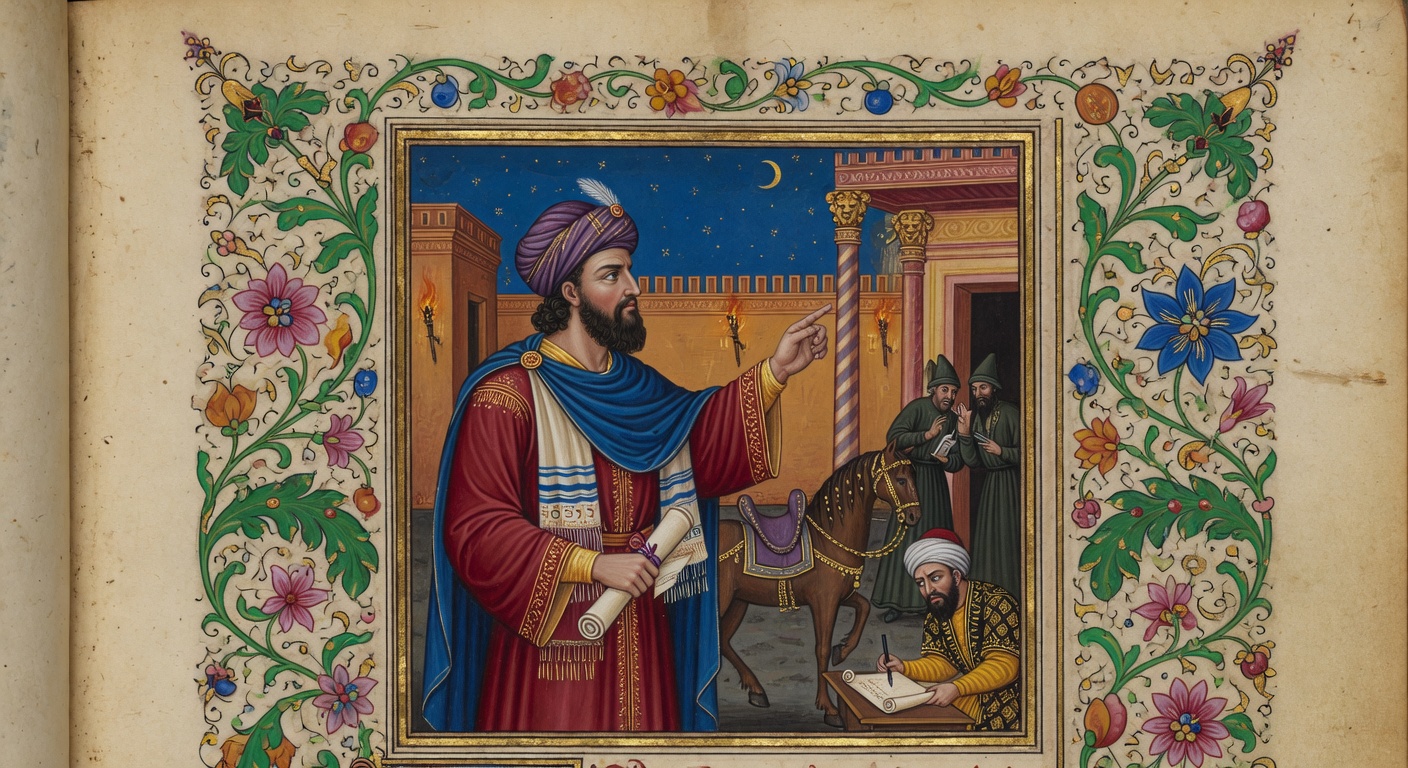
Mordecai was a Jewish exile living in the Persian capital of Susa who served as the cousin and guardian of Esther, the young woman who became queen. When he uncovered a conspiracy by two of the king's eunuchs to assassinate Ahasuerus, Mordecai reported it through Esther, an act that was later recorded in the royal chronicles. His refusal to bow to the ambitious official Haman provoked a genocidal plot against the Jewish people, which Mordecai helped thwart by urging Esther to intercede with the king, ultimately leading to the deliverance of the Jews and the institution of the feast of Purim. This account, preserved in the biblical Book of Esther, illustrates themes of divine providence and courage in the face of persecution.
Biography
- Occupation
- Royal Official
- Tribe
- Benjamin
- Father
- Jair
- Children
- Esther (adopted)
- Era
- Post-Exile (c. 480-470 BC)
- Nationality
- Jewish/Persian
Family
Did You Know?
Mordecai's name likely derives from the Babylonian god Marduk, illustrating how Jewish exiles in Persia often bore dual identities blending their heritage with local culture while preserving core religious practices.
Mordecai's refusal to bow before Haman probably reflected not only monotheistic convictions but also the ancient command to oppose Amalekites, since Haman descended from King Agag of the Amalekites whom Saul failed to destroy.
Positioned daily at the king's gate in Susa, Mordecai overheard and reported the assassination plot by eunuchs Bigthan and Teresh, an act recorded in the royal chronicles that later saved Ahasuerus's life and elevated his status.
As Esther's cousin and adoptive guardian, Mordecai maintained contact with her through palace officials even after she became queen, enabling coordinated resistance against Haman's decree without direct access to the inner court.
Following Haman's downfall, Mordecai was appointed vizier and authorized to issue a counter-edict allowing Jews to defend themselves, which established the legal basis for the annual celebration of Purim still observed today.
Key Passages
Mordecai Uncovers a Plot
Esther 2:21-23
This passage shows how Mordecai’s quiet faithfulness helps protect the king and advances God’s care for His people.
 21n those days, while Mordecai sat in the king’s gate, two of the king’s chamberlains, Bigthan and Teresh, of those which kept the door, were wroth, and sought to lay hand on the king Ahasuerus.
Mordecai Refuses to Bow
Esther 3:1-6
Mordecai's stand shows the quiet courage of holding firm to faith and conscience, even when it invites powerful opposition.
 1fter these things did king Ahasuerus promote Haman the son of Hammedatha the Agagite, and advanced him, and set his seat above all the princes that were with him.
Mordecai Honored
Esther 6:7-11
This passage reveals how God sovereignly reverses evil schemes to honor the faithful at just the right moment.
7nd Haman answered the king, For the man whom the king delighteth to honour,