Rhoda
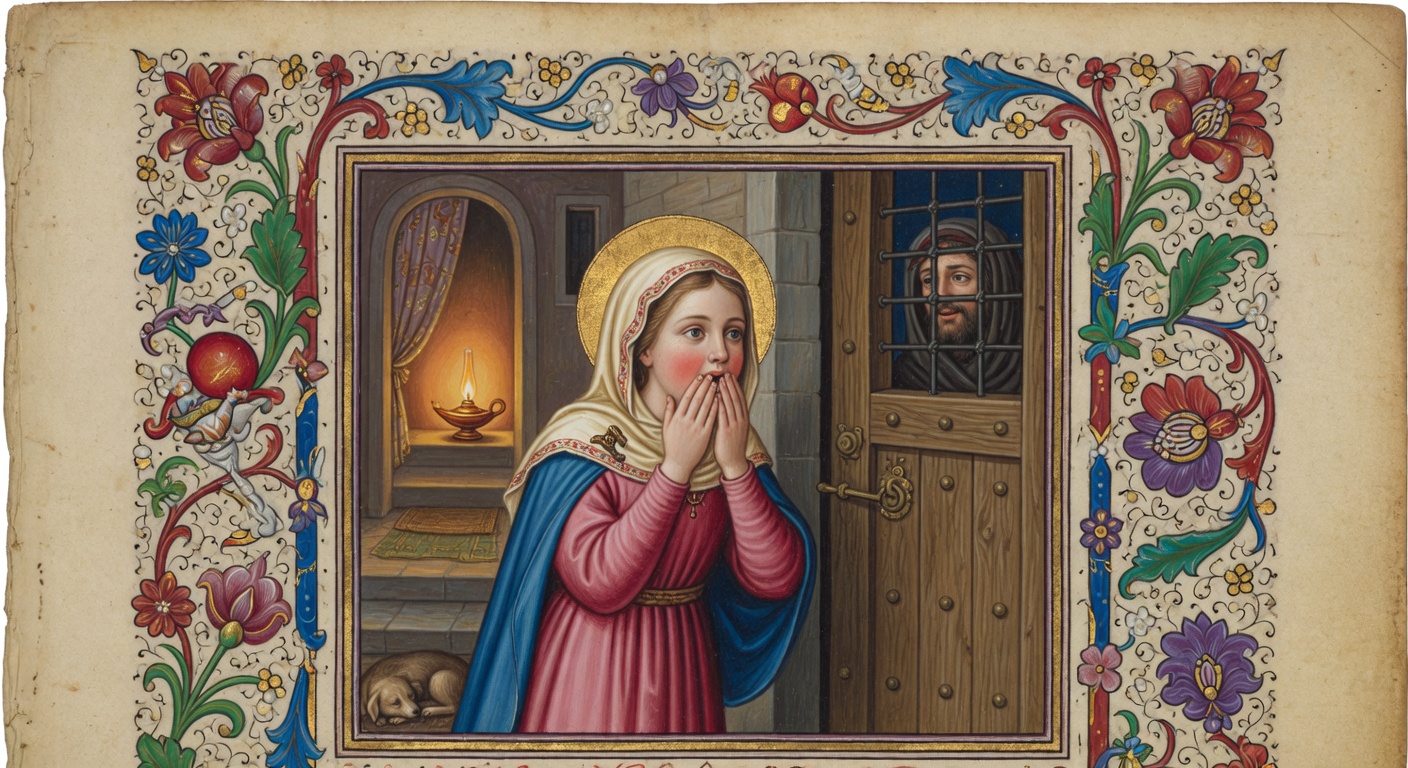
In the household of Mary the mother of John whose surname was Mark, Rhoda the servant girl attended to the door while the church prayed fervently for Peter's deliverance from Herod's prison. Hearing his voice after his supernatural release by an angel, she became so elated that she forgot to open the gate and instead ran to tell the others of his arrival. Her joyful reaction captures the surprise and exuberance that can accompany answered prayer in the redemptive narrative of the early church, where persistent intercession meets God's unexpected intervention.
Biography
- Occupation
- Servant girl
- Era
- New Testament (c. AD 44)
- Nationality
- Jewish
Did You Know?
Rhoda's Greek name meaning 'rose' is the sole instance of this feminine name in the New Testament, hinting at possible Hellenistic origins for a servant in a Jerusalem household of Jewish believers.
In Acts 12 her recognition of Peter's voice alone authenticates the apostle's escape from Agrippa's prison, making an unnamed servant girl the narrative's key witness to answered prayer.
The detail that Rhoda ran back inside without opening the gate illustrates the intense excitement that overrode social duty, a rare biblical glimpse of spontaneous emotion among early Christians.
Her report was initially dismissed as madness or mistaken for Peter's angel, reflecting first-century Jewish traditions that a person's guardian angel could appear in their likeness during crisis.
Rhoda's testimony ultimately convinced the praying assembly in Mary's home, underscoring how God used the least socially prominent member to confirm Peter's deliverance amid Herod's persecution.
Key Passages
Rhoda Answers the Door
Acts 12:13-16
Rhoda's joyful surprise reminds us that God often answers our prayers more quickly and wonderfully than we dare to believe.
 13nd as Peter knocked at the door of the gate, a damsel came to hearken, named Rhoda.