Rizpah
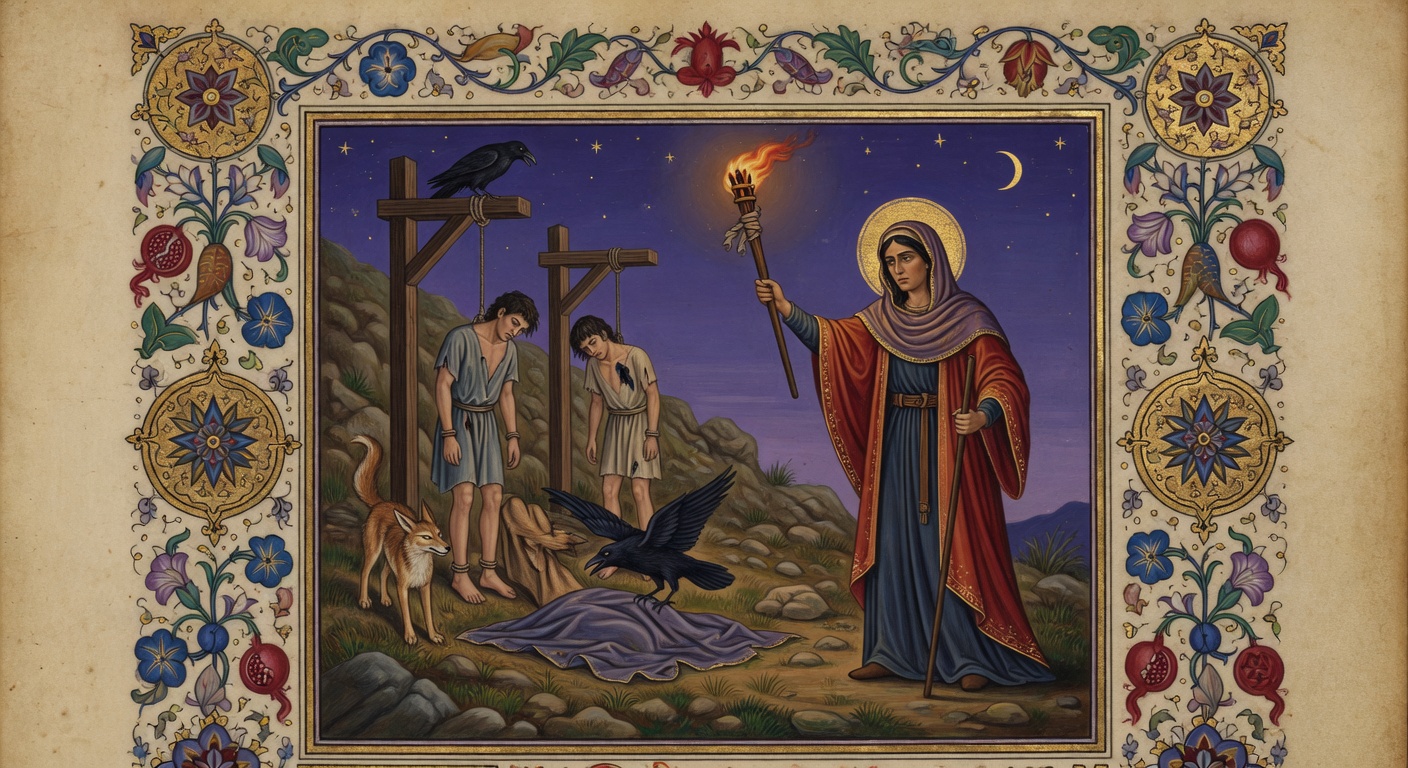
Rizpah was a concubine of King Saul whose two sons, Armoni and Mephibosheth, were among seven of Saul’s male descendants handed over to the Gibeonites and publicly hanged during a famine in David’s reign as atonement for Saul’s earlier slaughter of Gibeonite envoys. For several months she kept solitary vigil beside the exposed corpses, driving away birds and wild animals until rain signaled the end of divine judgment. Her persistent act of maternal devotion moved David to retrieve the bones of Saul, Jonathan, and the executed men for honorable burial in the family tomb at Zela. The episode in 2 Samuel 21 illustrates ancient Israelite concerns with covenant justice, proper burial, and the capacity of individual faithfulness to prompt royal restitution.
Biography
- Occupation
- Concubine of Saul
- Father
- Aiah
- Spouse
- Saul (concubine)
- Children
- Armoni, Mephibosheth
- Era
- United Kingdom
- Nationality
- Israelite
Family
Did You Know?
Rizpah's name derives from the Hebrew word for 'hot coal' or 'pavement,' evoking both her intense maternal vigilance and the rocky terrain where she kept watch over the exposed corpses for months.
Her six-month vigil over the impaled bodies of her sons Armoni and Mephibosheth, lasting from the barley harvest until autumn rains, directly invoked ancient Near Eastern customs of corpse exposure as a covenant curse, compelling King David to end the famine by reburying Saul's house.
An earlier political scandal arose when Saul's son Ishbosheth accused Abner of sexual relations with Rizpah, prompting Abner to switch allegiance to David and accelerate the collapse of Saul's dynasty.
As a royal concubine, Rizpah bore no inheritance rights for her sons under Israelite custom, yet her public protest uniquely leveraged maternal grief to enforce the Gibeonite treaty obligations that David had neglected.
Rizpah's actions are the only recorded instance in the Hebrew Bible of a woman single-handedly halting royal corpse desecration, highlighting concubines' rare but potent influence outside formal queenship during the United Monarchy.
Key Passages
Rizpah Guards Her Sons
2 Samuel 21:8-14
Rizpah’s steadfast vigil shows how a mother’s devoted love can move leaders toward mercy, dignity, and healing for the broken.
 8ut the king took the two sons of Rizpah the daughter of Aiah, whom she bare unto Saul, Armoni and Mephibosheth; and the five sons of Michal the daughter of Saul, whom she brought up for Adriel the son of Barzillai the Meholathite:
David Buries Saul's Descendants
2 Samuel 21:12-14
This passage reveals how one woman's steadfast love and honor can move a leader to restore dignity and bring healing to a broken land.
 12nd David went and took the bones of Saul and the bones of Jonathan his son from the men of Jabeshgilead, which had stolen them from the street of Bethshan, where the Philistines had hanged them, when the Philistines had slain Saul in Gilboa: