Nehemiah 6 KJV
The Wall Completed
Nehemiah Chapter 6: The Wall Completed
Nehemiah discerns Shemaiah's false prophecy by recognizing its direct violation of Mosaic law barring laymen from the temple sanctuary, revealing a hermeneutical rather than merely intuitive test for prophetic authenticity.
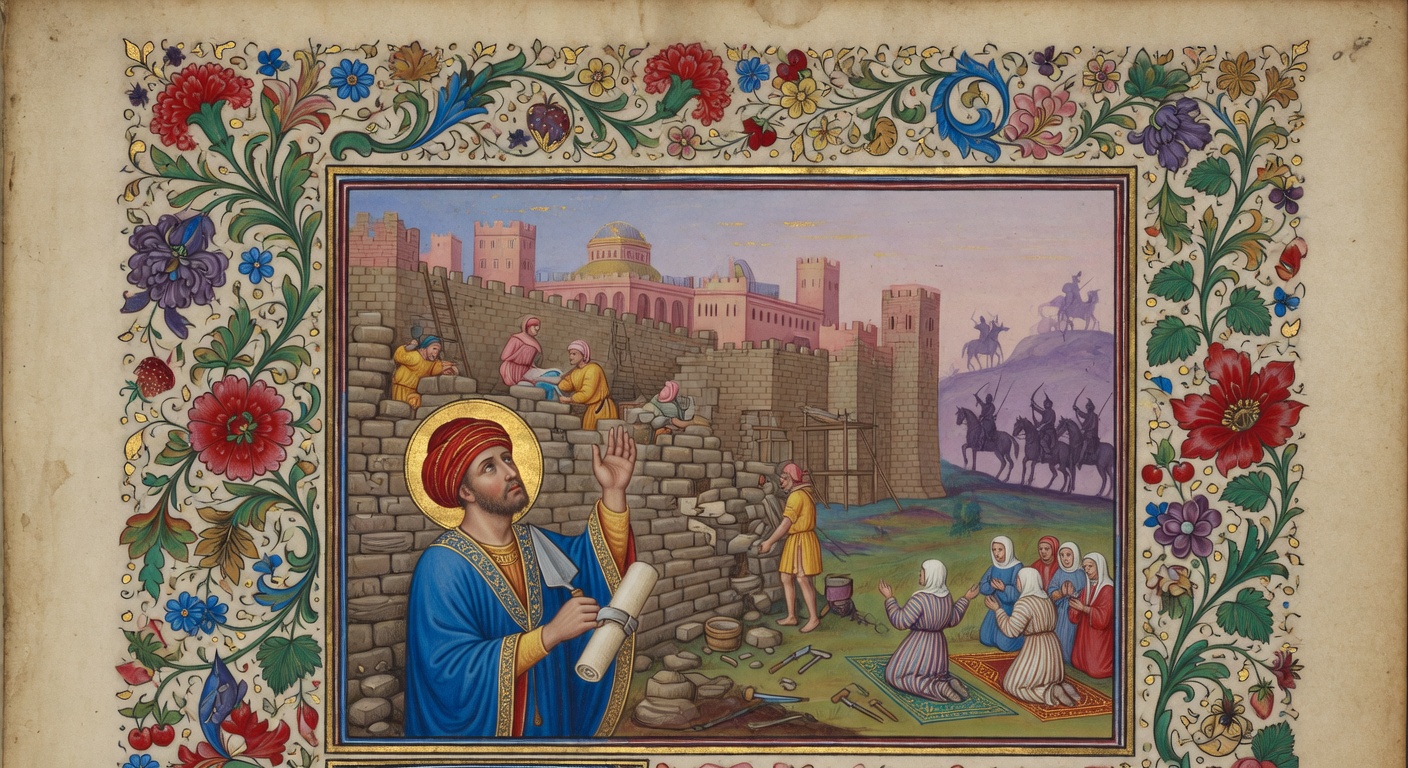
 1ow it came to pass, when Sanballat, and Tobiah, and Geshem the Arabian, and the rest of our enemies, heard that I had builded the wall, and that there was no breach left therein; (though at that time I had not set up the doors upon the gates;)
2 That Sanballat and Geshem sent unto me, saying, Come, let us meet together in some one of the villages in the plain of Ono. But they thought to do me mischief.
3 And I sent messengers unto them, saying, I am doing a great work, so that I cannot come down: why should the work cease, whilst I leave it, and come down to you?
4 Yet they sent unto me four times after this sort; and I answered them after the same manner.
5 Then sent Sanballat his servant unto me in like manner the fifth time with an open letter in his hand;
6 Wherein was written, It is reported among the heathen, and Gashmu saith it, that thou and the Jews think to rebel: for which cause thou buildest the wall, that thou mayest be their king, according to these words.
7 And thou hast also appointed prophets to preach of thee at Jerusalem, saying, There is a king in Judah: and now shall it be reported to the king according to these words. Come now therefore, and let us take counsel together.
8 Then I sent unto him, saying, There are no such things done as thou sayest, but thou feignest them out of thine own heart.
9 For they all made us afraid, saying, Their hands shall be weakened from the work, that it be not done. Now therefore, O God, strengthen my hands.
10 Afterward I came unto the house of Shemaiah the son of Delaiah the son of Mehetabeel, who was shut up; and he said, Let us meet together in the house of God, within the temple, and let us shut the doors of the temple: for they will come to slay thee; yea, in the night will they come to slay thee.
11 And I said, Should such a man as I flee? and who is there, that, being as I am, would go into the temple to save his life? I will not go in.
12 And, lo, I perceived that God had not sent him; but that he pronounced this prophecy against me: for Tobiah and Sanballat had hired him.
13 Therefore was he hired, that I should be afraid, and do so, and sin, and that they might have matter for an evil report, that they might reproach me.
14 My God, think thou upon Tobiah and Sanballat according to these their works, and on the prophetess Noadiah, and the rest of the prophets, that would have put me in fear.
15 So the wall was finished in the twenty and fifth day of the month Elul, in fifty and two days.
16 And it came to pass, that when all our enemies heard thereof, and all the heathen that were about us saw these things, they were much cast down in their own eyes: for they perceived that this work was wrought of our God.
17 Moreover in those days the nobles of Judah sent many letters unto Tobiah, and the letters of Tobiah came unto them.
18 For there were many in Judah sworn unto him, because he was the son in law of Shechaniah the son of Arah; and his son Johanan had taken the daughter of Meshullam the son of Berechiah.
19 Also they reported his good deeds before me, and uttered my words to him. And Tobiah sent letters to put me in fear.
← → arrow keys to navigate chapters · spacebar to play/pause audio
Did You Know?
Nehemiah discerns Shemaiah's false prophecy by recognizing its direct violation of Mosaic law barring laymen from the temple sanctuary, revealing a hermeneutical rather than merely intuitive test for prophetic authenticity.
The accusation that Nehemiah sought kingship parallels earlier Persian-era charges against Zerubbabel, underscoring how local governors weaponized fears of Jewish autonomy to maintain Achaemenid control over the Trans-Euphrates province.
Tobiah's letters to Judean nobles expose entrenched internal alliances with external adversaries, illustrating how economic and marital ties undermined communal solidarity during reconstruction.
Nehemiah's plea that God remember his enemies invokes the Deuteronomic principle of divine remembrance, framing political intrigue within covenantal accountability rather than personal vendetta.
The surrounding nations' acknowledgment that the work succeeded through divine aid inverts typical ancient Near Eastern propaganda, where rulers alone claimed credit for fortifications.