Festus
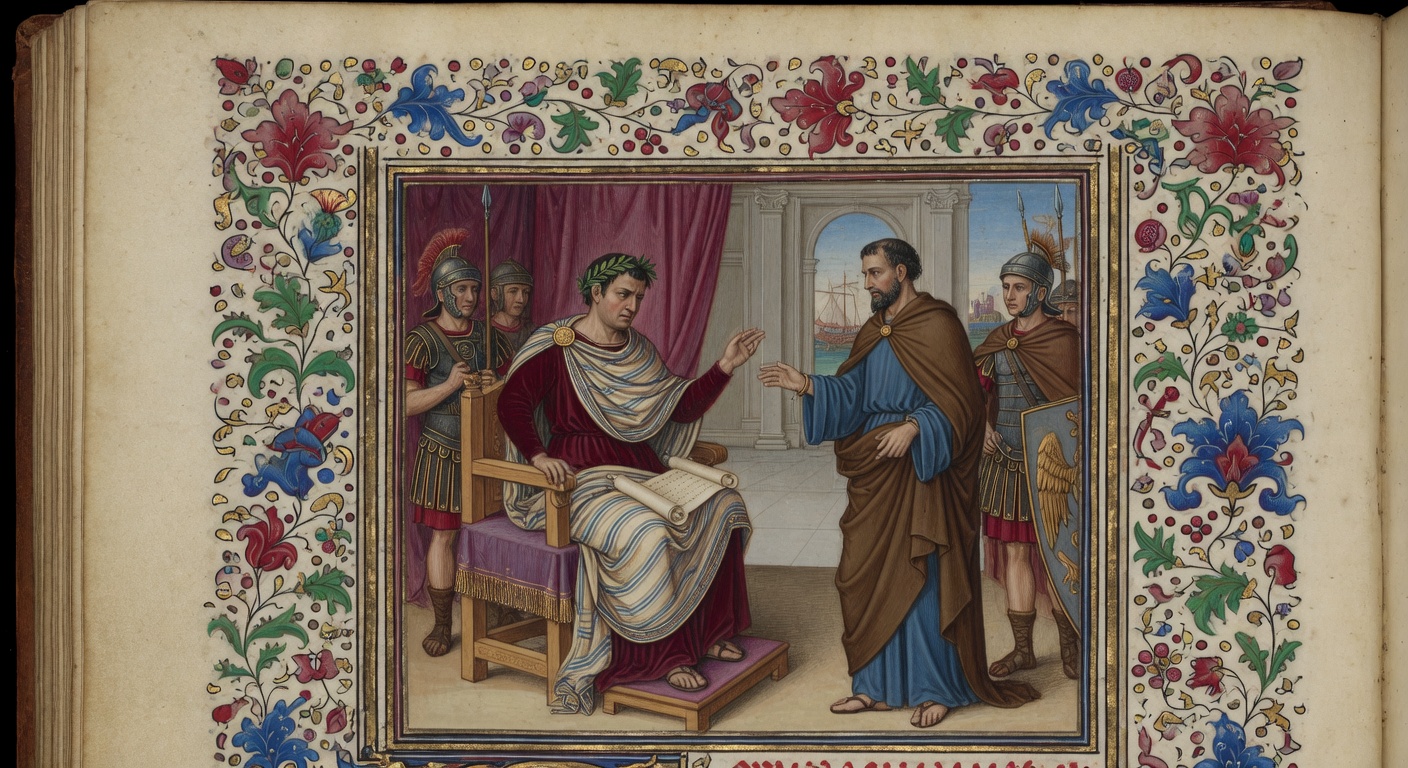
Porcius Festus succeeded Antonius Felix as Roman procurator of Judea around AD 59–60, inheriting the unresolved case of the imprisoned apostle Paul. During a formal hearing in Caesarea, Jewish leaders renewed their accusations against Paul, but Festus proposed trying him in Jerusalem; Paul, invoking his rights as a Roman citizen, appealed directly to Caesar, prompting Festus to declare that the appeal would be honored and Paul sent to Rome. Before arranging the transfer, Festus arranged for Paul to present his defense before King Agrippa II and his sister Bernice, an occasion that allowed Paul to recount his conversion and mission. This sequence of events proved pivotal in Scripture, as it set in motion Paul’s voyage to Rome, enabling the gospel to reach the imperial capital and fulfilling Jesus’ earlier promise that Paul would testify there.
Biography
- Died
- c. AD 62, Judea
- Occupation
- Roman Governor of Judea
- Era
- New Testament (c. AD 59-62)
- Nationality
- Roman
- Also Known As
- Porcius Festus
Did You Know?
Festus inherited Paul's case from Felix but quickly rejected a bribe attempt by the high priest's delegation in Jerusalem, instead ordering an immediate trial in Caesarea where he found no capital offense under Roman law.
Festus granted Paul's appeal to Caesar under the lex Iulia de vi publica even though he privately admitted the charges involved only Jewish religious disputes rather than Roman crimes.
To draft the required report for Nero, Festus arranged a private hearing with Herod Agrippa II and Bernice, during which Paul's testimony prompted Agrippa to declare the apostle could have been freed had he not appealed.
Archaeological evidence from Caesarea shows Festus completed and dedicated a new praetorium building project begun under Felix, reflecting his brief but active administrative focus amid rising Judean unrest from 59-62 CE.
Unlike many predecessors, Festus died in office after less than three years, forcing his successor Albinus to manage the volatile situation Paul had left behind in the provincial courts.
Key Passages
Paul Before Festus
Acts 25:1-12
This passage shows how God uses Paul's courage and Roman rights to advance the gospel toward Rome despite opposition.
 1ow when Festus was come into the province, after three days he ascended from Caesarea to Jerusalem.
Festus Declares Paul Not Guilty
Acts 25:25-27
This passage shows how God sovereignly guides Paul’s journey through Roman officials, turning human justice toward His greater redemptive plan.
 25ut when I found that he had committed nothing worthy of death, and that he himself hath appealed to Augustus, I have determined to send him.