Joshua 16 KJV
Allotment for Ephraim
Joshua Chapter 16: Allotment for Ephraim
The border description places Bethel (formerly Luz) as a key northern marker, directly echoing Jacob's renaming of the site after his ladder vision and reinforcing the patriarchal promises of land inheritance now being fulfilled for Joseph's line.
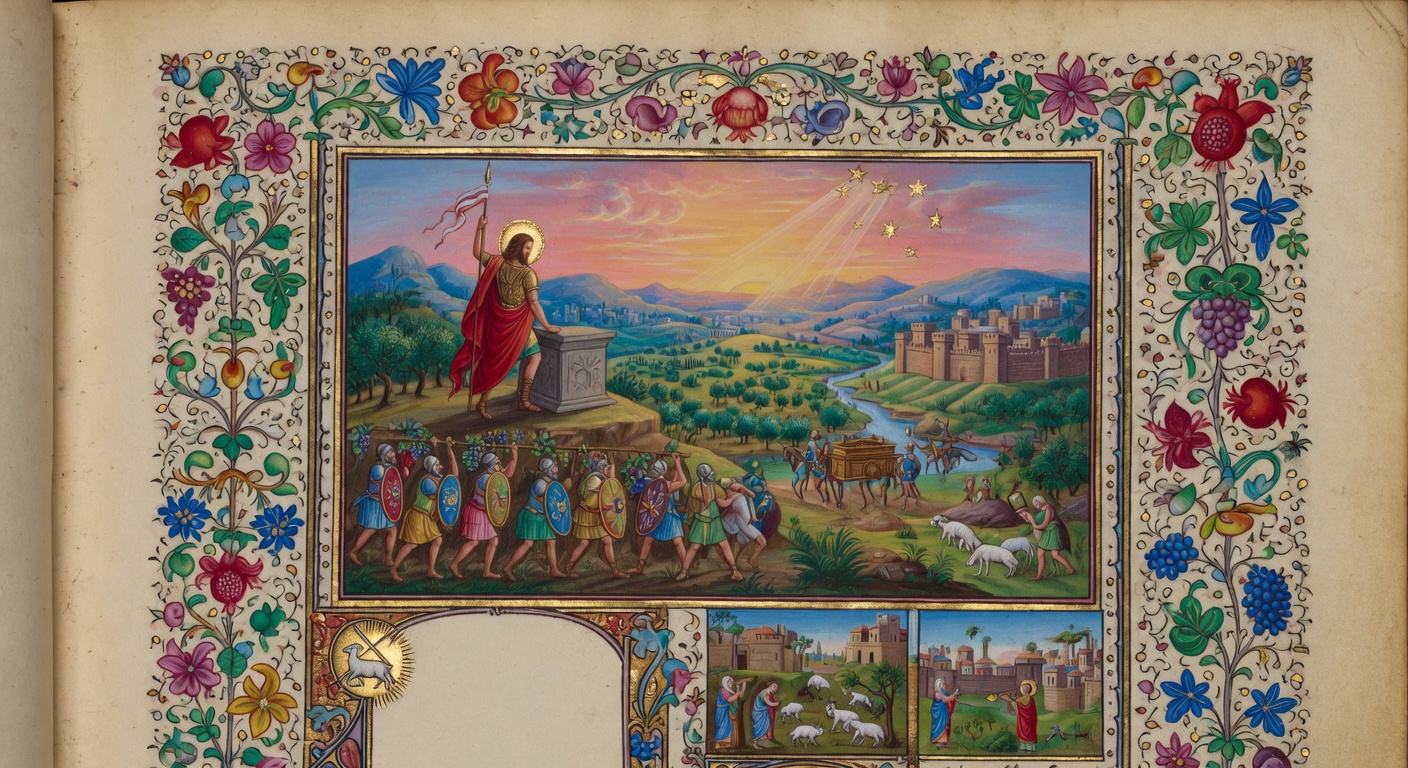
 1nd the lot of the children of Joseph fell from Jordan by Jericho, unto the water of Jericho on the east, to the wilderness that goeth up from Jericho throughout mount Bethel,
2 And goeth out from Bethel to Luz, and passeth along unto the borders of Archi to Ataroth,
3 And goeth down westward to the coast of Japhleti, unto the coast of Bethhoron the nether, and to Gezer; and the goings out thereof are at the sea.
4 So the children of Joseph, Manasseh and Ephraim, took their inheritance.
5 And the border of the children of Ephraim according to their families was thus: even the border of their inheritance on the east side was Atarothaddar, unto Bethhoron the upper;
6 And the border went out toward the sea to Michmethah on the north side; and the border went about eastward unto Taanathshiloh, and passed by it on the east to Janohah;
7 And it went down from Janohah to Ataroth, and to Naarath, and came to Jericho, and went out at Jordan.
8 The border went out from Tappuah westward unto the river Kanah; and the goings out thereof were at the sea. This is the inheritance of the tribe of the children of Ephraim by their families.
9 And the separate cities for the children of Ephraim were among the inheritance of the children of Manasseh, all the cities with their villages.
10 And they drave not out the Canaanites that dwelt in Gezer: but the Canaanites dwell among the Ephraimites unto this day, and serve under tribute.
← → arrow keys to navigate chapters · spacebar to play/pause audio
Did You Know?
The border description places Bethel (formerly Luz) as a key northern marker, directly echoing Jacob's renaming of the site after his ladder vision and reinforcing the patriarchal promises of land inheritance now being fulfilled for Joseph's line.
Ephraim's southern boundary at Beth-horon the nether highlights a narrow, historically contested pass later used in decisive battles, such as Joshua's victory over the Amorite coalition and Judas Maccabeus's campaigns, underscoring the territory's ongoing strategic value.
The explicit note that Canaanites remained in Gezer as tributaries rather than being driven out anticipates the recurring theme of incomplete conquest in Judges, illustrating how Ephraim's partial obedience created lasting enclaves of foreign influence within the promised land.
Although Manasseh was the elder son, this chapter's placement of Ephraim's allotment first mirrors Jacob's deliberate crossing of hands in Genesis 48 to grant Ephraim the preeminence, demonstrating how the tribal land distribution enacts earlier prophetic reversals of primogeniture.
The western terminus at the sea (Mediterranean) and shared southern border with Benjamin subtly positions Ephraim to control access routes to the coastal plain, setting up later tensions evident when Ephraim later complains about its allotment size in the following chapter.