Titus 2 KJV
Sound Doctrine and Good Works
Titus Chapter 2: Sound Doctrine and Good Works
This chapter explores themes of Grace. Titus 2:13 applies the title 'the great God' directly to Jesus in a grammatical construction that treats 'God and our Saviour' as a single referent, one of the New Testament's strongest implicit affirmations of Christ's deity.
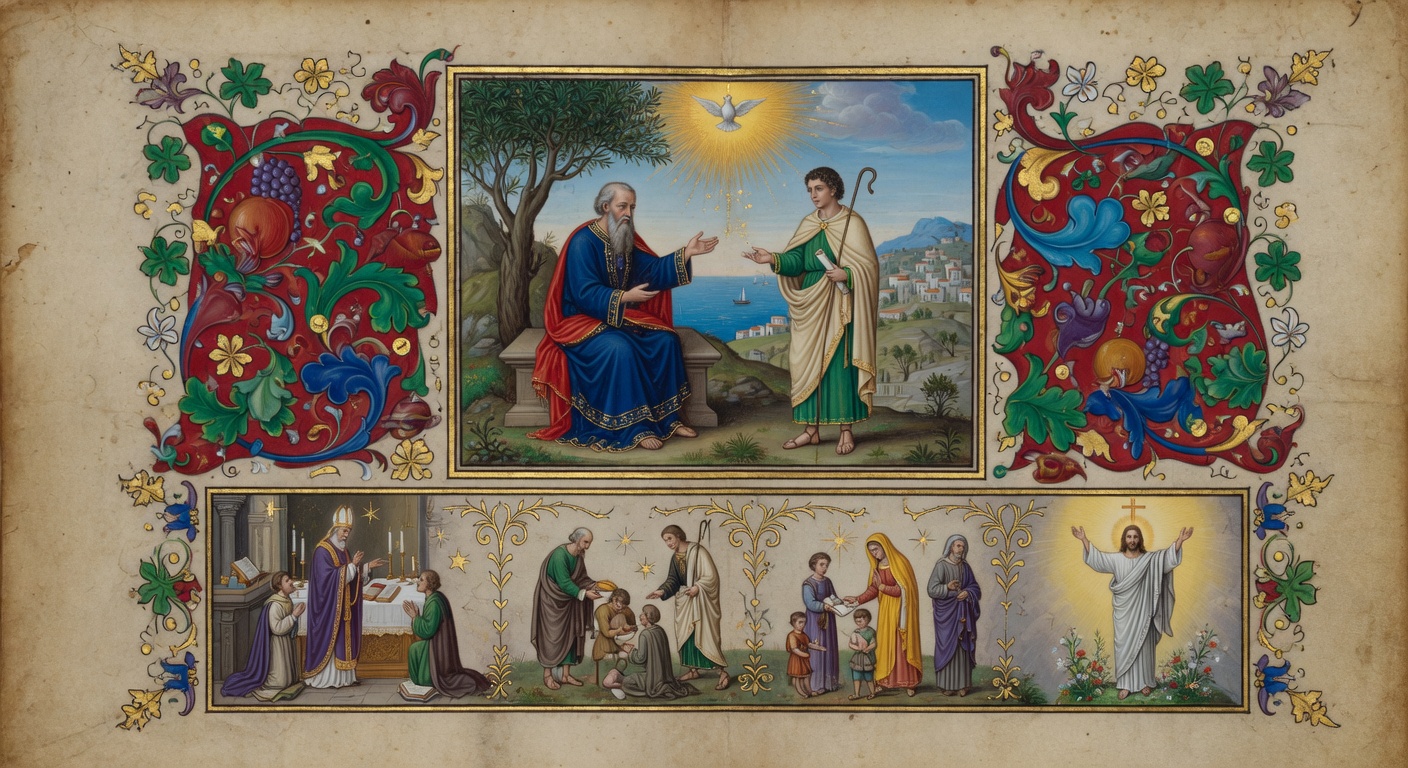
 1ut speak thou the things which become sound doctrine:
2 That the aged men be sober, grave, temperate, sound in faith, in charity, in patience.
3 The aged women likewise, that they be in behaviour as becometh holiness, not false accusers, not given to much wine, teachers of good things;
4 That they may teach the young women to be sober, to love their husbands, to love their children,
5 To be discreet, chaste, keepers at home, good, obedient to their own husbands, that the word of God be not blasphemed.
6 Young men likewise exhort to be sober minded.
7 In all things shewing thyself a pattern of good works: in doctrine shewing uncorruptness, gravity, sincerity,
8 Sound speech, that cannot be condemned; that he that is of the contrary part may be ashamed, having no evil thing to say of you.
9 Exhort servants to be obedient unto their own masters, and to please them well in all things; not answering again;
10 Not purloining, but shewing all good fidelity; that they may adorn the doctrine of God our Saviour in all things.
11 For the grace of God that bringeth salvation hath appeared to all men,
12 Teaching us that, denying ungodliness and worldly lusts, we should live soberly, righteously, and godly, in this present world;
13 Looking for that blessed hope, and the glorious appearing of the great God and our Saviour Jesus Christ;
14 Who gave himself for us, that he might redeem us from all iniquity, and purify unto himself a peculiar people, zealous of good works.
15 These things speak, and exhort, and rebuke with all authority. Let no man despise thee.
← → arrow keys to navigate chapters · spacebar to play/pause audio
Did You Know?
Titus 2:13 applies the title 'the great God' directly to Jesus in a grammatical construction that treats 'God and our Saviour' as a single referent, one of the New Testament's strongest implicit affirmations of Christ's deity.
The verb kosmeō ('adorn') in verse 10 is used uniquely here among the household codes to describe how slaves' conduct can make the doctrine of God visually attractive, shifting ethical motivation from social stability to missional witness.
Verse 14 fuses Exodus 19:5 and Ezekiel 37:23 by calling the church a 'peculiar people' that Christ has both redeemed and purified, transferring Israel's covenant identity to Gentile believers in Crete.
The chapter deliberately counters the Cretan stereotypes quoted in 1:12 by prescribing the very virtues (temperance, fidelity, honesty) that ancient writers denied Cretans possessed, turning cultural slander into a platform for sound doctrine.
Verses 11 and 13 repurpose the Hellenistic term epiphaneia, normally reserved for imperial visits or divine manifestations of rulers, to describe Christ's future return, subverting Roman civic religion with an eschatological hope.