Nebuzaradan
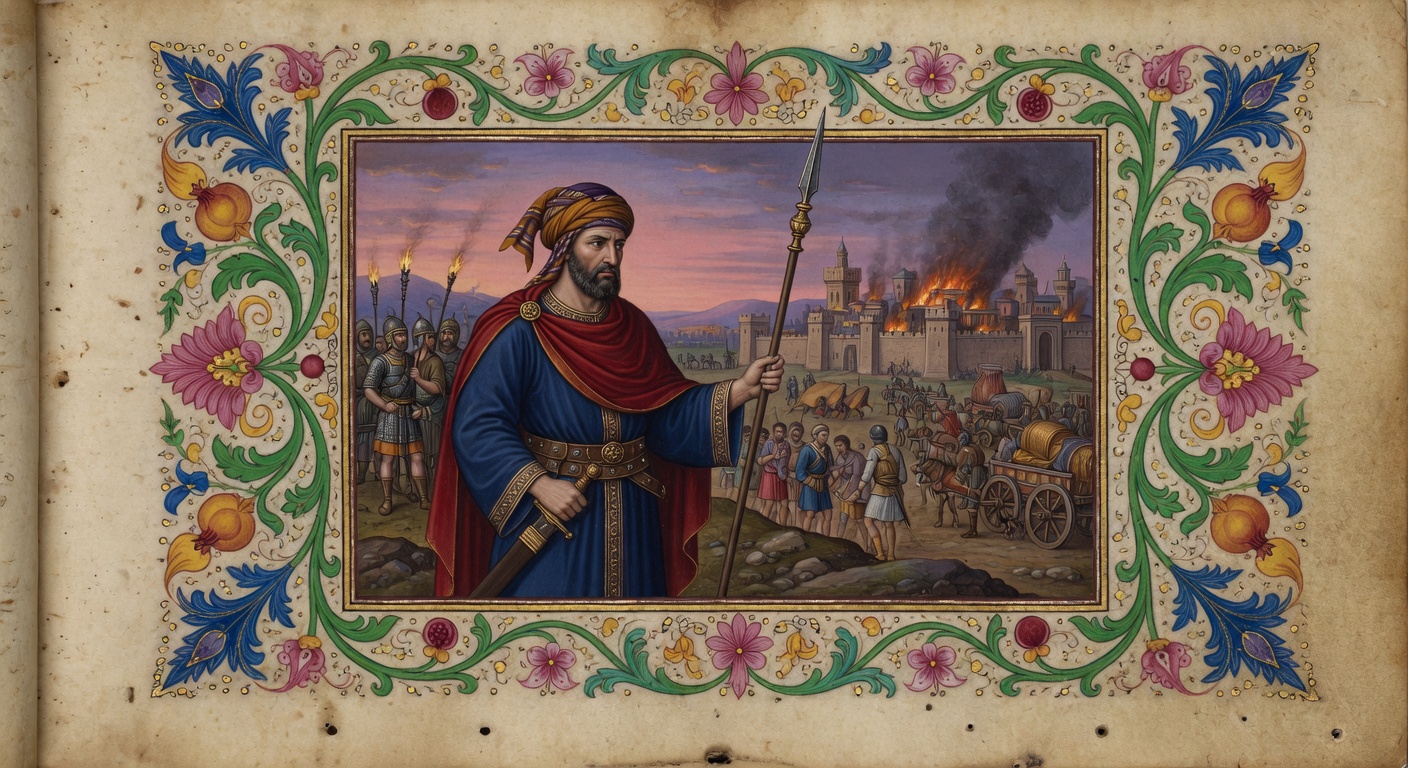
Nebuzaradan served as the captain of the guard under Babylonian King Nebuchadnezzar II and led the final assault on Jerusalem in 586 BCE. He directed the systematic destruction of the city walls, the burning of Solomon's Temple, and the execution of key officials while arranging the forced deportation of thousands of Judeans into exile. These events, recorded in 2 Kings 25 and Jeremiah 39-40, fulfilled earlier prophetic warnings of judgment for covenant unfaithfulness and initiated the Babylonian exile, a defining period that reshaped Jewish religious identity and hope for restoration.
Biography
- Occupation
- Captain of the Guard (Babylonian)
- Era
- Exile (c. 586 BC)
- Nationality
- Babylonian
Did You Know?
Nebuzaradan's title is literally rendered 'chief of the slaughterers' or 'executioners' in Hebrew, underscoring his direct role in carrying out mass executions and temple burnings during Jerusalem's fall rather than a mere military oversight position.
Despite his destructive mandate, Nebuzaradan explicitly followed Nebuchadnezzar's orders to release the prophet Jeremiah from chains and offer him safe passage to Babylon or anywhere else in Judah, revealing a rare moment of Babylonian clemency toward a Judean figure.
After the 586 BC destruction, he deliberately left the poorest remnant of Judah to work as vinedressers and plowmen on the land, a pragmatic decision that preserved minimal agricultural infrastructure amid the deportations.
Nebuzaradan's name incorporates the Babylonian deity Nabu (Nebo), translating roughly to 'Nabu has given offspring,' illustrating how even high-ranking officials bore theophoric names tying their identity to the empire's state religion.
Three years after the main exile, he led a smaller follow-up deportation of 745 additional Judeans, as noted in the precise tally of Jeremiah 52:30, extending Babylonian control through incremental population removals.
Key Passages
Nebuzaradan Burns Jerusalem
2 Kings 25:8-12
This passage shows how God’s justice for persistent unfaithfulness still leaves room for a humble remnant to carry His promises forward.
 8nd in the fifth month, on the seventh day of the month, which is the nineteenth year of king Nebuchadnezzar king of Babylon, came Nebuzaradan, captain of the guard, a servant of the king of Babylon, unto Jerusalem:
Nebuzaradan Frees Jeremiah
Jeremiah 39:11-14
This passage reveals God's tender protection over His faithful servants, orchestrating even foreign officials to preserve and bless them amid judgment.
 11ow Nebuchadrezzar king of Babylon gave charge concerning Jeremiah to Nebuzaradan the captain of the guard, saying,
Final Deportation
Jeremiah 52:12-16
This passage shows how God’s justice brings painful consequences for sin, yet He mercifully preserves a humble remnant to carry hope forward.
12ow in the fifth month, in the tenth day of the month, which was the nineteenth year of Nebuchadrezzar king of Babylon, came Nebuzaradan, captain of the guard, which served the king of Babylon, into Jerusalem,