Psalms 108 KJV
A Prayer for Victory
About This Psalm
A confident morning prayer combining parts of Psalms 57 and 60. Awake, my glory! Ready to face the day with God.
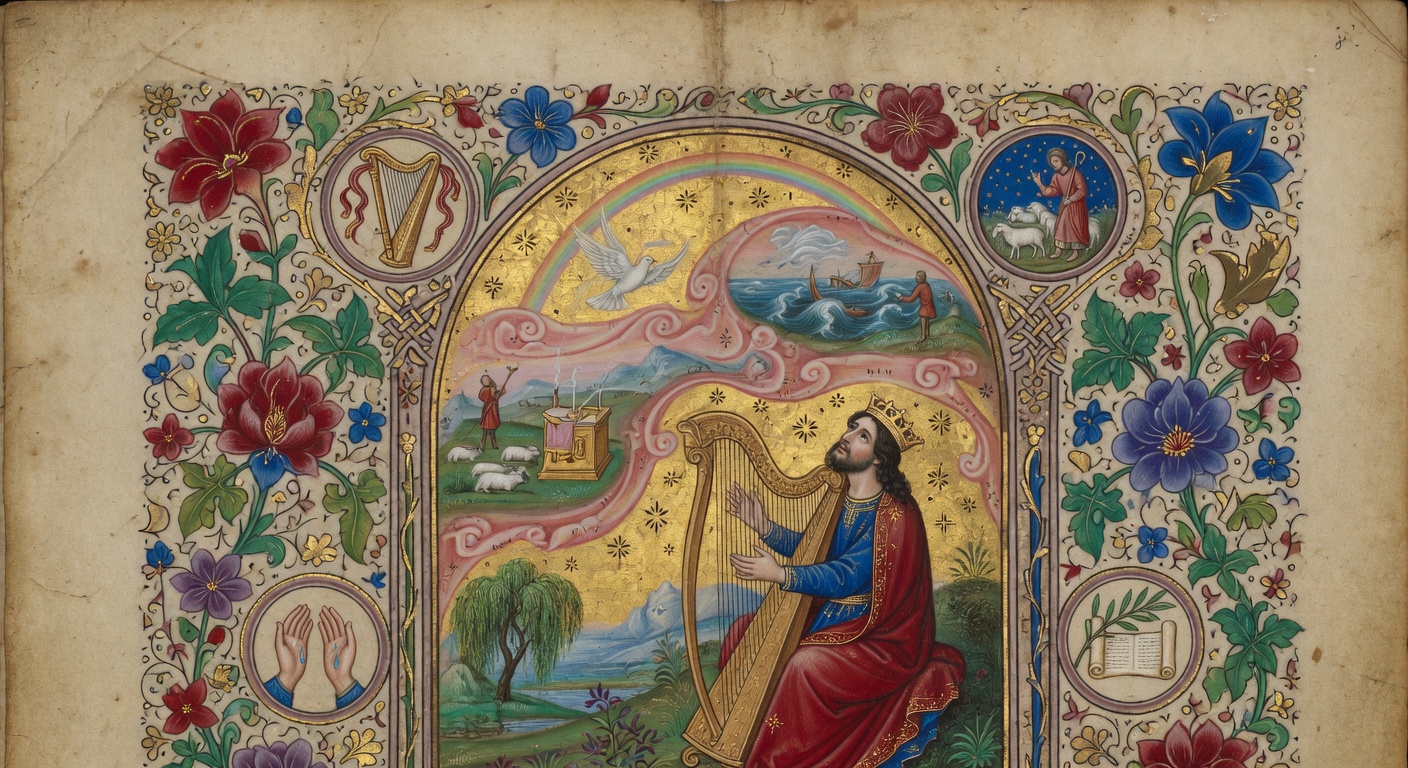
 1 God, my heart is fixed; I will sing and give praise, even with my glory.
2 Awake, psaltery and harp: I myself will awake early.
3 I will praise thee, O LORD, among the people: and I will sing praises unto thee among the nations.
4 For thy mercy is great above the heavens: and thy truth reacheth unto the clouds.
5 Be thou exalted, O God, above the heavens: and thy glory above all the earth;
6 That thy beloved may be delivered: save with thy right hand, and answer me.
7 God hath spoken in his holiness; I will rejoice, I will divide Shechem, and mete out the valley of Succoth.
8 Gilead is mine; Manasseh is mine; Ephraim also is the strength of mine head; Judah is my lawgiver;
9 Moab is my washpot; over Edom will I cast out my shoe; over Philistia will I triumph.
10 Who will bring me into the strong city? who will lead me into Edom?
11 Wilt not thou, O God, who hast cast us off? and wilt not thou, O God, go forth with our hosts?
12 Give us help from trouble: for vain is the help of man.
13 Through God we shall do valiantly: for he it is that shall tread down our enemies.
← → arrow keys to navigate chapters · spacebar to play/pause audio
Did You Know?
Psalm 108 reworks material from Psalms 57 and 60 into a new liturgical unit, illustrating how post-exilic editors repurposed earlier Davidic prayers to address fresh communal crises rather than simply copying them verbatim.
The abrupt transition from exuberant personal praise (vv. 1-5) to urgent national petition (vv. 6-13) mirrors ancient Near Eastern treaty patterns in which a vassal first affirms loyalty before requesting military aid from the suzerain deity.
Verse 9’s imagery of Moab as a washbasin and Edom as a sandal-throwing site draws on Iron Age victory rituals in which conquered territory was symbolically claimed through domestic acts, underscoring the psalm’s claim that YHWH himself performs these gestures through the king.
The unusual superscription “A Song. A Psalm of David” combines two distinct musical terms that elsewhere appear separately, hinting at a deliberate fusion of two pre-existing cultic compositions into one performance piece for temple use.
By placing this composite victory prayer immediately after Psalm 107’s fourfold refrain of deliverance from exile, the Psalter editor creates a theological arc in which individual and corporate redemption culminates in renewed conquest of ancestral enemies.