Psalms 137 KJV
By the Rivers of Babylon
About This Psalm
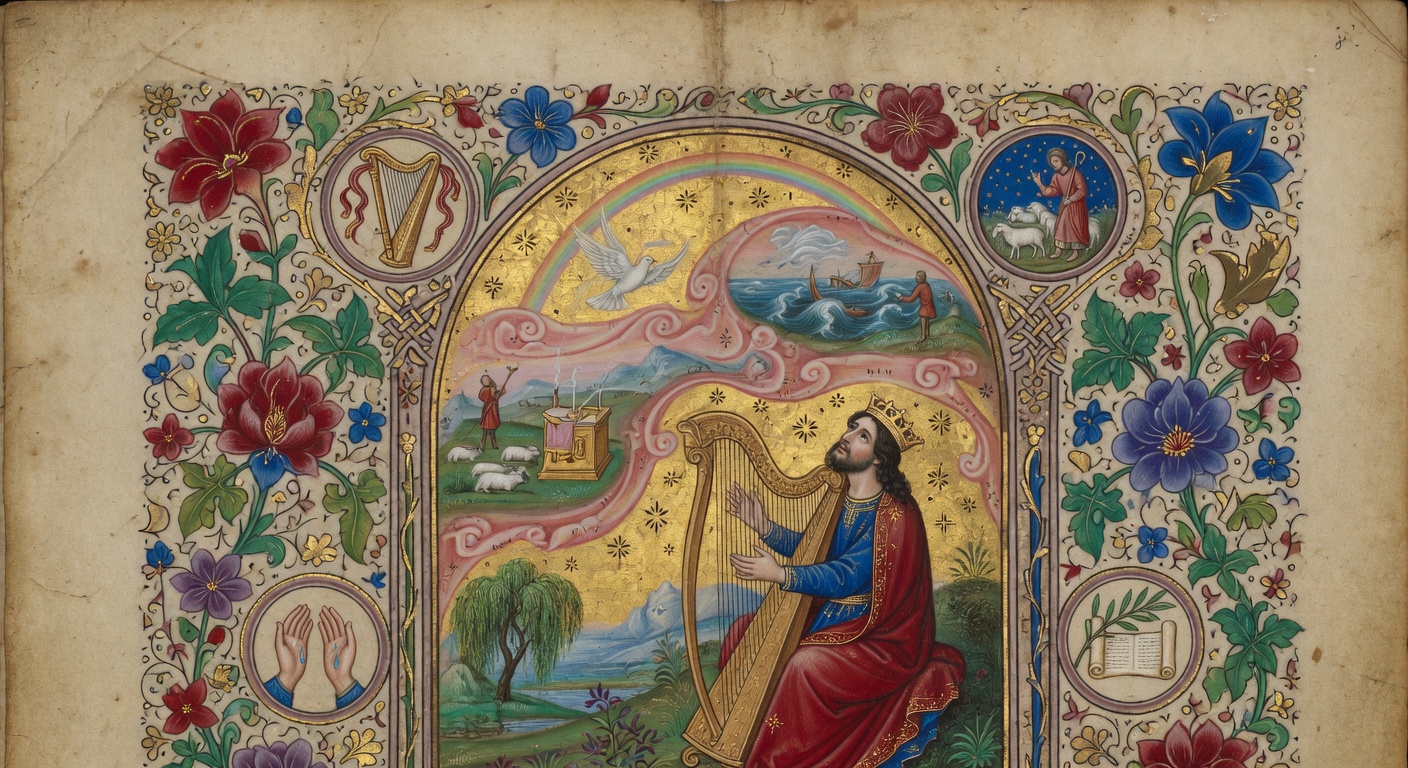
By the rivers of Babylon we wept. How can we sing the LORD's song in a foreign land? Exile grief.
 1y the rivers of Babylon, there we sat down, yea, we wept, when we remembered Zion.
2 We hanged our harps upon the willows in the midst thereof.
3 For there they that carried us away captive required of us a song; and they that wasted us required of us mirth, saying, Sing us one of the songs of Zion.
4 How shall we sing the LORD’s song in a strange land?
5 If I forget thee, O Jerusalem, let my right hand forget her cunning.
6 If I do not remember thee, let my tongue cleave to the roof of my mouth; if I prefer not Jerusalem above my chief joy.
7 Remember, O LORD, the children of Edom in the day of Jerusalem; who said, Rase it, rase it, even to the foundation thereof.
8 O daughter of Babylon, who art to be destroyed; happy shall he be, that rewardeth thee as thou hast served us.
9 Happy shall he be, that taketh and dasheth thy little ones against the stones.
← → arrow keys to navigate chapters · spacebar to play/pause audio
Did You Know?
Psalm 137 uniquely lacks any superscription attributing authorship or musical direction, distinguishing it from nearly all other psalms and suggesting a communal exilic origin rather than individual or temple-based composition.
The psalm's imprecation in verses 8-9 directly echoes the lex talionis principle found in Deuteronomy 19:21 while inverting the language of blessing from Genesis 13:16, framing the Babylonian infants as a reversal of Abrahamic promises.
Its refusal to sing 'the Lord's song' in a strange land (v. 4) theologically links Israel's liturgy to the physical temple and land, anticipating later rabbinic debates on whether true worship could occur outside Jerusalem after 70 CE.
The reference to Edom's complicity in verse 7 draws on the ancient Jacob-Esau rivalry (Genesis 25-27) and parallels the specific accusations in Obadiah 10-14, revealing a layered intertextual polemic against Edomite betrayal during Jerusalem's fall.
The riverside setting evokes both the Tigris-Euphrates irrigation canals where exiles labored and the mythic 'rivers of the underworld' motif from Mesopotamian literature, subtly contrasting Babylonian fertility cults with Israel's memory of Zion.