Psalms 143 KJV
A Prayer for Deliverance
About This Psalm
My spirit is overwhelmed. Teach me to do your will. A morning prayer when depression weighs heavy.
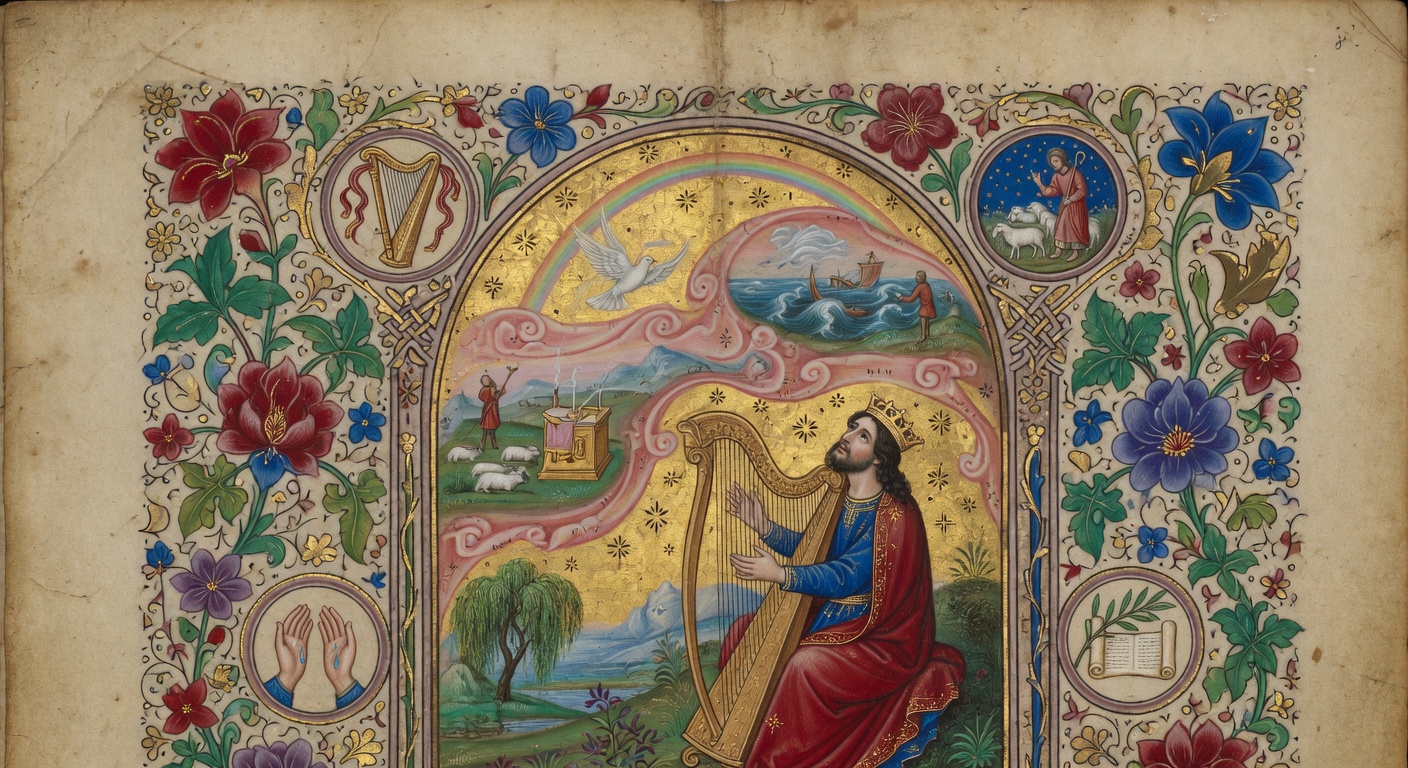
 1ear my prayer, O LORD, give ear to my supplications: in thy faithfulness answer me, and in thy righteousness.
2 And enter not into judgment with thy servant: for in thy sight shall no man living be justified.
3 For the enemy hath persecuted my soul; he hath smitten my life down to the ground; he hath made me to dwell in darkness, as those that have been long dead.
4 Therefore is my spirit overwhelmed within me; my heart within me is desolate.
5 I remember the days of old; I meditate on all thy works; I muse on the work of thy hands.
6 I stretch forth my hands unto thee: my soul thirsteth after thee, as a thirsty land. Selah.
7 Hear me speedily, O LORD: my spirit faileth: hide not thy face from me, lest I be like unto them that go down into the pit.
8 Cause me to hear thy lovingkindness in the morning; for in thee do I trust: cause me to know the way wherein I should walk; for I lift up my soul unto thee.
9 Deliver me, O LORD, from mine enemies: I flee unto thee to hide me.
10 Teach me to do thy will; for thou art my God: thy spirit is good; lead me into the land of uprightness.
11 Quicken me, O LORD, for thy name’s sake: for thy righteousness’ sake bring my soul out of trouble.
12 And of thy mercy cut off mine enemies, and destroy all them that afflict my soul: for I am thy servant.
← → arrow keys to navigate chapters · spacebar to play/pause audio
Did You Know?
Verse 2's declaration that no living person can be justified before God anticipates Pauline soteriology by grounding justification solely in divine mercy rather than human merit.
The appeal to 'thy good spirit' in verse 10 represents one of the earliest personal petitions for the Spirit's guidance in the Psalter, linking pneumatology to ethical formation in the land of uprightness.
Its meditation on God's former works (v. 5) mirrors the structure of Psalm 77, suggesting redactional pairing that transforms individual lament into a shared liturgical memory of deliverance.
The 'thirsty land' metaphor in verse 6 draws on ancient Near Eastern drought imagery to depict spiritual exhaustion, inverting fertility motifs from Canaanite religion into covenantal dependence on YHWH.
The morning petition in verse 8 echoes the timing of the Tamid offering, framing the psalm as a bridge between personal crisis and temple liturgy where dawn signals renewed covenant faithfulness.