Psalms 24 KJV
The King of Glory
About This Psalm
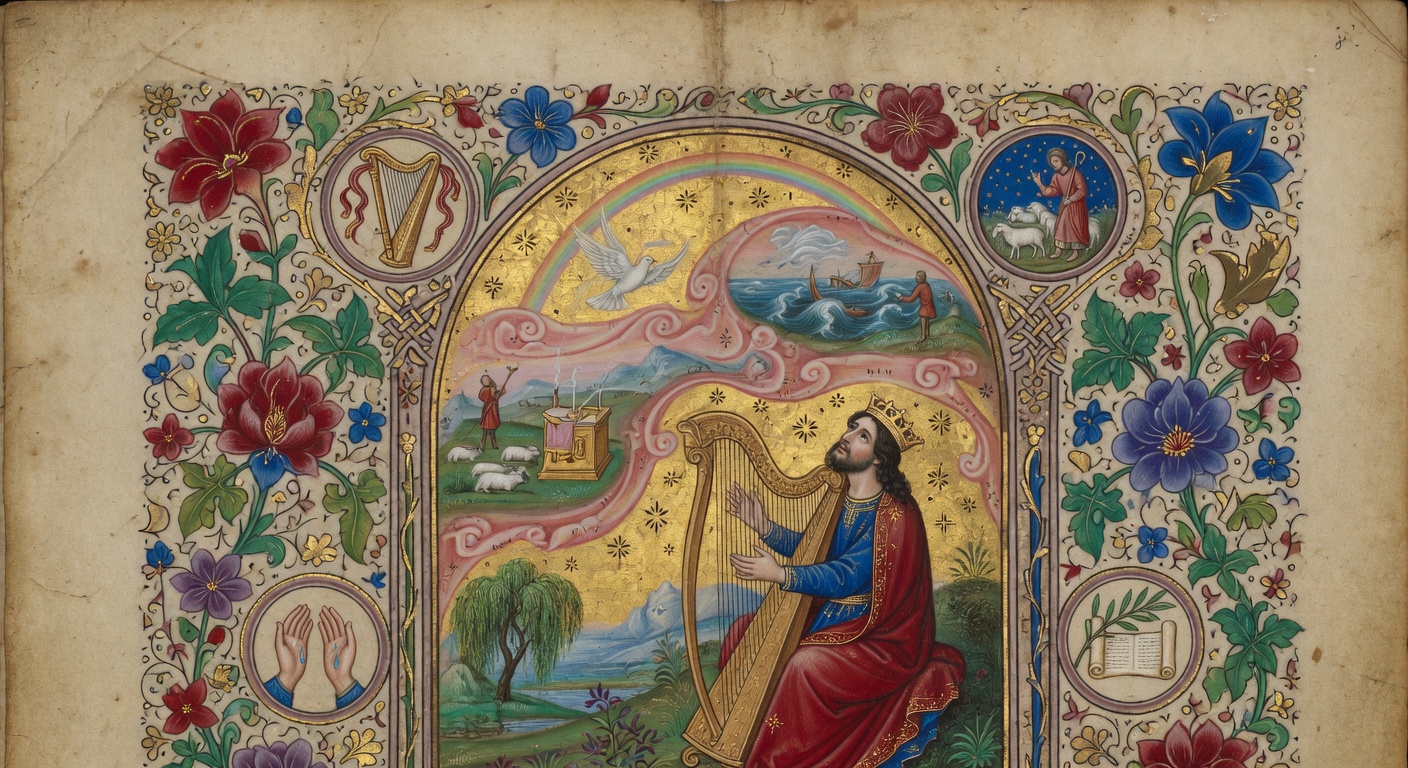
The King of Glory enters His city. A processional hymn asking 'Who is worthy?' Answer: the LORD strong and mighty.
 1he earth is the LORD’s, and the fulness thereof; the world, and they that dwell therein.
2 For he hath founded it upon the seas, and established it upon the floods.
3 Who shall ascend into the hill of the LORD? or who shall stand in his holy place?
4 He that hath clean hands, and a pure heart; who hath not lifted up his soul unto vanity, nor sworn deceitfully.
5 He shall receive the blessing from the LORD, and righteousness from the God of his salvation.
6 This is the generation of them that seek him, that seek thy face, O Jacob. Selah.
7 Lift up your heads, O ye gates; and be ye lift up, ye everlasting doors; and the King of glory shall come in.
8 Who is this King of glory? The LORD strong and mighty, the LORD mighty in battle.
9 Lift up your heads, O ye gates; even lift them up, ye everlasting doors; and the King of glory shall come in.
10 Who is this King of glory? The LORD of hosts, he is the King of glory. Selah.
← → arrow keys to navigate chapters · spacebar to play/pause audio
Did You Know?
Psalm 24's opening declaration that the earth belongs to the Lord with its fullness directly counters Canaanite Baal myths by asserting Yahweh's ownership over creation without conflict or combat, grounding the psalm in polemic theology rather than mere praise.
The repeated question 'Who is this King of glory?' in verses 8 and 10 employs a liturgical dialogue format that mirrors ancient Near Eastern gate liturgies where priests challenged entrants, but here it functions to affirm Yahweh's exclusive identity as both warrior and sovereign.
Verses 3-6 form a precise ethical mirror to the Decalogue's second table, requiring clean hands and a pure heart as prerequisites for temple ascent, which subtly shifts focus from ritual purity to moral integrity in pre-exilic worship practice.
The psalm's final call for the 'everlasting doors' to lift up connects intertextually with Isaiah 6's temple vision and Ezekiel 43's divine entry, suggesting a shared motif of cosmic architecture yielding to divine presence rather than literal Jerusalem gates.
Its tripartite structure (creation dominion, ascent qualifications, and enthronement acclamation) parallels the ancient Israelite New Year festival pattern evidenced in Ugaritic texts, positioning the psalm as a likely component of enthronement ritual rather than a standalone hymn.