Psalms 3 KJV
A Morning Prayer of Trust
About This Psalm
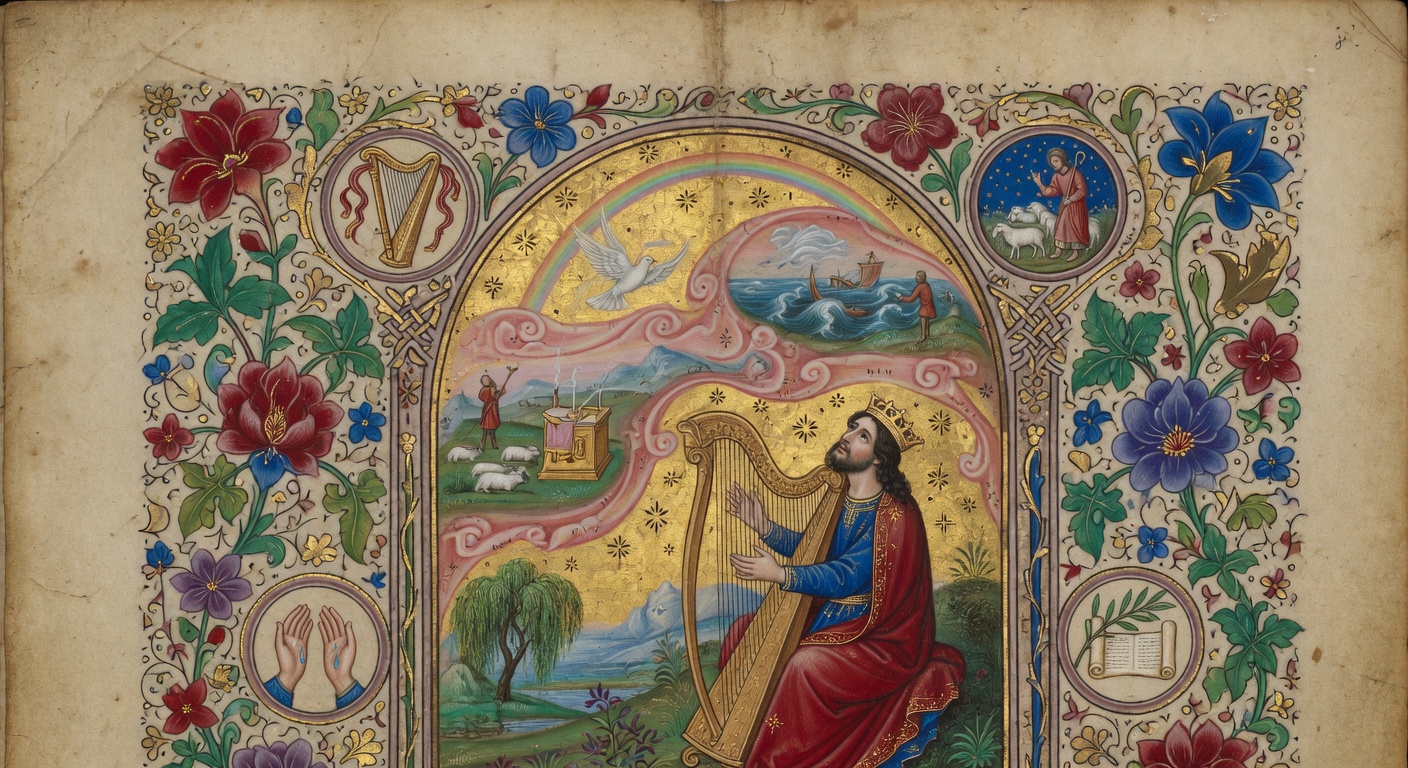
Written while fleeing his own son Absalom. David finds peace to sleep even when surrounded by enemies. When everything falls apart, God is still a shield.
 1ord, how are they increased that trouble me! many are they that rise up against me.
2 Many there be which say of my soul, There is no help for him in God. Selah.
3 But thou, O LORD, art a shield for me; my glory, and the lifter up of mine head.
4 I cried unto the LORD with my voice, and he heard me out of his holy hill. Selah.
5 I laid me down and slept; I awaked; for the LORD sustained me.
6 I will not be afraid of ten thousands of people, that have set themselves against me round about.
7 Arise, O LORD; save me, O my God: for thou hast smitten all mine enemies upon the cheek bone; thou hast broken the teeth of the ungodly.
8 Salvation belongeth unto the LORD: thy blessing is upon thy people. Selah.
← → arrow keys to navigate chapters · spacebar to play/pause audio
Did You Know?
Psalm 3 is the first in the Psalter to carry a detailed historical superscription linking it to Absalom's rebellion, a device that later shapes the interpretive frame for roughly one-third of the Davidic collection.
The psalm's movement from nocturnal sleep (v. 5) to morning confidence subtly echoes ancient Near Eastern royal ideology in which a king's ability to rest safely signals divine legitimation of his throne amid insurrection.
Verse 2's report that enemies deny David any 'help in God' likely preserves a fragment of Absalom's propaganda campaign, which sought to portray David's kingship as already abandoned by YHWH rather than merely militarily threatened.
The unusual closing benediction upon 'thy people' (v. 8) shifts the psalm from individual petition to corporate intercession, implying that the king's personal deliverance is understood as the channel through which national salvation flows.
The striking dental imagery of God shattering the teeth of the wicked (v. 7) repurposes a curse motif common in Egyptian execration texts, transforming it into a declaration that YHWH himself performs the physical neutralization of covenant breakers.