Psalms 42 KJV
Thirsting for God
About This Psalm
As the deer pants for water, so my soul thirsts for God. Written in exile, far from the temple. Spiritual homesickness at its most poetic.
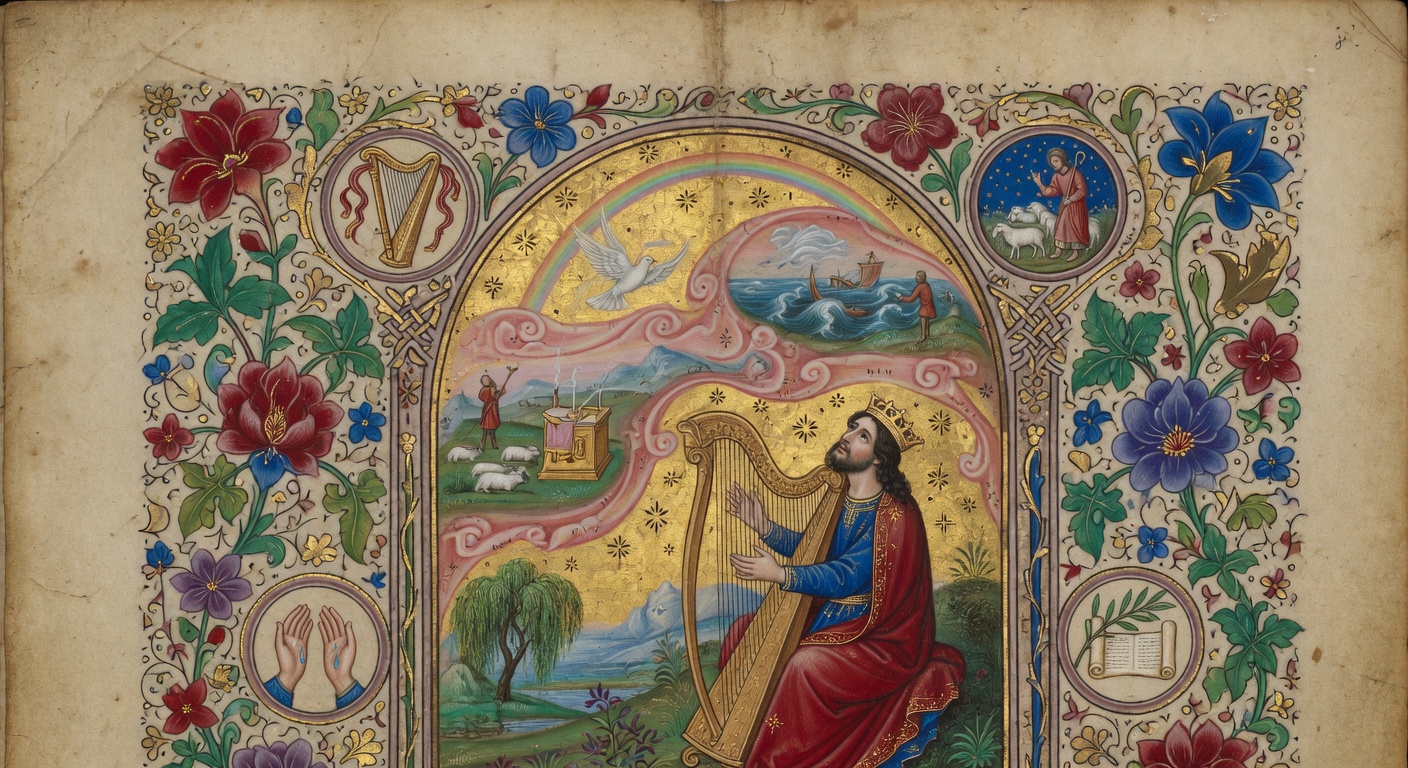
 1s the hart panteth after the water brooks, so panteth my soul after thee, O God.
2 My soul thirsteth for God, for the living God: when shall I come and appear before God?
3 My tears have been my meat day and night, while they continually say unto me, Where is thy God?
4 When I remember these things, I pour out my soul in me: for I had gone with the multitude, I went with them to the house of God, with the voice of joy and praise, with a multitude that kept holyday.
5 Why art thou cast down, O my soul? and why art thou disquieted in me? hope thou in God: for I shall yet praise him for the help of his countenance.
6 O my God, my soul is cast down within me: therefore will I remember thee from the land of Jordan, and of the Hermonites, from the hill Mizar.
7 Deep calleth unto deep at the noise of thy waterspouts: all thy waves and thy billows are gone over me.
8 Yet the LORD will command his lovingkindness in the day time, and in the night his song shall be with me, and my prayer unto the God of my life.
9 I will say unto God my rock, Why hast thou forgotten me? why go I mourning because of the oppression of the enemy?
10 As with a sword in my bones, mine enemies reproach me; while they say daily unto me, Where is thy God?
11 Why art thou cast down, O my soul? and why art thou disquieted within me? hope thou in God: for I shall yet praise him, who is the health of my countenance, and my God.
← → arrow keys to navigate chapters · spacebar to play/pause audio
Did You Know?
Psalms 42 is the first of the Korahite collection in Book II, whose superscription links it to descendants of the rebel Korah whose line was divinely preserved to become temple musicians, embodying a theological arc from judgment to restored worship leadership.
The repeated refrain 'Why art thou cast down, O my soul' in verses 5 and 11, together with its echo in 43:5 and the absence of a superscription in Psalm 43, indicates the two psalms were likely one unified composition later divided in the canonical Psalter.
Geographical markers such as 'the land of Jordan, and of the Hermonites, from the hill Mizar' place the speaker in northern exile or diaspora, transforming a personal lament into a communal expression of distance from Zion's cultic presence.
The phrase 'deep calleth unto deep at the noise of thy waterspouts' draws on ancient Near Eastern chaos imagery, recasting primordial waters not as rival deities but as forces summoned and governed by Yahweh's sovereign voice.
Its opening deer-and-water metaphor, unique in the Psalter for its sustained physiological intensity, later shaped both Jewish and Christian mystical traditions, notably influencing medieval commentaries that read the panting hart as the soul's Eucharistic or eschatological longing.