Psalms 47 KJV
God the King of All the Earth
About This Psalm
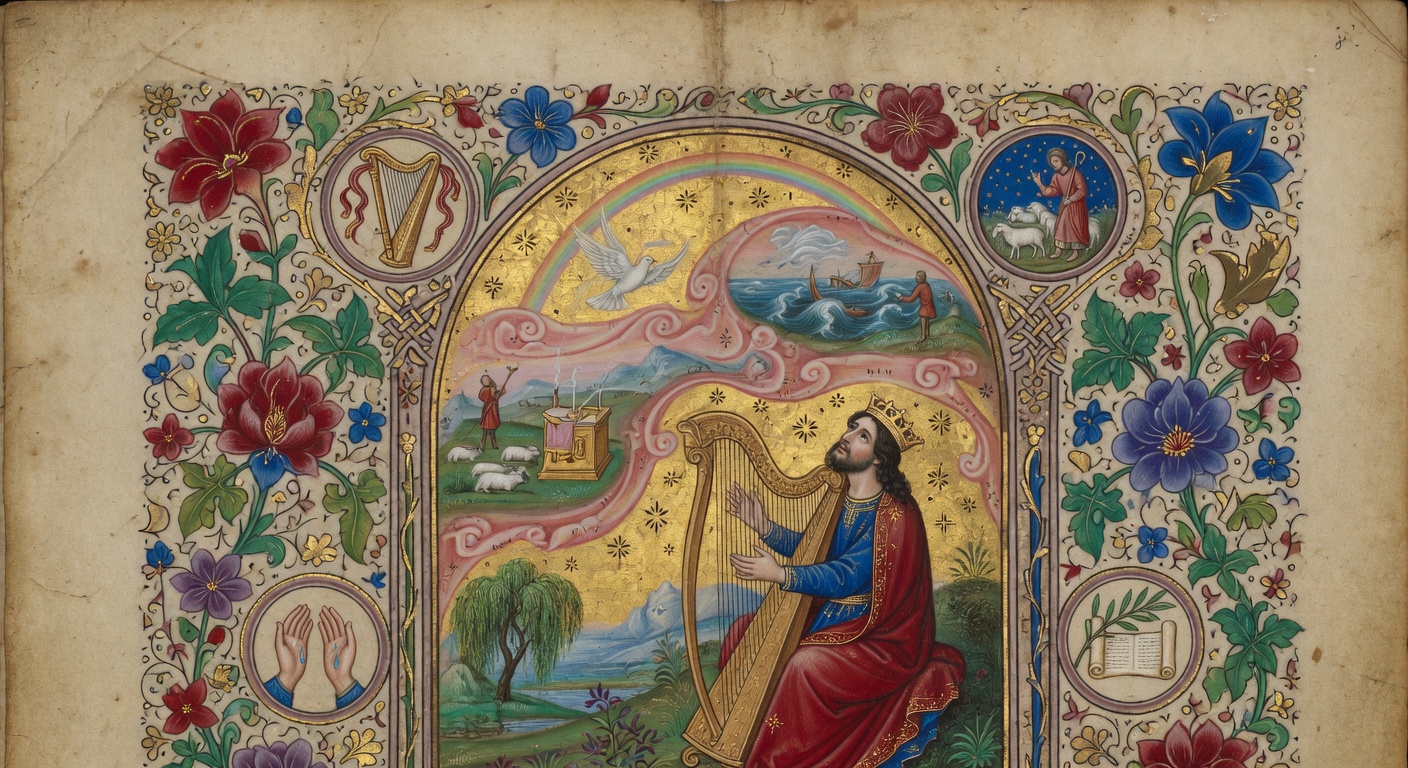
Clap your hands, all peoples! God is King over all the earth. Pure, exuberant, global worship.
 1 clap your hands, all ye people; shout unto God with the voice of triumph.
2 For the LORD most high is terrible; he is a great King over all the earth.
3 He shall subdue the people under us, and the nations under our feet.
4 He shall choose our inheritance for us, the excellency of Jacob whom he loved. Selah.
5 God is gone up with a shout, the LORD with the sound of a trumpet.
6 Sing praises to God, sing praises: sing praises unto our King, sing praises.
7 For God is the King of all the earth: sing ye praises with understanding.
8 God reigneth over the heathen: God sitteth upon the throne of his holiness.
9 The princes of the people are gathered together, even the people of the God of Abraham: for the shields of the earth belong unto God: he is greatly exalted.
← → arrow keys to navigate chapters · spacebar to play/pause audio
Did You Know?
The psalm's reference to God going up with a shout and trumpet likely evokes the procession of the Ark of the Covenant ascending Mount Zion, ritually dramatizing Yahweh's enthronement rather than a literal heavenly ascent.
Its attribution to the sons of Korah connects it to a Levitical guild whose history of rebellion and survival (Numbers 16) adds ironic depth to their role as composers of songs celebrating divine kingship over rebellious nations.
Verse 9's gathering of 'the people of the God of Abraham' alongside Gentile princes subtly fulfills the Abrahamic promise that all families of the earth would be blessed, extending covenant language beyond Israel.
The unusual phrase 'sing praises with understanding' employs a Hebrew root also meaning 'to act wisely,' implying that worship must combine musical expression with covenantal insight rather than mere emotion.
The closing image of the 'shields of the earth' belonging to God poetically equates earthly rulers and their military power with votive offerings surrendered to the divine throne, underscoring universal sovereignty.