Psalms 77 KJV
Remembering God's Mighty Deeds
About This Psalm
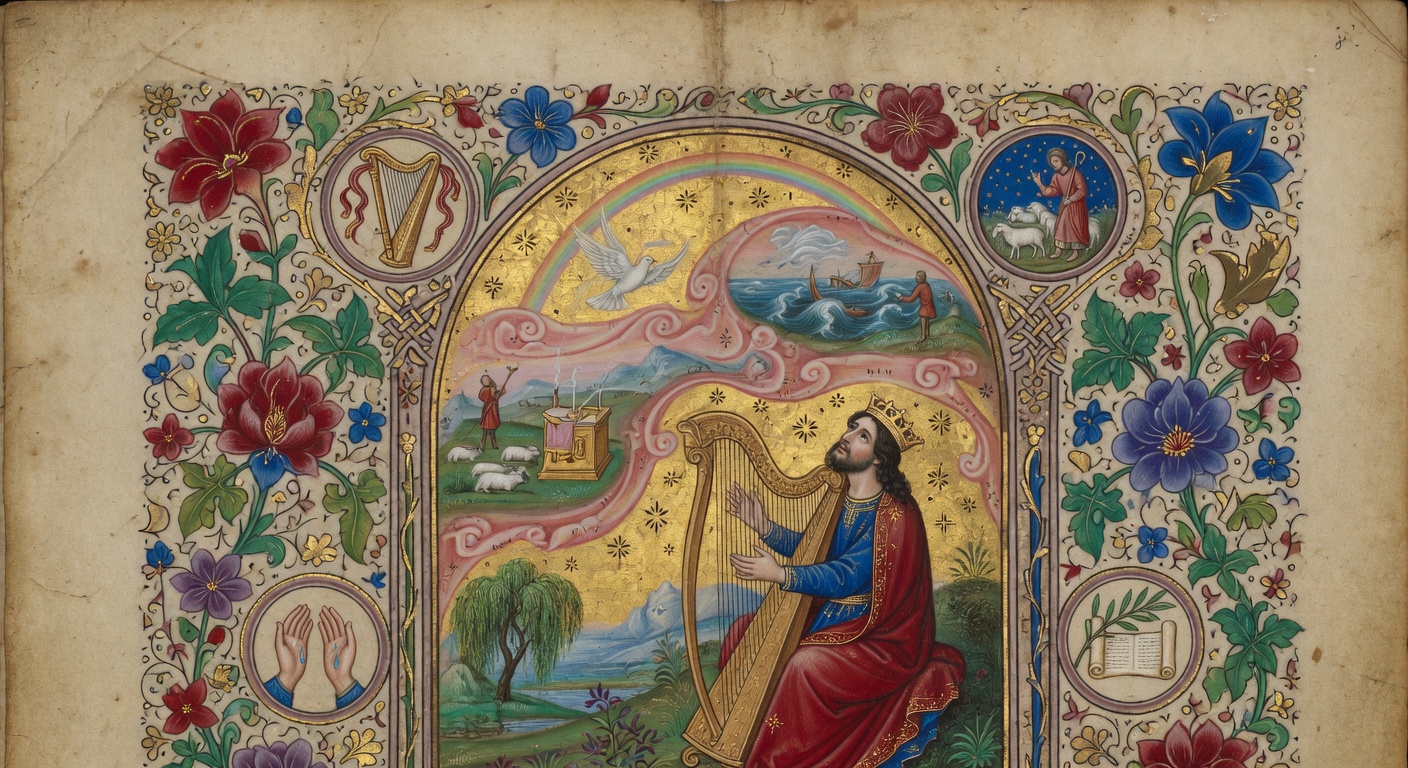
Sleepless nights remembering better days. Has God forgotten to be gracious? Then remembering His past faithfulness.
 1 cried unto God with my voice, even unto God with my voice; and he gave ear unto me.
2 In the day of my trouble I sought the Lord: my sore ran in the night, and ceased not: my soul refused to be comforted.
3 I remembered God, and was troubled: I complained, and my spirit was overwhelmed. Selah.
4 Thou holdest mine eyes waking: I am so troubled that I cannot speak.
5 I have considered the days of old, the years of ancient times.
6 I call to remembrance my song in the night: I commune with mine own heart: and my spirit made diligent search.
7 Will the Lord cast off for ever? and will he be favourable no more?
8 Is his mercy clean gone for ever? doth his promise fail for evermore?
9 Hath God forgotten to be gracious? hath he in anger shut up his tender mercies? Selah.
10 And I said, This is my infirmity: but I will remember the years of the right hand of the most High.
11 I will remember the works of the LORD: surely I will remember thy wonders of old.
12 I will meditate also of all thy work, and talk of thy doings.
13 Thy way, O God, is in the sanctuary: who is so great a God as our God?
14 Thou art the God that doest wonders: thou hast declared thy strength among the people.
15 Thou hast with thine arm redeemed thy people, the sons of Jacob and Joseph. Selah.
16 The waters saw thee, O God, the waters saw thee; they were afraid: the depths also were troubled.
17 The clouds poured out water: the skies sent out a sound: thine arrows also went abroad.
18 The voice of thy thunder was in the heaven: the lightnings lightened the world: the earth trembled and shook.
19 Thy way is in the sea, and thy path in the great waters, and thy footsteps are not known.
20 Thou leddest thy people like a flock by the hand of Moses and Aaron.
← → arrow keys to navigate chapters · spacebar to play/pause audio
Did You Know?
Psalm 77 reappropriates Canaanite storm-god imagery by portraying Yahweh's thunderous voice and lightning arrows at the Red Sea, transforming polytheistic motifs into a monotheistic affirmation that chaos itself obeys Israel's covenant Lord.
The psalm's abrupt ending after the Exodus recollection leaves the speaker's personal crisis unresolved, implying that faithful memory of God's 'way in the sea' functions as an ongoing liturgical act rather than a guaranteed emotional cure.
Verse 19's declaration that God's footsteps were unknown in the waters subtly subverts ancient Near Eastern expectations of visible divine processions, presenting hiddenness as integral to Yahweh's redemptive method.
As one of the Asaphite psalms, it models how temple musicians transformed individual insomnia and doubt into corporate catechesis, linking personal anguish to the collective rehearsal of salvation history during worship.
The rhetorical shift from 'Has God forgotten to be gracious?' to the Exodus narrative enacts a theological move in which Israel's past becomes the grammar for interpreting present suffering, a pattern later echoed in prophetic and New Testament uses of the sea-crossing motif.