Psalms 92 KJV
A Song for the Sabbath
About This Psalm
A song for the Sabbath. The righteous flourish like a palm tree. Taking time to rest and recognize God's works.
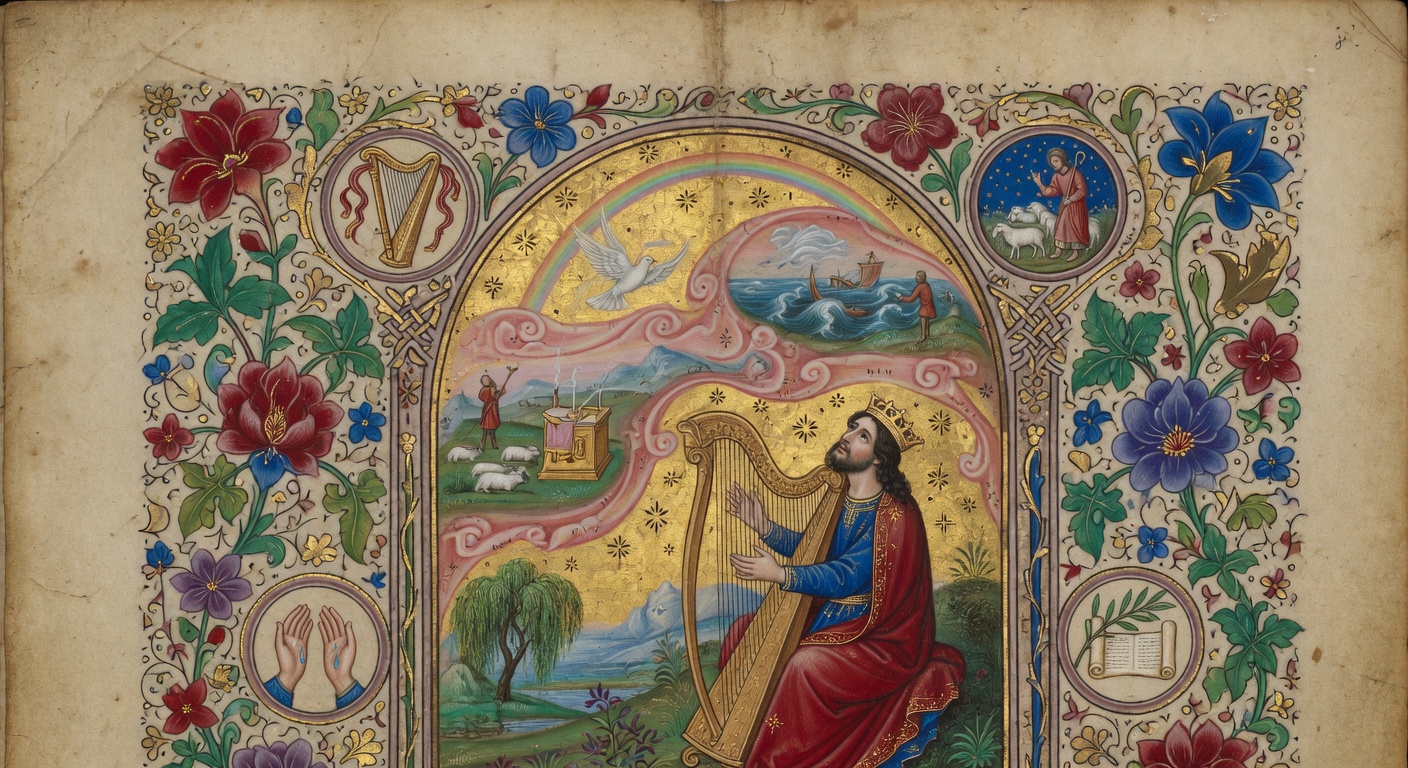
 1T IS A GOOD THING TO GIVE THANKS UNTO THE LORD, AND TO SING PRAISES UNTO THY NAME, O MOST HIGH:
2 To shew forth thy lovingkindness in the morning, and thy faithfulness every night,
3 Upon an instrument of ten strings, and upon the psaltery; upon the harp with a solemn sound.
4 For thou, LORD, hast made me glad through thy work: I will triumph in the works of thy hands.
5 O LORD, how great are thy works! and thy thoughts are very deep.
6 A brutish man knoweth not; neither doth a fool understand this.
7 When the wicked spring as the grass, and when all the workers of iniquity do flourish; it is that they shall be destroyed for ever:
8 But thou, LORD, art most high for evermore.
9 For, lo, thine enemies, O LORD, for, lo, thine enemies shall perish; all the workers of iniquity shall be scattered.
10 But my horn shalt thou exalt like the horn of an unicorn: I shall be anointed with fresh oil.
11 Mine eye also shall see my desire on mine enemies, and mine ears shall hear my desire of the wicked that rise up against me.
12 The righteous shall flourish like the palm tree: he shall grow like a cedar in Lebanon.
13 Those that be planted in the house of the LORD shall flourish in the courts of our God.
14 They shall still bring forth fruit in old age; they shall be fat and flourishing;
15 To shew that the LORD is upright: he is my rock, and there is no unrighteousness in him.
← → arrow keys to navigate chapters · spacebar to play/pause audio
Did You Know?
According to the Mishnah (Tamid 7:4), this psalm was the designated song of the Levites for the Sabbath Temple service, linking its performance to the weekly reenactment of creation rest.
The botanical contrast between grass (quickly destroyed) and transplanted palm/cedar trees evokes ancient Near Eastern royal iconography where such trees symbolized enduring divine favor and temple presence.
Verse 10's reference to being 'anointed with fresh oil' uses language typically reserved for kings or high priests, subtly implying that Sabbath worshippers share in a form of participatory exaltation.
Though assigned to the Sabbath, the psalm omits any mention of cessation from labor and instead centers on the inscrutability of divine thoughts (v. 5), offering theodicy rather than rest as the day's theme.
The sudden shift to first-person singular in verses 10-11 after communal plural praise mirrors the structure of certain Ugaritic victory hymns, suggesting an archaic literary borrowing adapted for Israelite Sabbath liturgy.