Esther 10 KJV
The Greatness of Mordecai
Esther Chapter 10: The Greatness of Mordecai
The chapter's appeal to the chronicles of the kings of Media and Persia functions as a deliberate literary device that embeds the Esther narrative within the official archival tradition of the Achaemenid empire, implying that Mordecai's rise was a matter of verifiable imperial record rather than isolated Jewish lore.
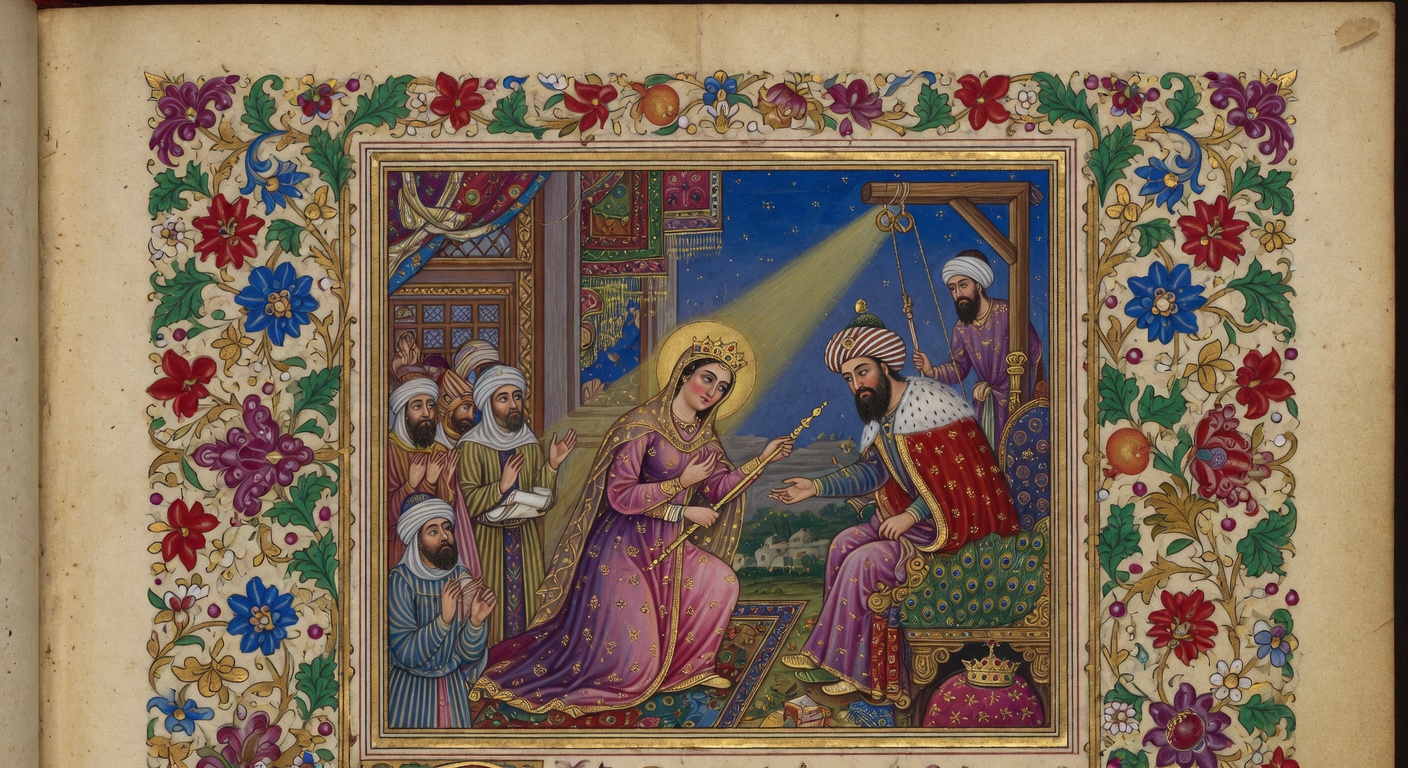
 1nd the king Ahasuerus laid a tribute upon the land, and upon the isles of the sea.
2 And all the acts of his power and of his might, and the declaration of the greatness of Mordecai, whereunto the king advanced him, are they not written in the book of the chronicles of the kings of Media and Persia?
3 For Mordecai the Jew was next unto king Ahasuerus, and great among the Jews, and accepted of the multitude of his brethren, seeking the wealth of his people, and speaking peace to all his seed.
← → arrow keys to navigate chapters · spacebar to play/pause audio
Did You Know?
The chapter's appeal to the chronicles of the kings of Media and Persia functions as a deliberate literary device that embeds the Esther narrative within the official archival tradition of the Achaemenid empire, implying that Mordecai's rise was a matter of verifiable imperial record rather than isolated Jewish lore.
Mordecai's final portrayal as one who 'spoke peace to all his seed' employs language reminiscent of patriarchal blessings and prophetic visions of shalom, subtly positioning him as a new kind of diaspora patriarch who extends well-being beyond his immediate kin to the broader Jewish community.
The opening notice of tribute imposed on the land and the isles of the sea underscores the Persian empire's vast maritime reach, historically aligning with Achaemenid administrative practices that extracted revenue from Aegean and Mediterranean territories following military campaigns.
By shifting focus at the book's close from Esther to Mordecai's acceptance among 'the multitude of his brethren,' the narrative quietly acknowledges potential communal ambivalence toward a Jewish courtier whose power derived from both Persian favor and Jewish identity.
The absence of any explicit divine name in this concluding chapter completes the book's distinctive theological pattern in which God's activity remains entirely veiled, leaving readers to infer providential ordering solely through the improbable elevation of a Jewish vizier in a foreign court.