Psalms 36 KJV
The Wickedness of Man
About This Psalm
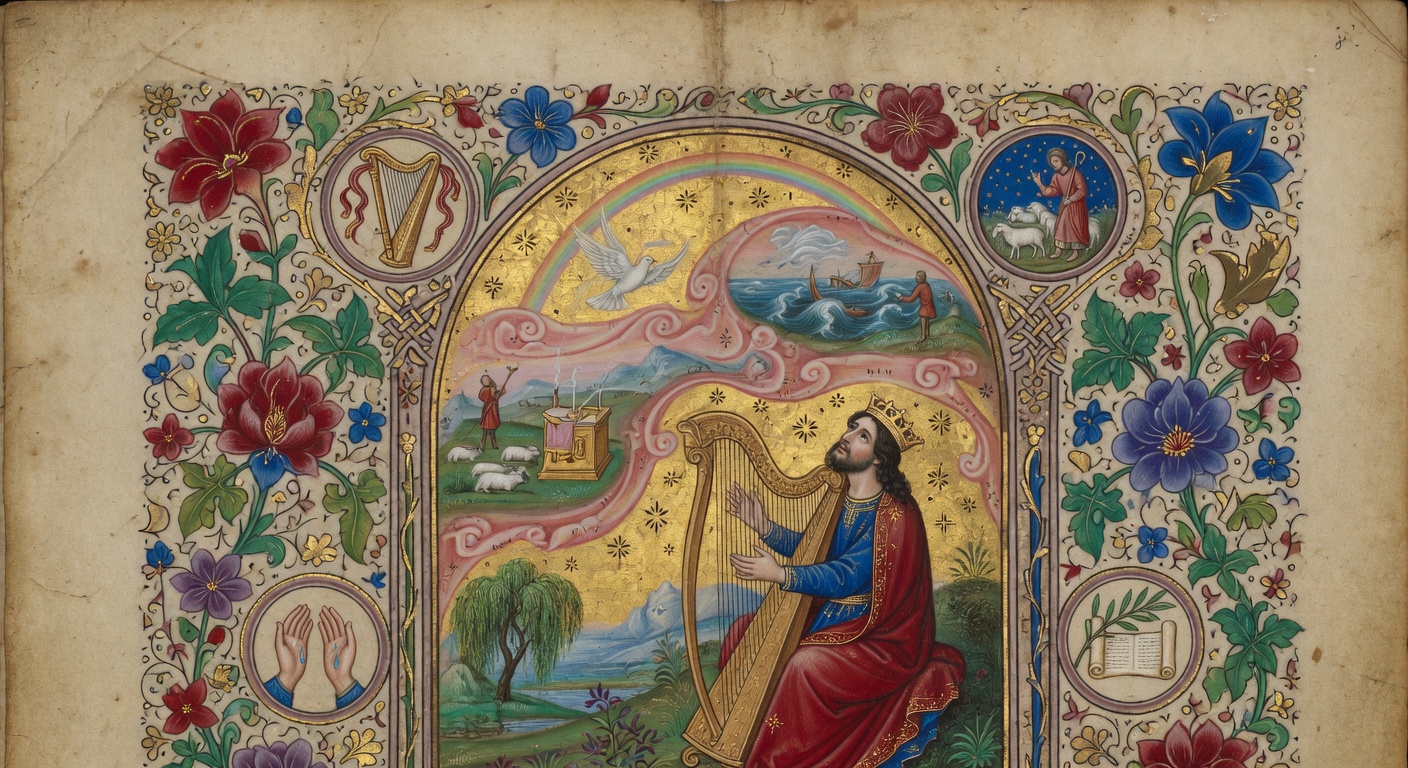
Contrasting human wickedness with God's boundless love. His faithfulness reaches to the clouds while evil plots in the dark.
 1he transgression of the wicked saith within my heart, that there is no fear of God before his eyes.
2 For he flattereth himself in his own eyes, until his iniquity be found to be hateful.
3 The words of his mouth are iniquity and deceit: he hath left off to be wise, and to do good.
4 He deviseth mischief upon his bed; he setteth himself in a way that is not good; he abhorreth not evil.
5 Thy mercy, O LORD, is in the heavens; and thy faithfulness reacheth unto the clouds.
6 Thy righteousness is like the great mountains; thy judgments are a great deep: O LORD, thou preservest man and beast.
7 How excellent is thy lovingkindness, O God! therefore the children of men put their trust under the shadow of thy wings.
8 They shall be abundantly satisfied with the fatness of thy house; and thou shalt make them drink of the river of thy pleasures.
9 For with thee is the fountain of life: in thy light shall we see light.
10 O continue thy lovingkindness unto them that know thee; and thy righteousness to the upright in heart.
11 Let not the foot of pride come against me, and let not the hand of the wicked remove me.
12 There are the workers of iniquity fallen: they are cast down, and shall not be able to rise.
← → arrow keys to navigate chapters · spacebar to play/pause audio
Did You Know?
The opening verse presents transgression itself as delivering an oracle to the wicked, inverting the normal prophetic pattern where YHWH speaks and framing sin as an autonomous, self-revealing voice within the human heart.
Verse 6’s pairing of God’s righteousness with “the great deep” deliberately echoes the chaos-waters of Genesis 1 and Canaanite cosmology, portraying divine justice as both ordering and containing the primordial abyss rather than eliminating it.
The superscription’s unique designation of David as “the servant of the LORD” (only here and in Psalm 18 among the Davidic psalms) aligns the speaker with the ideal covenant mediator of 2 Samuel 7, inviting readers to hear the psalm as royal intercession.
The phrase “fatness of thy house” (v. 8) alludes to the fatty portions of sacrificial offerings reserved for the deity yet shared with worshipers, implying that communion with God grants access to the very portion normally withheld from mortals.
The closing plea that “the foot of pride” not come against the psalmist (v. 11) employs the rare term “ga’avah” in a spatial sense, linking human arrogance with the mythic overreach of cosmic enemies subdued in the divine warrior hymns.