Judges 12 KJV
Jephthah and Ephraim
Judges Chapter 12: Jephthah and Ephraim
The Shibboleth test at the Jordan fords exploits a phonetic distinction between Ephraimite and Gileadite dialects, serving as one of the earliest biblical examples of language functioning as an ethnic boundary marker in intra-Israelite conflict.
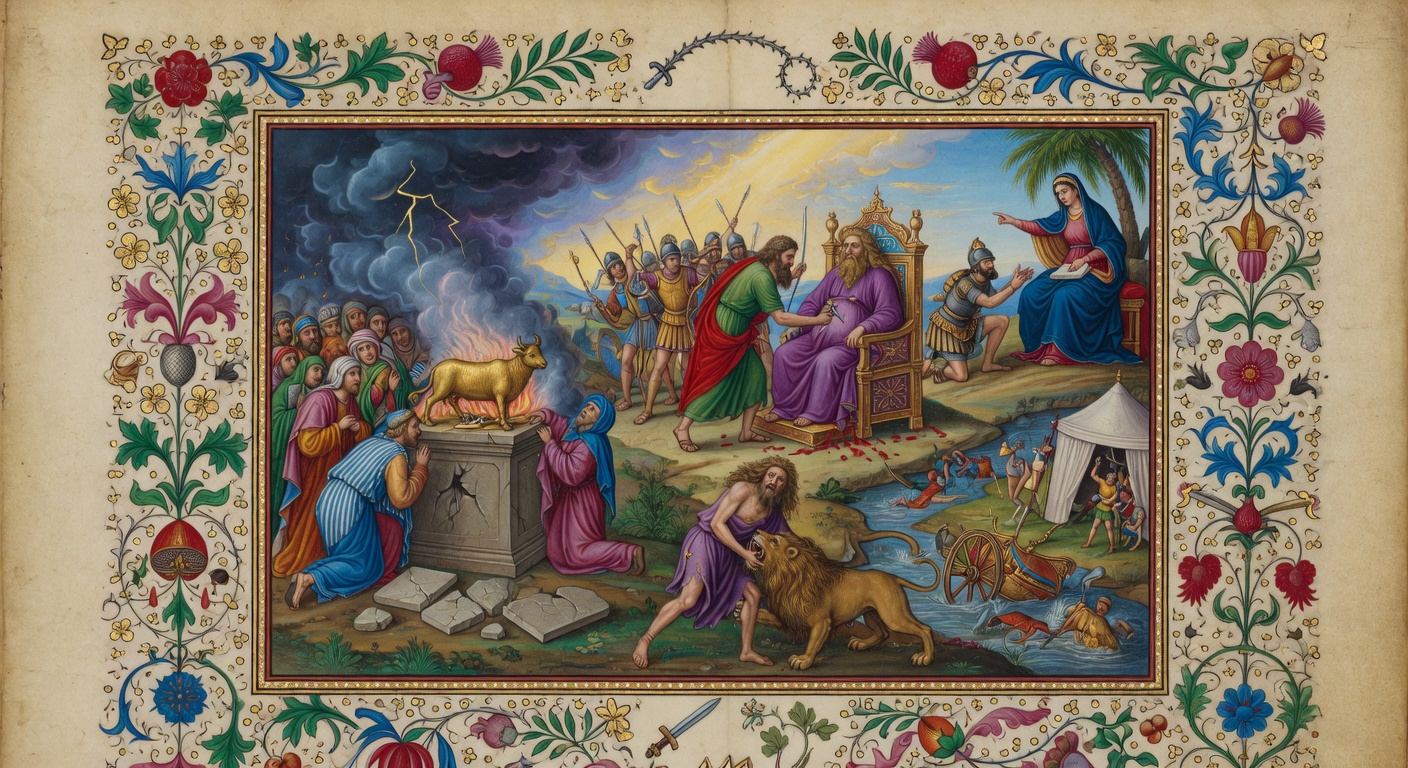
 1nd the men of Ephraim gathered themselves together, and went northward, and said unto Jephthah, Wherefore passedst thou over to fight against the children of Ammon, and didst not call us to go with thee? we will burn thine house upon thee with fire.
2 And Jephthah said unto them, I and my people were at great strife with the children of Ammon; and when I called you, ye delivered me not out of their hands.
3 And when I saw that ye delivered me not, I put my life in my hands, and passed over against the children of Ammon, and the LORD delivered them into my hand: wherefore then are ye come up unto me this day, to fight against me?
4 Then Jephthah gathered together all the men of Gilead, and fought with Ephraim: and the men of Gilead smote Ephraim, because they said, Ye Gileadites are fugitives of Ephraim among the Ephraimites, and among the Manassites.
5 And the Gileadites took the passages of Jordan before the Ephraimites: and it was so, that when those Ephraimites which were escaped said, Let me go over; that the men of Gilead said unto him, Art thou an Ephraimite? If he said, Nay;
6 Then said they unto him, Say now Shibboleth: and he said Sibboleth: for he could not frame to pronounce it right. Then they took him, and slew him at the passages of Jordan: and there fell at that time of the Ephraimites forty and two thousand.
7 And Jephthah judged Israel six years. Then died Jephthah the Gileadite, and was buried in one of the cities of Gilead.
8 And after him Ibzan of Bethlehem judged Israel.
9 And he had thirty sons, and thirty daughters, whom he sent abroad, and took in thirty daughters from abroad for his sons. And he judged Israel seven years.
10 Then died Ibzan, and was buried at Bethlehem.
11 And after him Elon, a Zebulonite, judged Israel; and he judged Israel ten years.
12 And Elon the Zebulonite died, and was buried in Aijalon in the country of Zebulun.
13 And after him Abdon the son of Hillel, a Pirathonite, judged Israel.
14 And he had forty sons and thirty nephews, that rode on threescore and ten ass colts: and he judged Israel eight years.
15 And Abdon the son of Hillel the Pirathonite died, and was buried in Pirathon in the land of Ephraim, in the mount of the Amalekites.
← → arrow keys to navigate chapters · spacebar to play/pause audio
Did You Know?
The Shibboleth test at the Jordan fords exploits a phonetic distinction between Ephraimite and Gileadite dialects, serving as one of the earliest biblical examples of language functioning as an ethnic boundary marker in intra-Israelite conflict.
Jephthah's clash with Ephraim echoes but escalates Gideon's earlier diplomatic rebuke in Judges 8, transforming what had been a verbal confrontation into lethal tribal warfare and revealing a progressive breakdown in covenant unity.
The minor judges Ibzan, Elon, and Abdon are each linked to specific tribal territories and large families, their accounts emphasizing procreative abundance in deliberate contrast to Jephthah's childless legacy after his daughter's sacrifice.
The chapter's closing genealogical notices locate judges in Judah (Bethlehem), Zebulun, and Ephraim, quietly mapping a geographically dispersed leadership pattern that anticipates the later demand for centralized monarchy.
Ephraim's accusation that Jephthah failed to summon them reframes his Ammonite victory as a missed opportunity for tribal glory, exposing how pride in shared military heritage could override recognition of divine deliverance through an outsider.