Numbers 7 KJV
Offerings of the Leaders
Numbers Chapter 7: Offerings of the Leaders
The identical offerings from each tribal leader underscore covenantal equality among the tribes, countering any notion of hierarchical favoritism in Israel's worship structure despite their distinct encampment positions.
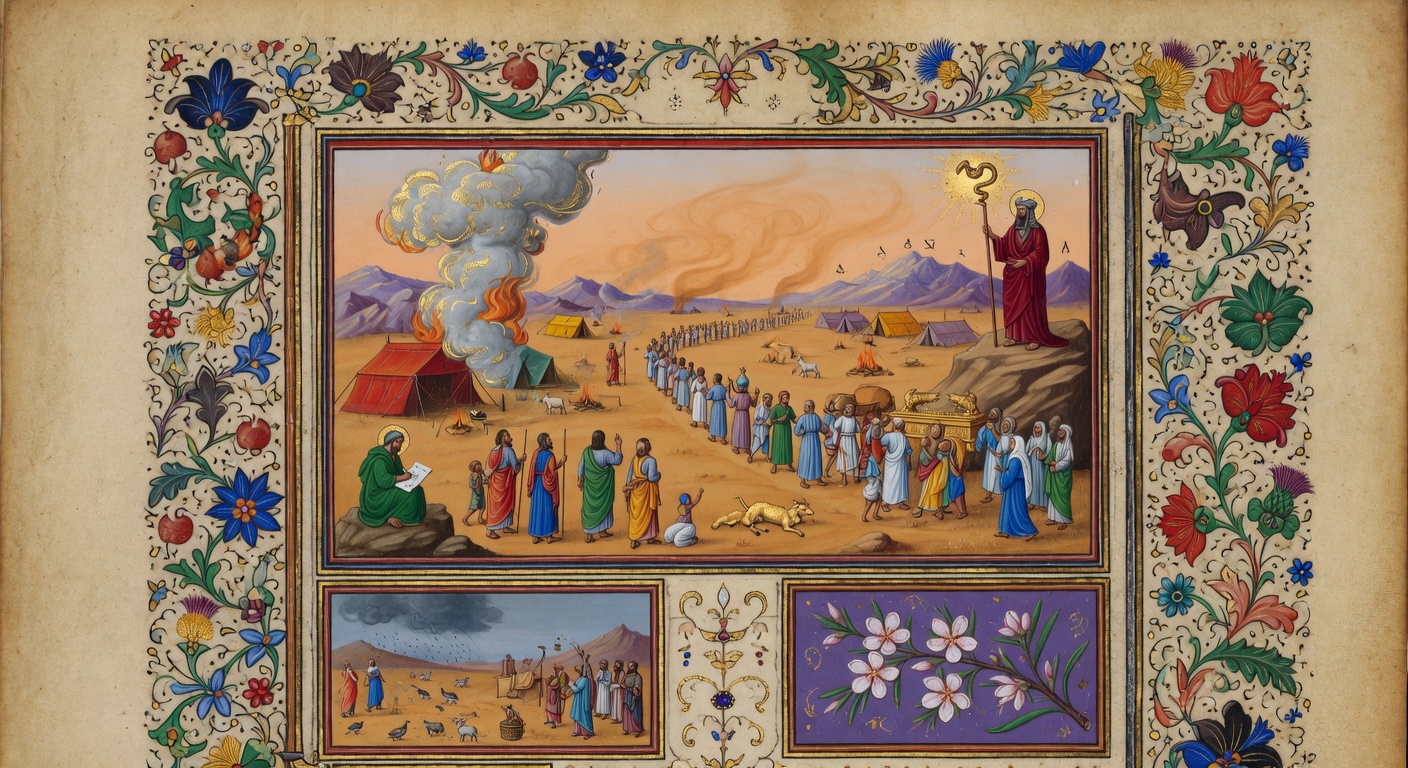
 1nd it came to pass on the day that Moses had fully set up the tabernacle, and had anointed it, and sanctified it, and all the instruments thereof, both the altar and all the vessels thereof, and had anointed them, and sanctified them;
2 That the princes of Israel, heads of the house of their fathers, who were the princes of the tribes, and were over them that were numbered, offered:
3 And they brought their offering before the LORD, six covered wagons, and twelve oxen; a wagon for two of the princes, and for each one an ox: and they brought them before the tabernacle.
4 And the LORD spake unto Moses, saying,
5 Take it of them, that they may be to do the service of the tabernacle of the congregation; and thou shalt give them unto the Levites, to every man according to his service.
6 And Moses took the wagons and the oxen, and gave them unto the Levites.
7 Two wagons and four oxen he gave unto the sons of Gershon, according to their service:
8 And four wagons and eight oxen he gave unto the sons of Merari, according unto their service, under the hand of Ithamar the son of Aaron the priest.
9 But unto the sons of Kohath he gave none: because the service of the sanctuary belonging unto them was that they should bear upon their shoulders.
10 And the princes offered for dedicating of the altar in the day that it was anointed, even the princes offered their offering before the altar.
11 And the LORD said unto Moses, They shall offer their offering, each prince on his day, for the dedicating of the altar.
12 And he that offered his offering the first day was Nahshon the son of Amminadab, of the tribe of Judah:
13 And his offering was one silver charger, the weight thereof was an hundred and thirty shekels, one silver bowl of seventy shekels, after the shekel of the sanctuary; both of them were full of fine flour mingled with oil for a meat offering:
14 One spoon of ten shekels of gold, full of incense:
15 One young bullock, one ram, one lamb of the first year, for a burnt offering:
16 One kid of the goats for a sin offering:
17 And for a sacrifice of peace offerings, two oxen, five rams, five he goats, five lambs of the first year: this was the offering of Nahshon the son of Amminadab.
18 On the second day Nethaneel the son of Zuar, prince of Issachar, did offer:
19 He offered for his offering one silver charger, the weight whereof was an hundred and thirty shekels, one silver bowl of seventy shekels, after the shekel of the sanctuary; both of them full of fine flour mingled with oil for a meat offering:
20 One spoon of gold of ten shekels, full of incense:
21 One young bullock, one ram, one lamb of the first year, for a burnt offering:
22 One kid of the goats for a sin offering:
23 And for a sacrifice of peace offerings, two oxen, five rams, five he goats, five lambs of the first year: this was the offering of Nethaneel the son of Zuar.
24 On the third day Eliab the son of Helon, prince of the children of Zebulun, did offer:
25 His offering was one silver charger, the weight whereof was an hundred and thirty shekels, one silver bowl of seventy shekels, after the shekel of the sanctuary; both of them full of fine flour mingled with oil for a meat offering:
26 One golden spoon of ten shekels, full of incense:
27 One young bullock, one ram, one lamb of the first year, for a burnt offering:
28 One kid of the goats for a sin offering:
29 And for a sacrifice of peace offerings, two oxen, five rams, five he goats, five lambs of the first year: this was the offering of Eliab the son of Helon.
30 On the fourth day Elizur the son of Shedeur, prince of the children of Reuben, did offer:
31 His offering was one silver charger of the weight of an hundred and thirty shekels, one silver bowl of seventy shekels, after the shekel of the sanctuary; both of them full of fine flour mingled with oil for a meat offering:
32 One golden spoon of ten shekels, full of incense:
33 One young bullock, one ram, one lamb of the first year, for a burnt offering:
34 One kid of the goats for a sin offering:
35 And for a sacrifice of peace offerings, two oxen, five rams, five he goats, five lambs of the first year: this was the offering of Elizur the son of Shedeur.
36 On the fifth day Shelumiel the son of Zurishaddai, prince of the children of Simeon, did offer:
37 His offering was one silver charger, the weight whereof was an hundred and thirty shekels, one silver bowl of seventy shekels, after the shekel of the sanctuary; both of them full of fine flour mingled with oil for a meat offering:
38 One golden spoon of ten shekels, full of incense:
39 One young bullock, one ram, one lamb of the first year, for a burnt offering:
40 One kid of the goats for a sin offering:
41 And for a sacrifice of peace offerings, two oxen, five rams, five he goats, five lambs of the first year: this was the offering of Shelumiel the son of Zurishaddai.
42 On the sixth day Eliasaph the son of Deuel, prince of the children of Gad, offered:
43 His offering was one silver charger of the weight of an hundred and thirty shekels, a silver bowl of seventy shekels, after the shekel of the sanctuary; both of them full of fine flour mingled with oil for a meat offering:
44 One golden spoon of ten shekels, full of incense:
45 One young bullock, one ram, one lamb of the first year, for a burnt offering:
46 One kid of the goats for a sin offering:
47 And for a sacrifice of peace offerings, two oxen, five rams, five he goats, five lambs of the first year: this was the offering of Eliasaph the son of Deuel.
48 On the seventh day Elishama the son of Ammihud, prince of the children of Ephraim, offered:
49 His offering was one silver charger, the weight whereof was an hundred and thirty shekels, one silver bowl of seventy shekels, after the shekel of the sanctuary; both of them full of fine flour mingled with oil for a meat offering:
50 One golden spoon of ten shekels, full of incense:
51 One young bullock, one ram, one lamb of the first year, for a burnt offering:
52 One kid of the goats for a sin offering:
53 And for a sacrifice of peace offerings, two oxen, five rams, five he goats, five lambs of the first year: this was the offering of Elishama the son of Ammihud.
54 On the eighth day offered Gamaliel the son of Pedahzur, prince of the children of Manasseh:
55 His offering was one silver charger of the weight of an hundred and thirty shekels, one silver bowl of seventy shekels, after the shekel of the sanctuary; both of them full of fine flour mingled with oil for a meat offering:
56 One golden spoon of ten shekels, full of incense:
57 One young bullock, one ram, one lamb of the first year, for a burnt offering:
58 One kid of the goats for a sin offering:
59 And for a sacrifice of peace offerings, two oxen, five rams, five he goats, five lambs of the first year: this was the offering of Gamaliel the son of Pedahzur.
60 On the ninth day Abidan the son of Gideoni, prince of the children of Benjamin, offered:
61 His offering was one silver charger, the weight whereof was an hundred and thirty shekels, one silver bowl of seventy shekels, after the shekel of the sanctuary; both of them full of fine flour mingled with oil for a meat offering:
62 One golden spoon of ten shekels, full of incense:
63 One young bullock, one ram, one lamb of the first year, for a burnt offering:
64 One kid of the goats for a sin offering:
65 And for a sacrifice of peace offerings, two oxen, five rams, five he goats, five lambs of the first year: this was the offering of Abidan the son of Gideoni.
66 On the tenth day Ahiezer the son of Ammishaddai, prince of the children of Dan, offered:
67 His offering was one silver charger, the weight whereof was an hundred and thirty shekels, one silver bowl of seventy shekels, after the shekel of the sanctuary; both of them full of fine flour mingled with oil for a meat offering:
68 One golden spoon of ten shekels, full of incense:
69 One young bullock, one ram, one lamb of the first year, for a burnt offering:
70 One kid of the goats for a sin offering:
71 And for a sacrifice of peace offerings, two oxen, five rams, five he goats, five lambs of the first year: this was the offering of Ahiezer the son of Ammishaddai.
72 On the eleventh day Pagiel the son of Ocran, prince of the children of Asher, offered:
73 His offering was one silver charger, the weight whereof was an hundred and thirty shekels, one silver bowl of seventy shekels, after the shekel of the sanctuary; both of them full of fine flour mingled with oil for a meat offering:
74 One golden spoon of ten shekels, full of incense:
75 One young bullock, one ram, one lamb of the first year, for a burnt offering:
76 One kid of the goats for a sin offering:
77 And for a sacrifice of peace offerings, two oxen, five rams, five he goats, five lambs of the first year: this was the offering of Pagiel the son of Ocran.
78 On the twelfth day Ahira the son of Enan, prince of the children of Naphtali, offered:
79 His offering was one silver charger, the weight whereof was an hundred and thirty shekels, one silver bowl of seventy shekels, after the shekel of the sanctuary; both of them full of fine flour mingled with oil for a meat offering:
80 One golden spoon of ten shekels, full of incense:
81 One young bullock, one ram, one lamb of the first year, for a burnt offering:
82 One kid of the goats for a sin offering:
83 And for a sacrifice of peace offerings, two oxen, five rams, five he goats, five lambs of the first year: this was the offering of Ahira the son of Enan.
84 This was the dedication of the altar, in the day when it was anointed, by the princes of Israel: twelve chargers of silver, twelve silver bowls, twelve spoons of gold:
85 Each charger of silver weighing an hundred and thirty shekels, each bowl seventy: all the silver vessels weighed two thousand and four hundred shekels, after the shekel of the sanctuary:
86 The golden spoons were twelve, full of incense, weighing ten shekels apiece, after the shekel of the sanctuary: all the gold of the spoons was an hundred and twenty shekels.
87 All the oxen for the burnt offering were twelve bullocks, the rams twelve, the lambs of the first year twelve, with their meat offering: and the kids of the goats for sin offering twelve.
88 And all the oxen for the sacrifice of the peace offerings were twenty and four bullocks, the rams sixty, the he goats sixty, the lambs of the first year sixty. This was the dedication of the altar, after that it was anointed.
89 And when Moses was gone into the tabernacle of the congregation to speak with him, then he heard the voice of one speaking unto him from off the mercy seat that was upon the ark of testimony, from between the two cherubims: and he spake unto him.
← → arrow keys to navigate chapters · spacebar to play/pause audio
Did You Know?
The identical offerings from each tribal leader underscore covenantal equality among the tribes, countering any notion of hierarchical favoritism in Israel's worship structure despite their distinct encampment positions.
The provision of six covered wagons and twelve oxen to the Gershonites and Merarites for tabernacle transport integrates material generosity directly into the logistics of the wilderness journey, distinguishing their role from the Kohathites who carried sacred items on their shoulders.
The presentation sequence opens with Nahshon of Judah, enacting the reversal of primogeniture announced in Jacob's blessing over his sons and foreshadowing Judah's later royal and messianic trajectory.
Numbers 7:89 records Moses entering the tabernacle to hear the divine voice speaking from above the mercy seat, marking the first post-Egyptian instance of sustained oracular communication and confirming the altar's dedication as the site of renewed encounter.
By detailing the same combination of burnt, sin, and peace offerings repeated across all tribes, the chapter theologically frames collective atonement and fellowship as prerequisites for God's presence dwelling among a unified people en route to Canaan.
Commentary & Study Notes Jamieson-Fausset-Brown (1871) · Public Domain the day that Moses had fully set up the tabernacle — Those who take the word "day" as literally pointing to the exact date of the completion of the tabernacle, are under a necessit…
Classic verse-by-verse commentary on Numbers 7 from Jamieson, Fausset & Brown (1871). Covers: The princes' offerings.
- 1
- the day that Moses had fully set up the tabernacle — Those who take the word "day" as literally pointing to the exact date of the completion of the tabernacle, are under a necessity of considering the sacred narrative as disjointed, and this portion of the history from the seventh to the eleventh chapters as out of its place — the chronology requiring that it should have immediately followed the fortieth chapter of Exodus, which relates that the tabernacle was reared on the first day of the first month of the second year [Ex 40:17]. But that the term "day" is used in a loose and indeterminate sense, as synonymous with time, is evident from the fact that not one day but several days were occupied with the transactions about to be described. So that this chapter stands in its proper place in the order of the history; after the tabernacle and its instruments (the altar and its vessels) had been anointed (Le 8:10), the Levites separated to the sacred service — the numbering of the people, and the disposal of the tribes about the tabernacle, in a certain order, which was observed by the princes in the presentation of their offerings. This would fix the period of the imposing ceremonial described in this chapter about a month after the completion of the tabernacle.
- 2,3
- the princes of Israel... brought their offering before the Lord — The finishing of the sacred edifice would, it may well be imagined, be hailed as an auspicious occasion, diffusing great joy and thankfulness throughout the whole population of Israel. But the leading men, not content with participating in the general expression of satisfaction, distinguished themselves by a movement, which, while purely spontaneous, was at the same time so appropriate in the circumstances and so equal in character, as indicates it to have been the result of concerted and previous arrangement. It was an offer of the means of carriage, suitable to the migratory state of the nation in the wilderness, for transporting the tabernacle from place to place. In the pattern of that sacred tent exhibited on the mount, and to which its symbolic and typical character required a faithful adherence, no provision had been made for its removal in the frequent journeyings of the Israelites. That not being essential to the plan of the divine architect, it was left to be accomplished by voluntary liberality; and whether we look to the judicious character of the gifts, or to the public manner in which they were presented, we have unmistakable evidence of the pious and patriotic feelings from which they emanated and the extensive interest the occasion produced. The offerers were "the princes of Israel, heads of the house of their fathers," and the offering consisted of six covered wagons or little cars, and twelve oxen, two of the princes being partners in a wagon, and each furnishing an ox.
Read all 12 notes on Numbers 7 →